

17 Sensory Play Ideas for Babies by Age
Disclosure: Some of the links in this post are affiliate links. This means if you click on the link and purchase an item, I will receive an affiliate commission at no extra cost to you.
Sensory play gives babies simple opportunities to explore the world through touch, sight, sound, movement, and, when developmentally appropriate, taste and smell.
During the first year, babies learn largely through direct experiences. A soft fabric feels different from a wooden toy, a crinkly sound gets a different reaction from a quiet song, and watching an object move across the room helps a baby begin to understand how things behave.
The good news is that sensory play does not require an expensive collection of developmental toys. Many activities can be created with ordinary household items, provided they are age-appropriate and closely supervised.
The best activities are usually simple enough that the baby can focus on one or two sensory experiences at a time without becoming overwhelmed.
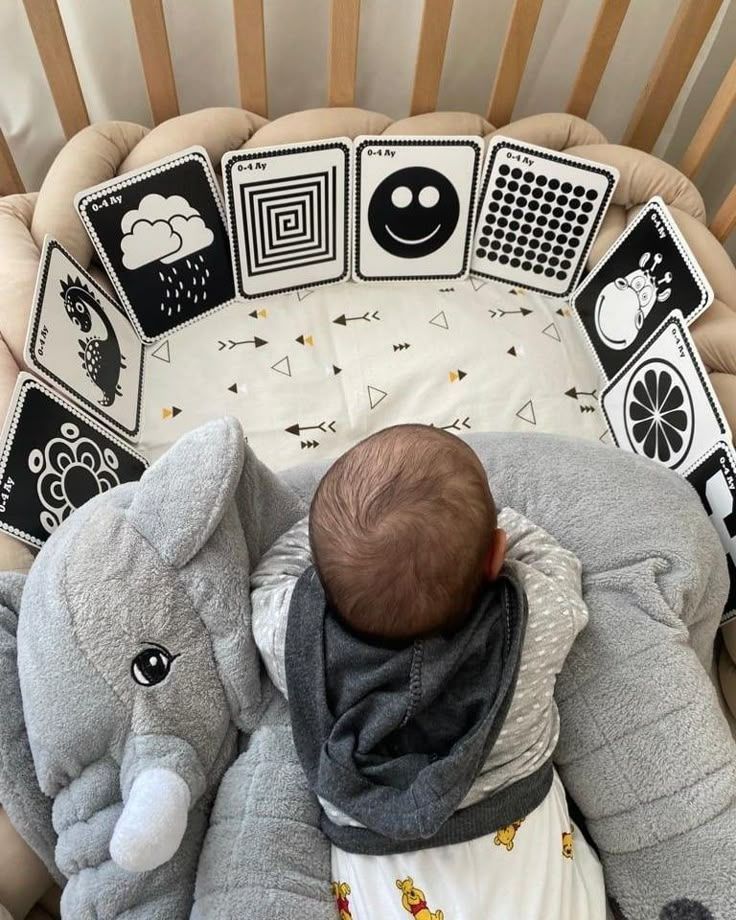
Age matters, though. A newborn has very different abilities from a six-month-old who can sit independently, and a crawling baby can interact with materials in ways that would not be appropriate for a younger infant.
That is why sensory activities should change as your baby develops.
Parents can use newborn development milestones as a general guide while remembering that babies do not all acquire skills on exactly the same schedule.
Sensory play should also be relaxed rather than treated like a lesson. You do not need to make your baby complete an activity or demonstrate a particular skill.
Let your baby look, reach, kick, grab, listen, smile, or simply observe. If your baby becomes tired, frustrated, or overstimulated, stop and try again another time.
17 Sensory Play Ideas for Babies by Age
The following sensory play ideas move from very simple experiences for young newborns toward activities that suit babies who are becoming more mobile and interactive.
Always choose activities according to your baby’s current abilities, and never leave a baby unattended with an object or material that could create a choking, suffocation, or other safety hazard.
1. Explore Different Soft Fabrics
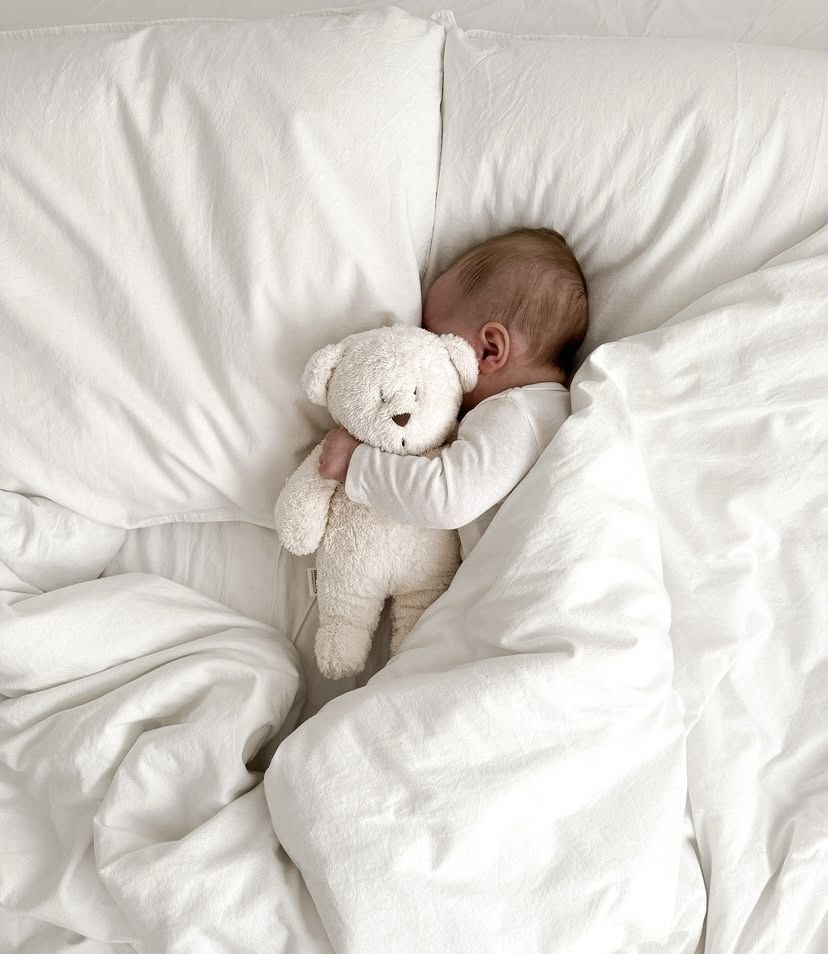
For very young babies, begin with something as simple as fabric.
Place your baby comfortably on a safe, firm surface and let them look at or gently feel several clean fabrics with noticeably different textures.
You might use a smooth cotton cloth, a soft fleece blanket, a lightweight muslin fabric, or another baby-safe textile.
Move one fabric gently against your baby’s hand or foot and pause to let them respond. Some babies may open their fingers, kick, stare at the material, or try to grasp it.
This activity is especially useful during the early months because newborns are still learning how different sensations feel.
Keep the experience gentle and avoid loose fabric around your baby’s face or sleep area.
2. Make Gentle Sounds With Your Voice
Your voice is one of the easiest sensory tools available.
Talk slowly to your baby while maintaining eye contact. Change your tone slightly, pause between phrases, and respond when your baby makes a sound or changes their facial expression.
You can also softly sing simple songs. Babies do not need complicated music to become interested in sound.
Your familiar voice can encourage them to listen, turn toward you, and gradually recognize patterns in speech.
For parents looking for additional ideas, best songs to sing to your baby can provide inspiration for incorporating music into everyday interaction.
Keep your volume comfortable. The goal is to encourage listening rather than overwhelm your baby’s developing hearing.
3. Watch a High-Contrast Picture
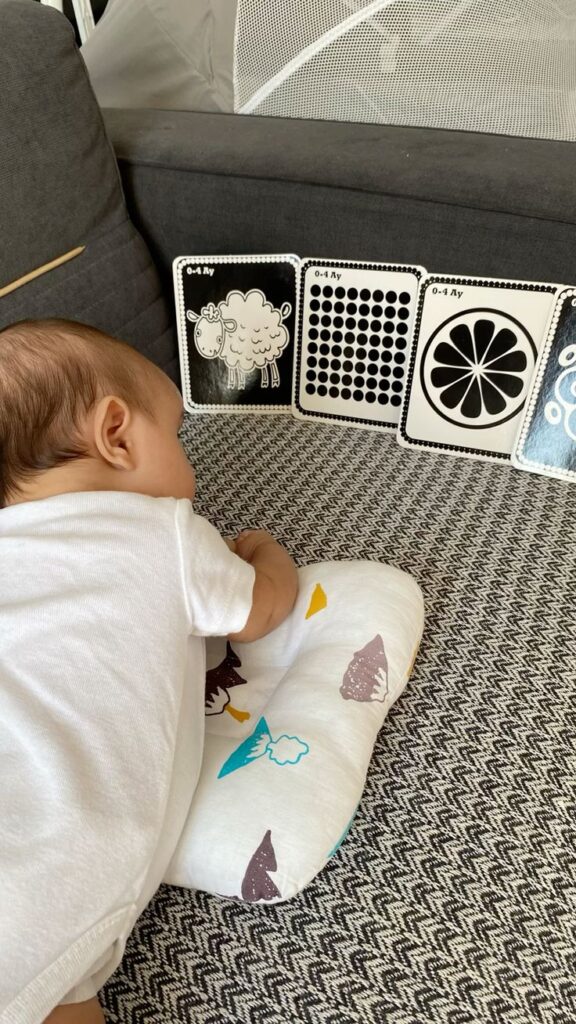
Young babies are often especially interested in strong contrasts.
Place a simple black-and-white or high-contrast picture where your baby can comfortably see it during supervised awake time. Hold it still for a few moments, then slowly move it from one side to the other.
Your baby may follow it with their eyes or turn their head toward it. Even if the response seems small, these moments give your baby an opportunity to practice visual attention.
You can use a simple homemade card or a baby-safe book rather than buying specialized equipment.
As your baby becomes more visually attentive, you can introduce best first books for babies as another way to combine visual exploration with your voice.
4. Try a Gentle Tummy-Time Texture
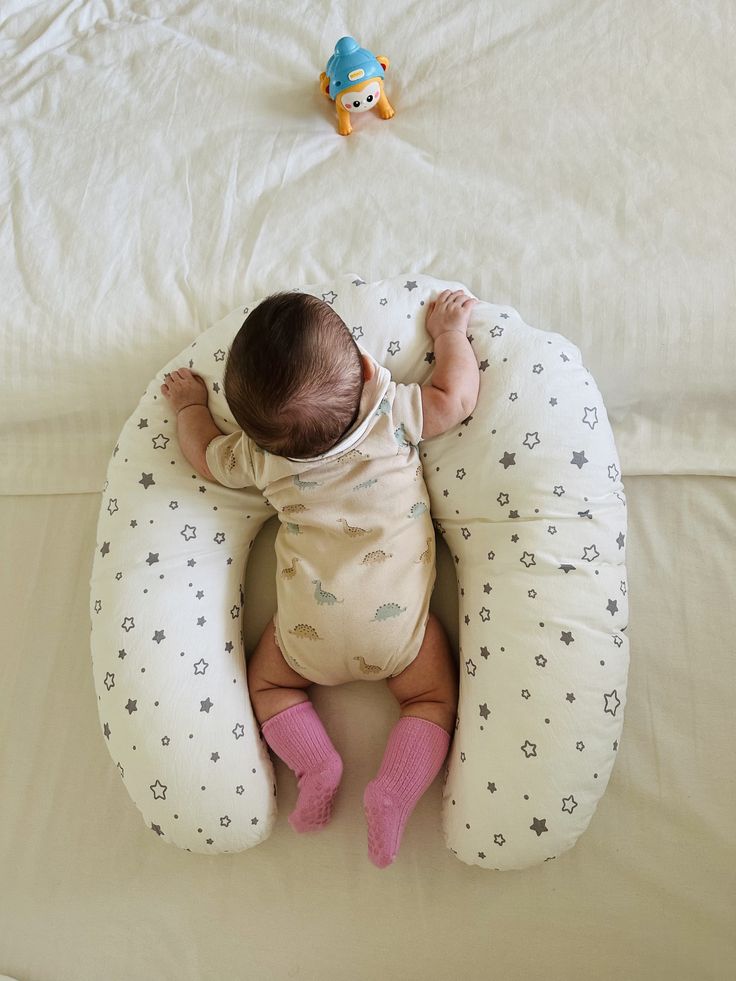
Once your baby is ready for supervised tummy time, you can introduce carefully selected textures beneath their hands.
A clean, firm play mat can provide one surface, while a baby-safe textured mat can offer another. Keep the activity simple and stay directly with your baby.
Tummy time gives babies opportunities to strengthen the muscles they will eventually use for rolling, sitting, crawling, and other movement.
Adding a mild sensory element can make the experience more interesting without turning it into a complicated exercise.
If your baby dislikes tummy time at first, keep sessions short and try again later. Never use sensory materials that can come loose or become trapped under your baby.
5. Introduce a Crinkly Baby-Safe Toy
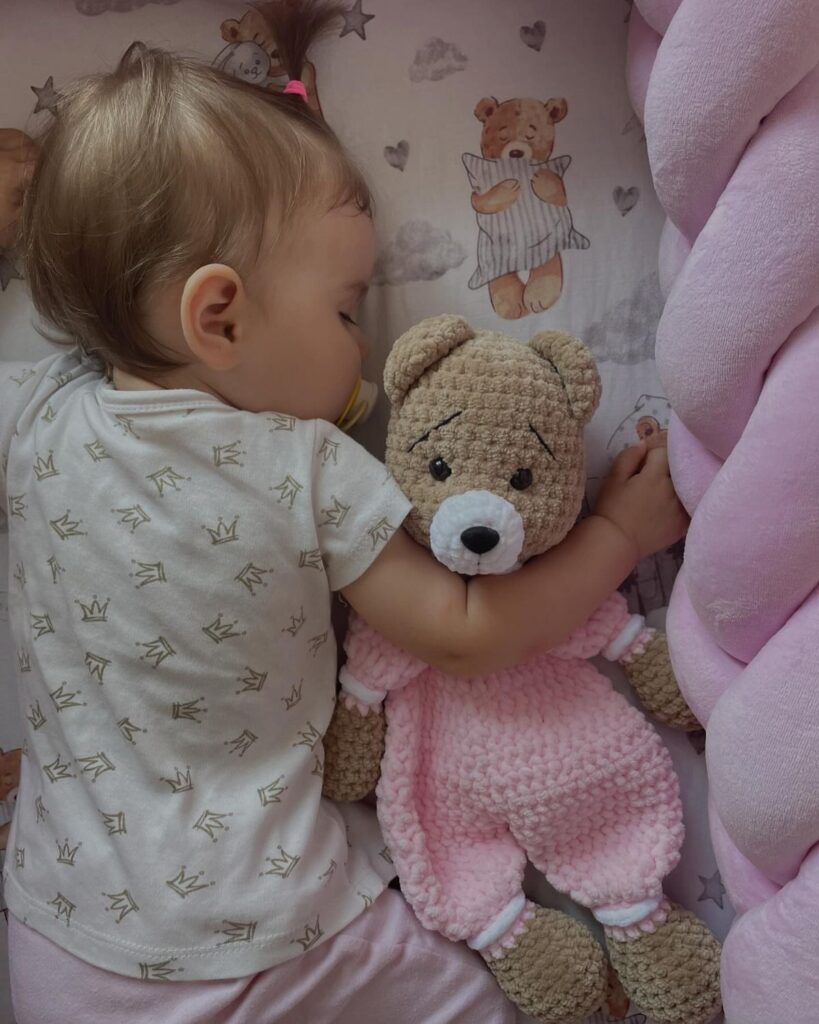
As babies become better at reaching and grasping, sounds can become particularly exciting.
A purpose-made baby-safe crinkle toy can make a soft rustling sound when squeezed or touched. Place it within your baby’s reach while they are awake and supervised.
Allow your baby to discover the sound independently rather than constantly making it for them.
They may eventually realize that squeezing or moving the object produces a response.
This introduces an early connection between action and consequence: “I moved this, and it made a sound.” That simple discovery can be surprisingly engaging for a young baby.
6. Play With a Baby-Safe Mirror
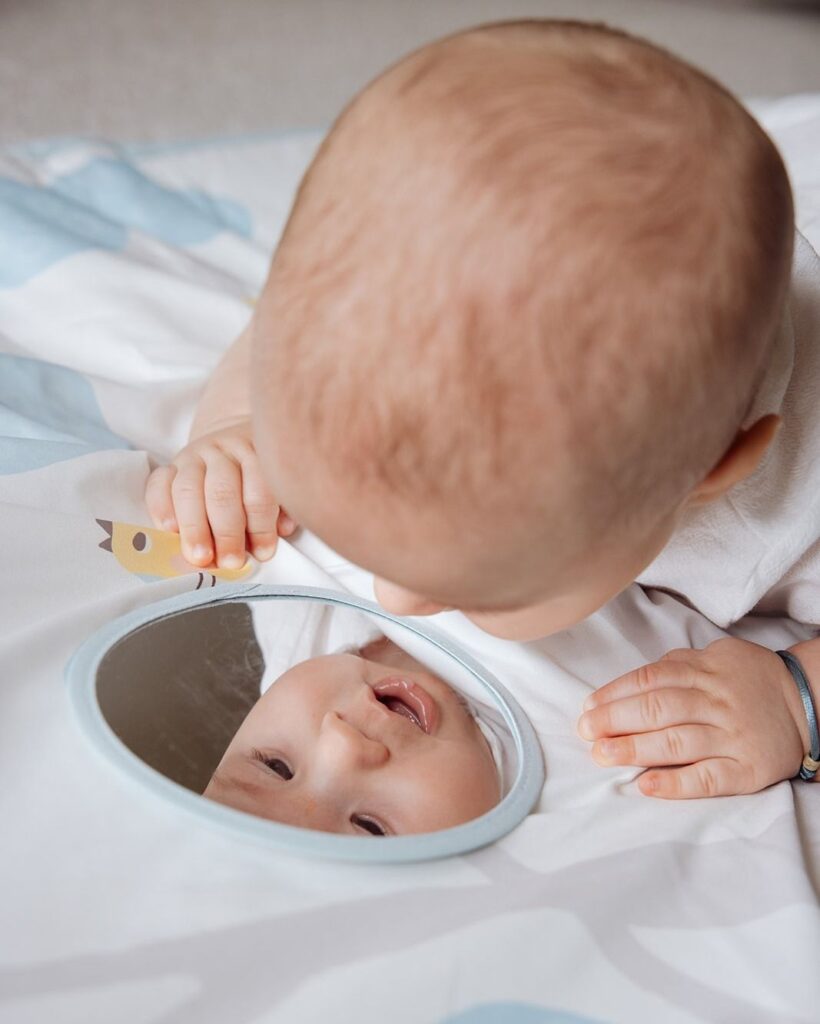
Mirrors can provide both visual and social stimulation.
Place a baby-safe mirror securely where your baby can see it during supervised floor play. Sit nearby and talk to your baby while they look at the reflection.
At first, your baby may simply stare at the image. Later, they may smile, move their arms, touch the mirror, or look between the reflection and you.
This activity can become especially engaging as babies become more socially aware.
Keep the mirror specifically designed for babies and make sure it cannot fall or break.
7. Explore Water With Hands and Feet
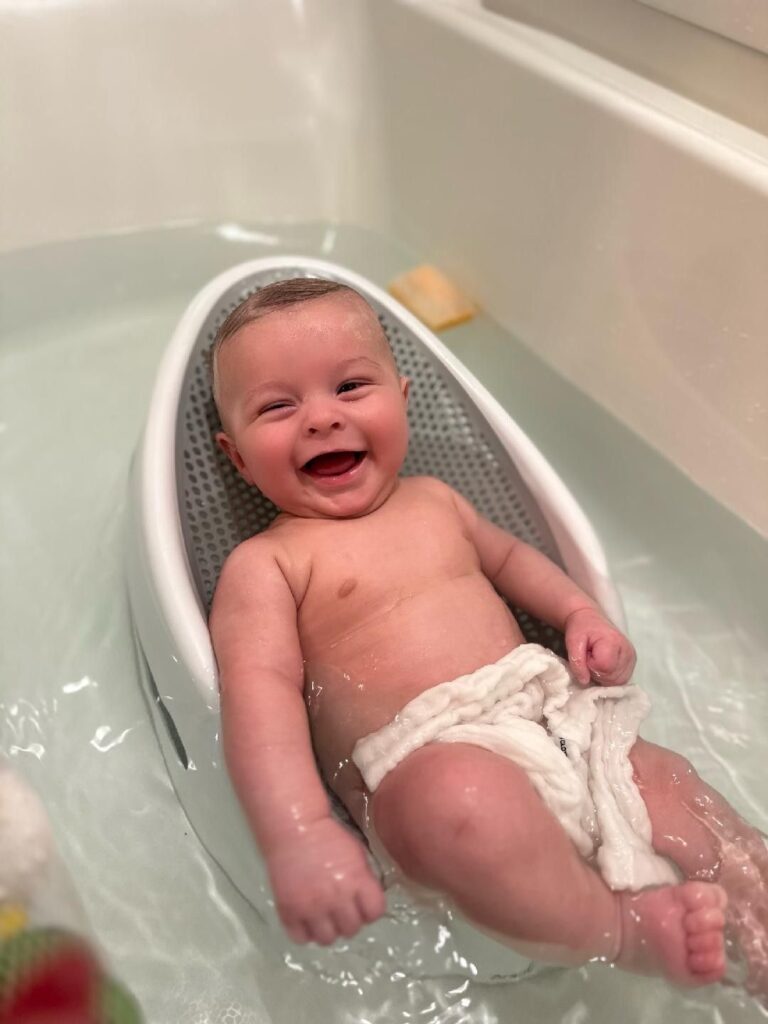
When your baby is developmentally ready and you can supervise continuously, a small amount of water can create an interesting sensory experience.
You might let your baby gently splash their hands or feet in a shallow container while you remain within arm’s reach. The temperature should be comfortably warm rather than hot or cold.
Water provides a combination of touch, movement, sound, and visual feedback.
A baby may notice that kicking creates splashes or that moving their hand through the water changes what they see.
Never leave your baby alone around water, even for a moment. A very small amount of water can still present a serious drowning risk.
8. Make a Texture Basket for Sitting Babies
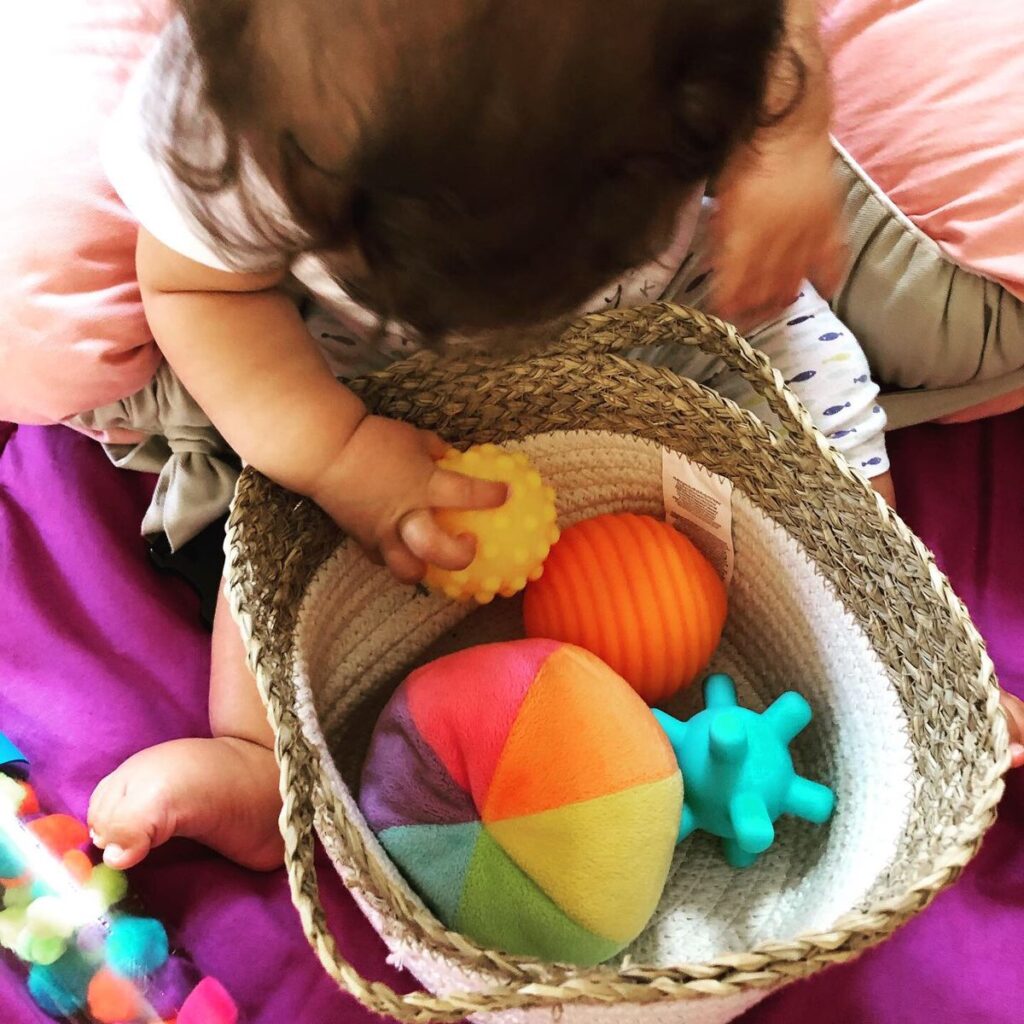
Once your baby can sit steadily with appropriate supervision, you can introduce a small collection of safe objects with different textures.
Choose large, baby-safe items that cannot easily break or become choking hazards.
Examples might include a soft silicone toy, a large wooden baby toy, a textured ball designed for infants, or a washable fabric toy.
Place only a few items in front of your baby at once. Let them decide what to touch, pick up, turn, or examine.
This activity supports independent exploration while allowing you to observe what textures and objects capture your baby’s attention.
For additional ideas that match different developmental stages, educational activities for babies from birth to one year can help you build a broader collection of simple activities.
9. Explore Edible Textures During Mealtime
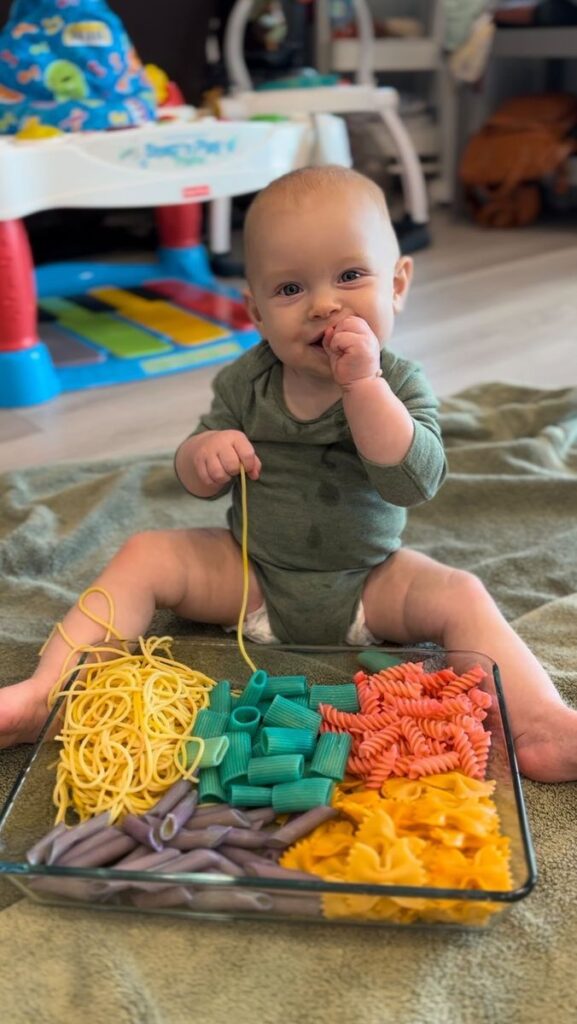
Once your baby is developmentally ready for complementary foods and has been introduced to appropriate foods, mealtime itself can become a sensory experience.
Different foods have different textures, temperatures, colors, smells, and shapes.
With guidance from your baby’s healthcare professional, you can offer appropriate foods prepared in safe forms for your baby’s developmental stage.
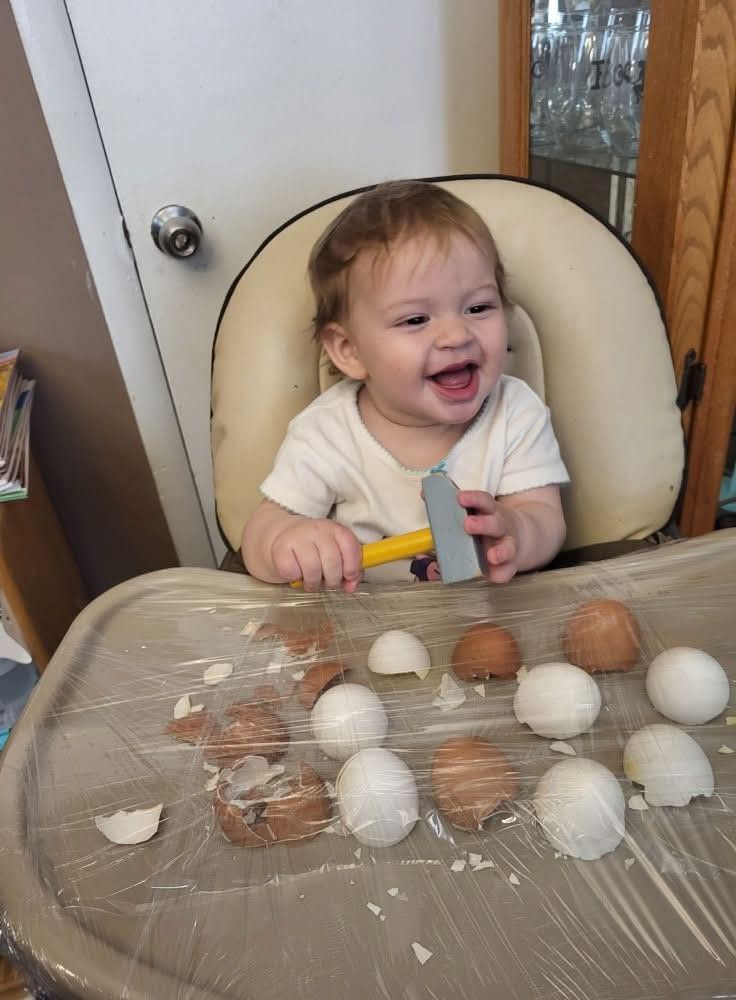
Allowing your baby to safely explore food can involve touching, smelling, tasting, and observing. Messiness is normal.
Food play should never replace appropriate nutrition, and parents should follow guidance about introducing foods and reducing choking risks.
Avoid giving babies foods or textures that are unsafe for their developmental stage.
10. Shake a Baby-Safe Rattle
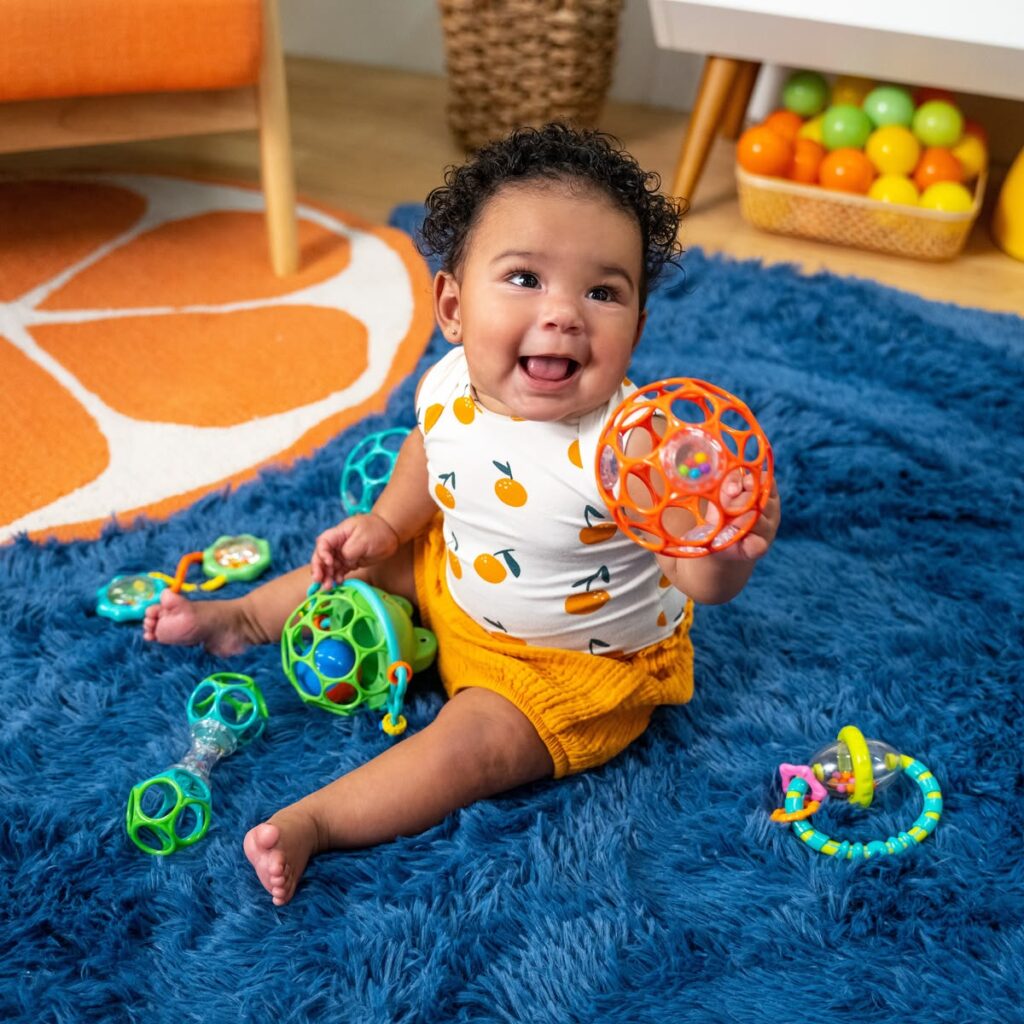
Rattles are classic sensory toys for a reason.
When your baby can grasp objects securely, give them a baby-safe rattle and allow them to explore it.
At first, they may accidentally move it and hear a sound. With repetition, they may begin deliberately shaking it.
You can also gently shake a second rattle nearby and pause. Your baby may look toward the sound or eventually try to imitate the movement.
This combines hearing, touch, vision, and movement in one simple activity.
Choose a rattle that is specifically designed for infants, inspect it regularly, and avoid anything with detachable pieces.
11. Sing While Moving Your Baby Gently
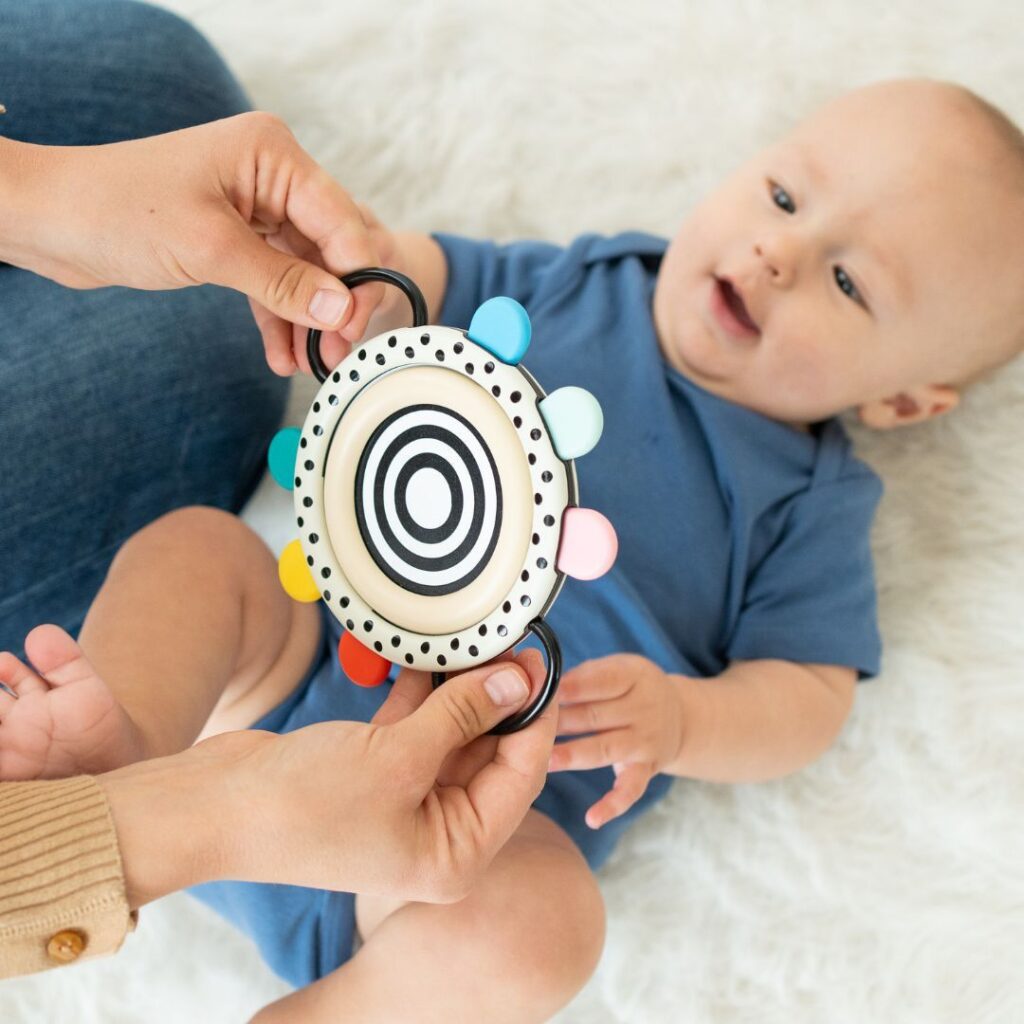
Sensory experiences do not have to happen separately.
During supervised awake time, you can sing a gentle song while slowly moving your baby’s arms or legs through comfortable, natural movements.
You might gently clap their hands together or move their feet in time with the song, as long as your baby remains relaxed.
The combination of your voice, touch, rhythm, and movement gives your baby several sensory experiences at once.
Watch your baby’s response carefully. If they turn away, become fussy, or appear overstimulated, pause and give them some quiet time.
Parents who want to build musical interaction into their routine can also explore music activities for babies for additional age-appropriate ideas.
12. Explore a Texture Ball
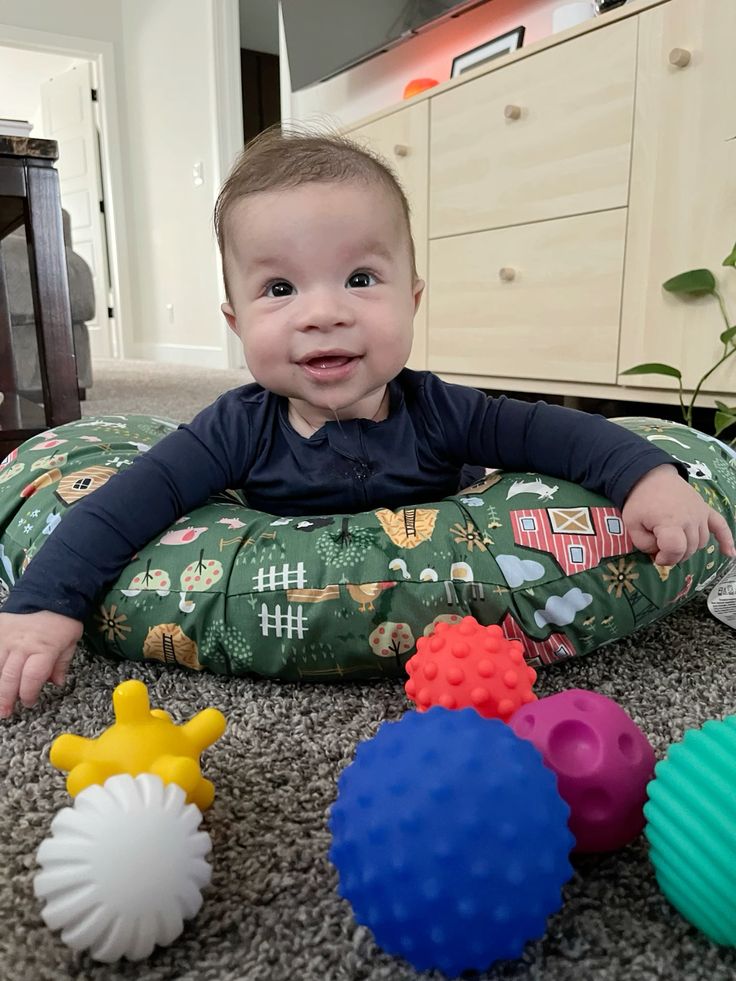
Babies who are becoming more mobile often enjoy objects they can grasp, squeeze, roll, and investigate.
A large baby-safe sensory ball with different raised or smooth sections can provide several tactile experiences. Sit with your baby and roll the ball gently toward them.
If your baby reaches for it, let them explore it at their own pace. They may squeeze it, turn it around, mouth it, or push it away.
Choose a ball that is specifically made for babies and is too large to create a choking hazard. Avoid small balls, loose pieces, or materials that can tear.
13. Create a Simple Sensory Scarf Game
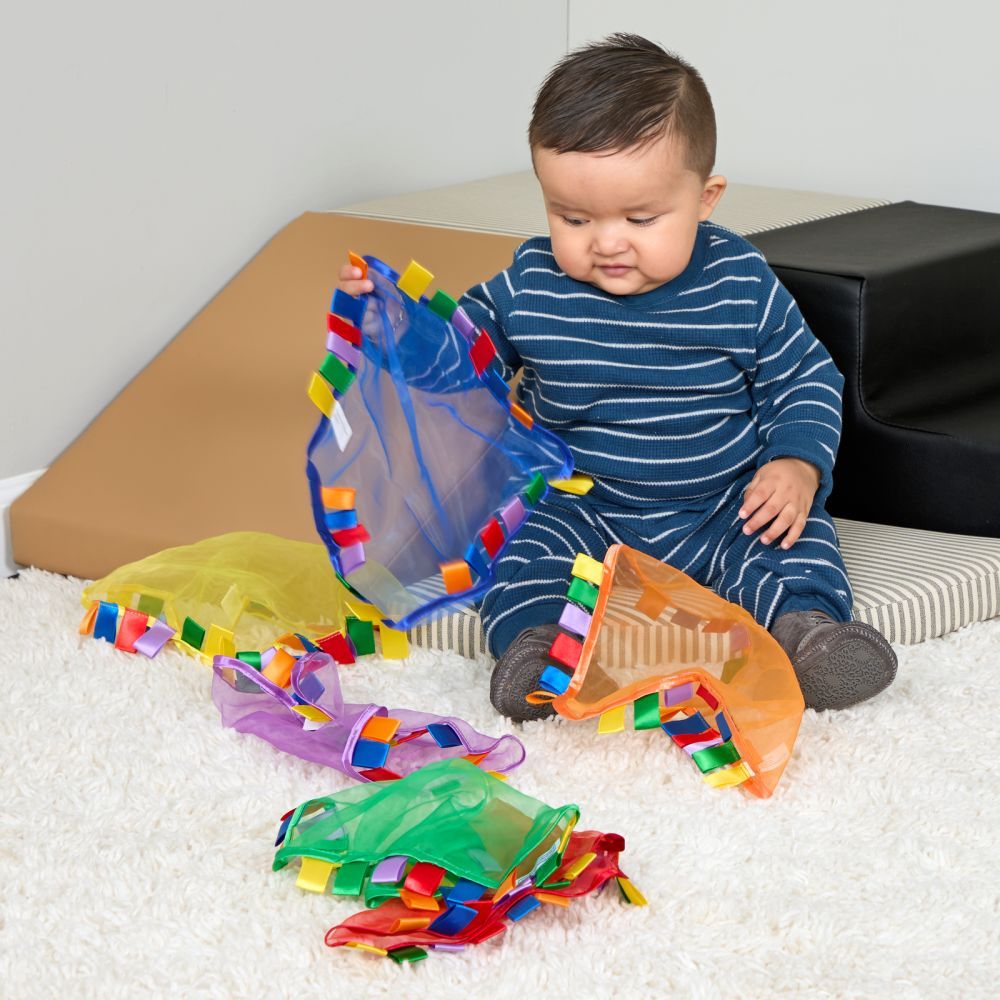
Lightweight baby-safe scarves can be used for a supervised visual and tactile game.
Hold a brightly colored scarf in your hand and move it slowly from one side of your baby to the other.
You can briefly hide your face behind it and then reappear, provided the scarf remains completely under your control.
Older babies may begin reaching for the fabric or anticipating your return.
The activity can encourage visual tracking, attention, and social interaction while also introducing the feeling of a lightweight fabric.
Do not leave scarves or other loose fabric with a baby unattended, and never place fabric over a baby’s face.
14. Explore Safe Outdoor Sounds
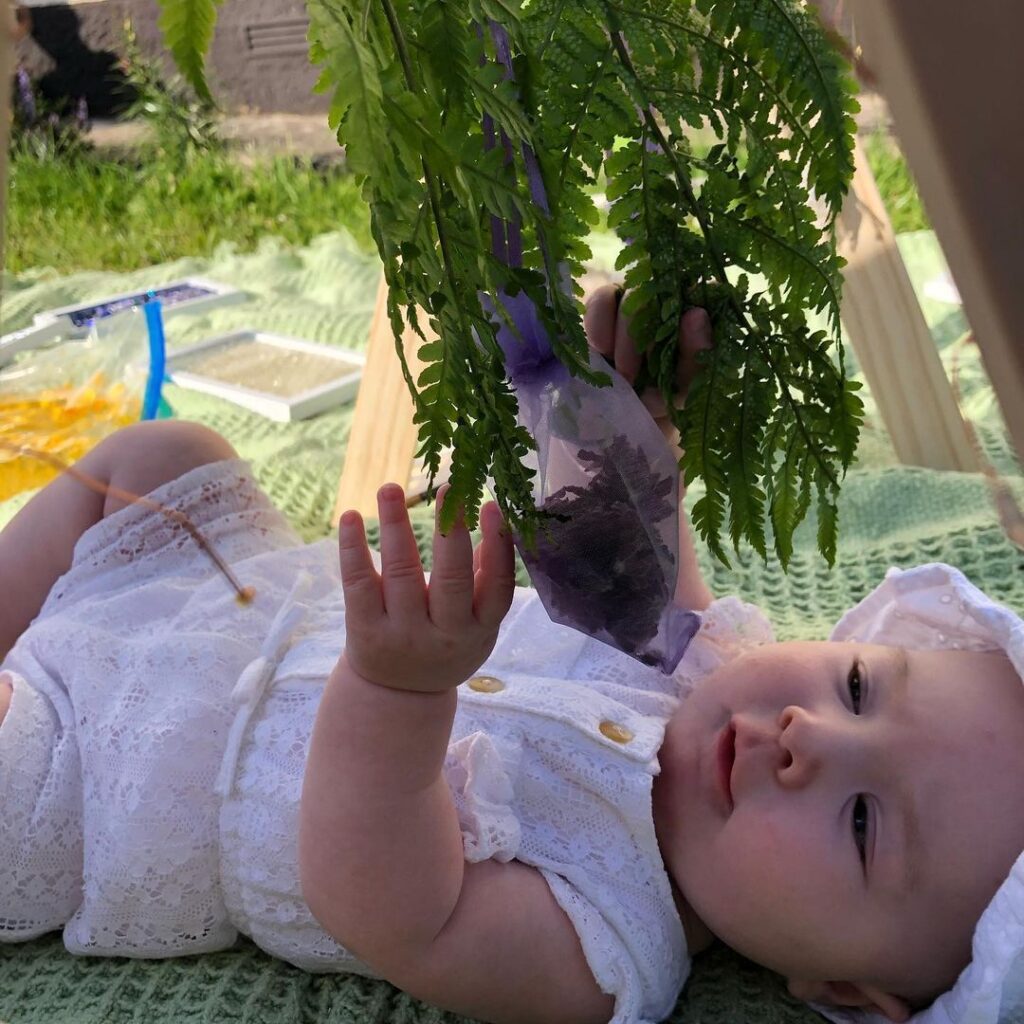
As your baby becomes more alert and comfortable with new environments, supervised outdoor time can provide rich sensory experiences.
You might sit together in a shaded, comfortable location and allow your baby to hear birds, leaves, distant voices, or gentle outdoor sounds.
You can describe what you hear: “That is a bird,” or “The leaves are moving.”
Your baby does not need to understand the words yet. Hearing you label experiences can become part of their early language environment.
For more ideas, outdoor activities for babies under one year can help you find additional ways to introduce safe outdoor experiences as your baby grows.
Avoid extreme heat, direct sun exposure, unsafe environments, and loud noises. Babies can become uncomfortable quickly, so keep outdoor sessions appropriate for the weather and your baby’s needs.
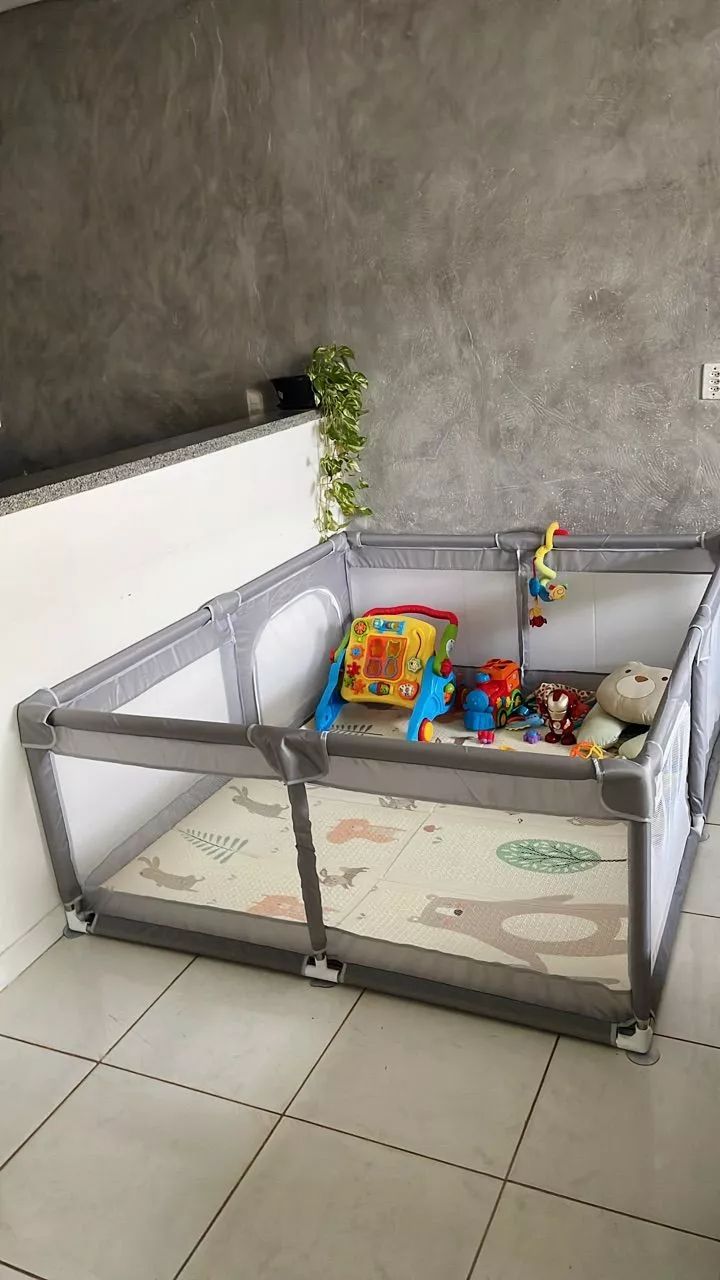
15. Try a Supervised Sensory Floor Station
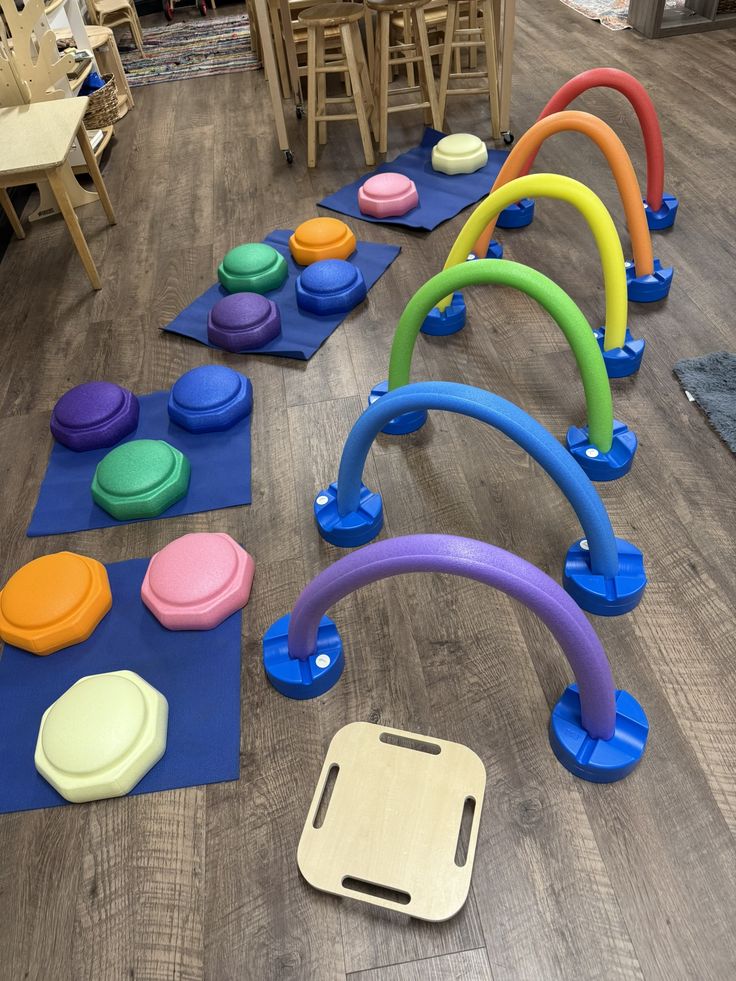
Once your baby is sitting, reaching, and beginning to move around more, create a small supervised area with a few developmentally appropriate objects.
You could place a soft toy, textured ball, baby-safe mirror, and large sensory toy within reach.
Rather than directing your baby from one object to another, allow them to decide what interests them.
This gives your baby opportunities to compare textures, sounds, shapes, and movements.
Keep the area uncluttered. Too many objects can make it difficult for your baby to focus, while a small selection encourages deeper exploration.
As babies become more active, safety becomes increasingly important.
A review of ultimate baby proofing checklist for new parents can help you identify hazards around the areas where your baby plays.
16. Introduce a Simple Sensory Story
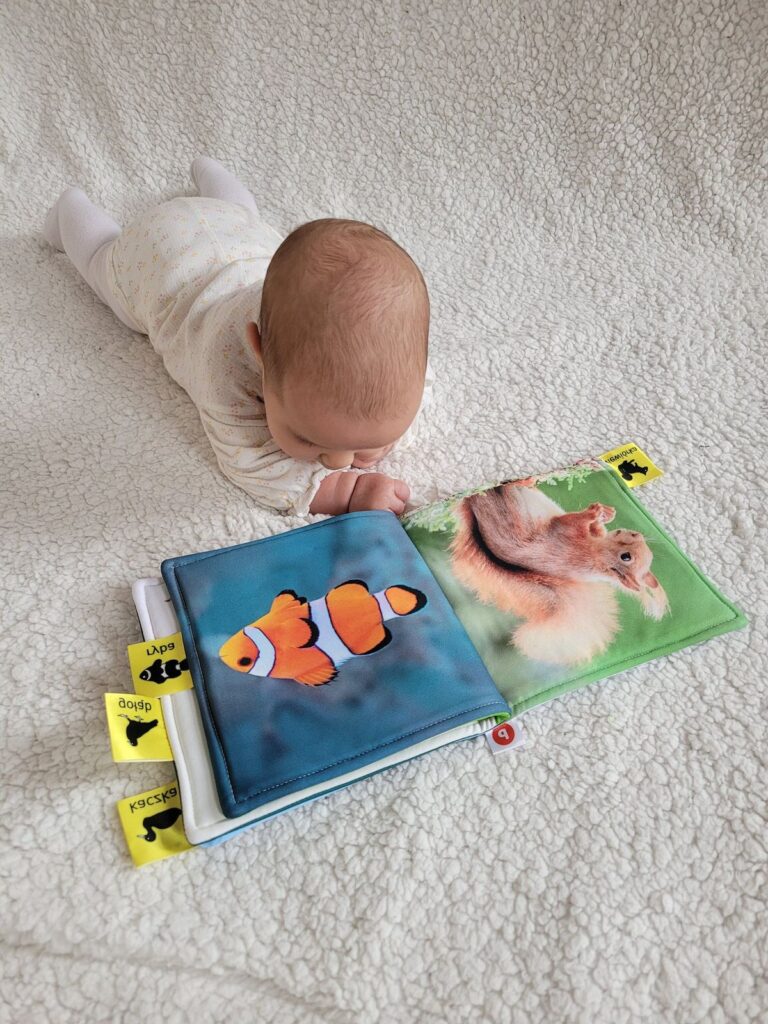
Books can combine several sensory experiences without requiring complicated materials.
Choose a sturdy baby book with clear pictures, large shapes, or appropriate textured pages. Sit with your baby and read slowly, allowing them to look at the pictures and hear your voice.
If the book has safe textured sections designed for infants, let your baby touch them while you describe what they are feeling.
Reading can become a predictable bonding routine, particularly before naps or bedtime.
You can also explore Benefits of Reading to Babies Daily to understand why regular reading can remain valuable well beyond the sensory-play stage.
The important thing is to keep the experience enjoyable. Your baby does not need to sit through an entire book.
17. Let Your Baby Explore a Safe Sensory Tray
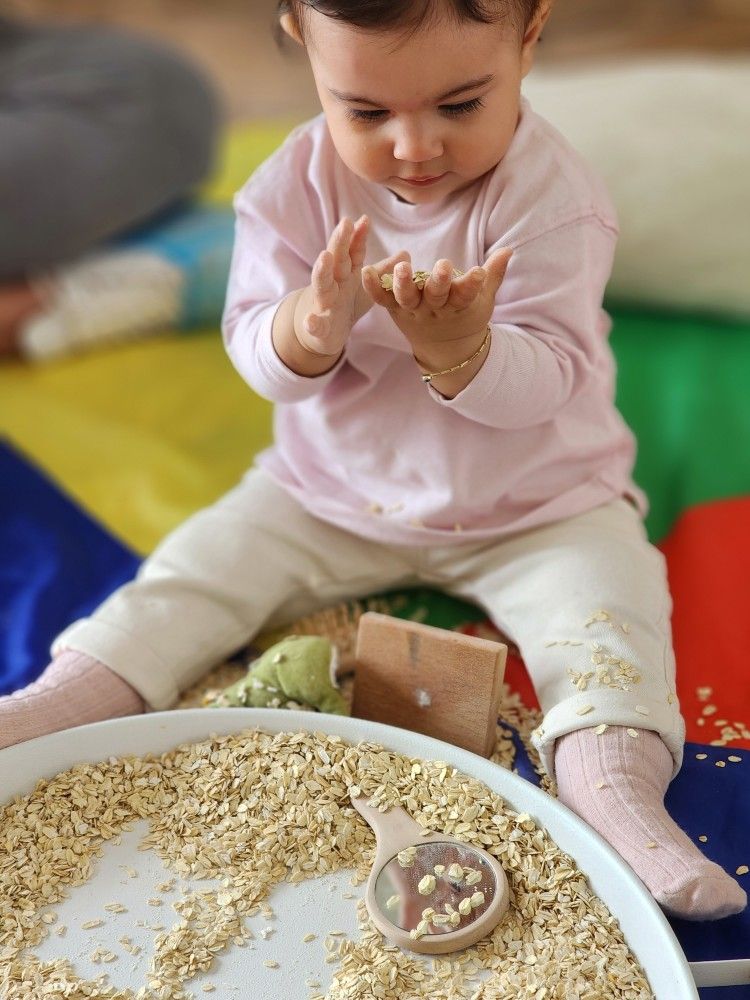
For babies who are confidently sitting and increasingly interested in objects, a carefully prepared sensory tray can bring several experiences together.
Use only large, baby-safe items that are appropriate for your child’s developmental stage.
You might include a textured silicone toy, a large soft ball, a sturdy fabric toy, and another washable object with a different texture.
Sit directly beside your baby and allow them to explore one object at a time. Talk about what they are doing, but don’t constantly interrupt their exploration.
The goal is not to create the most elaborate sensory setup possible. It is to give your baby a safe opportunity to notice differences, make choices, and investigate objects through movement and touch.
As your baby’s abilities change, you can gradually adjust the materials and activities.
These sensory play ideas for babies by age should always be treated as inspiration rather than a strict developmental checklist; your baby’s individual readiness matters more than their exact age.
Keeping Sensory Play Simple and Safe
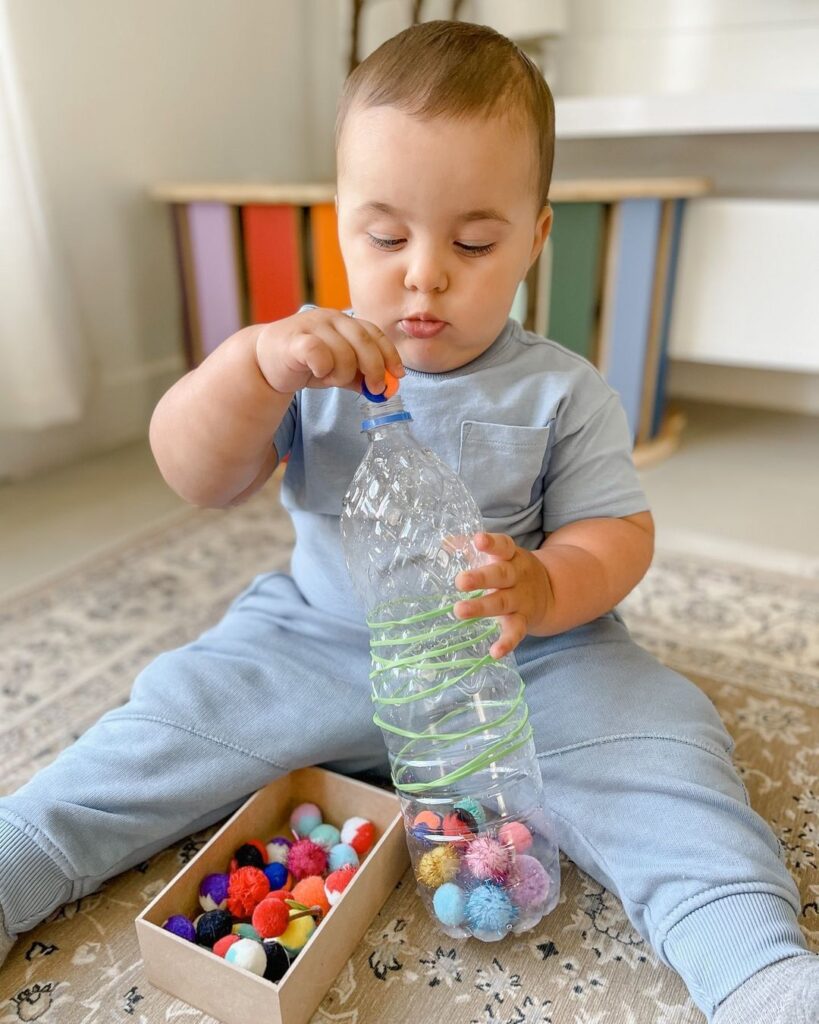
The best sensory activities are often the ones you can repeat naturally during everyday life.
Talking during diaper changes, singing during cuddles, reading before a nap, exploring textures during floor play, and noticing outdoor sounds can all become meaningful sensory experiences.
You do not need to fill every waking moment with activities. Babies also need plenty of time to rest, feed, observe quietly, move freely, and simply be with their caregivers.
Supervision is especially important whenever an activity involves an object, water, food, fabric, or anything else that could create a safety risk.
Avoid small objects and loose pieces that could become choking hazards, and stop an activity if your baby becomes uncomfortable or overwhelmed.
Most importantly, follow your baby’s cues. A baby who is smiling, reaching, looking closely, kicking, or making sounds may be enjoying the experience.
A baby who turns away, cries, becomes unusually fussy, or loses interest may simply need a break.
Sensory play is not about producing a particular result. It is about giving babies safe opportunities to experience their surroundings while spending relaxed, responsive time with the people who care for them.
Over time, these ordinary moments can become part of a rich environment where babies are encouraged to observe, explore, communicate, and gradually become more confident in the world around them.



7 Comments