

23 Activities for Sitting Babies That Are Not Stressful
Disclosure: Some of the links in this post are affiliate links. This means if you click on the link and purchase an item, I will receive an affiliate commission at no extra cost to you.
Learning to sit is one of those exciting stages that can quietly change the way your baby experiences the world.
Before sitting independently, your baby may spend most of their time lying down, being carried, or supported in someone’s arms.
Once they begin sitting with support or sitting independently for short periods, they suddenly have a different view of the people and objects around them.
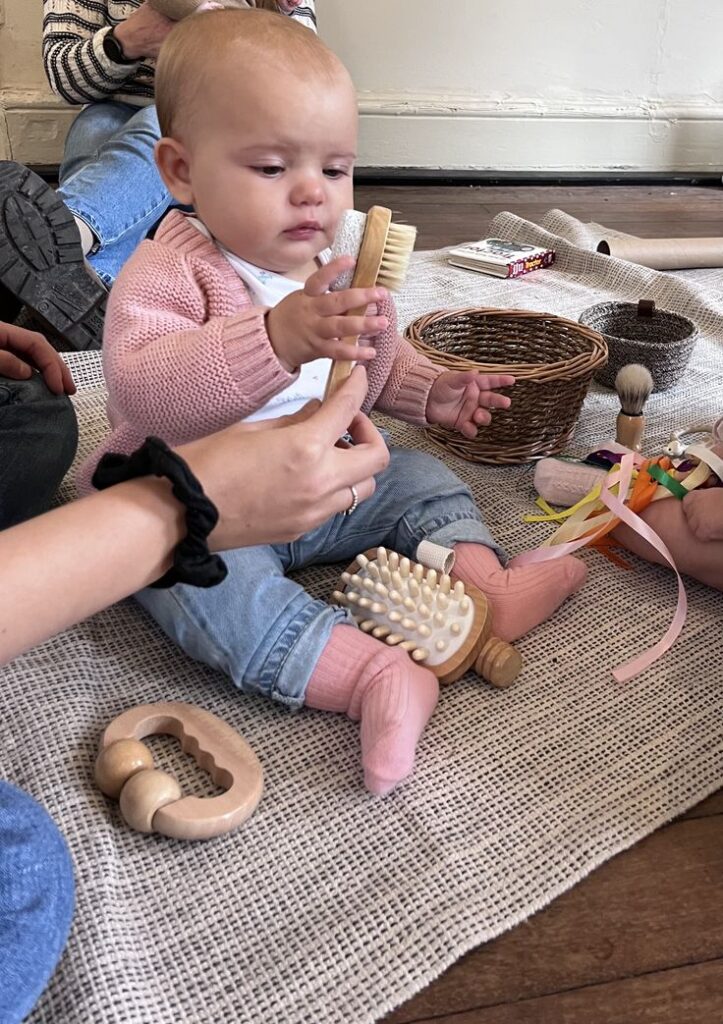
Their hands are freer. Toys can be explored in new ways. They can reach for objects in front of them and watch what happens when they drop something on the floor.
This stage can make parents eager to introduce more activities, but babies do not need a packed schedule to learn and develop.
In fact, sitting babies can easily become tired or overwhelmed when there is too much happening around them. The best activities are often simple.
A favourite toy placed nearby, a song sung together, a board book, or a few minutes of sensory exploration can give your baby something interesting to do without putting pressure on them.
Every baby also develops differently. Some babies sit confidently for long periods, while others are still learning to balance and may need support nearby. There is no need to compare your baby with another child or rush them into activities they are not ready for.
The purpose of play at this stage is not to make your baby perform.
It is to give them opportunities to explore, practise using their hands, interact with you, and enjoy their growing independence.
These activities are designed to be gentle, flexible, and easy to adapt to your baby’s abilities.
You can try one or two during the day and stop when your baby begins showing signs of tiredness or losing interest.
Gentle Activities for Sitting Babies That Support Play and Development
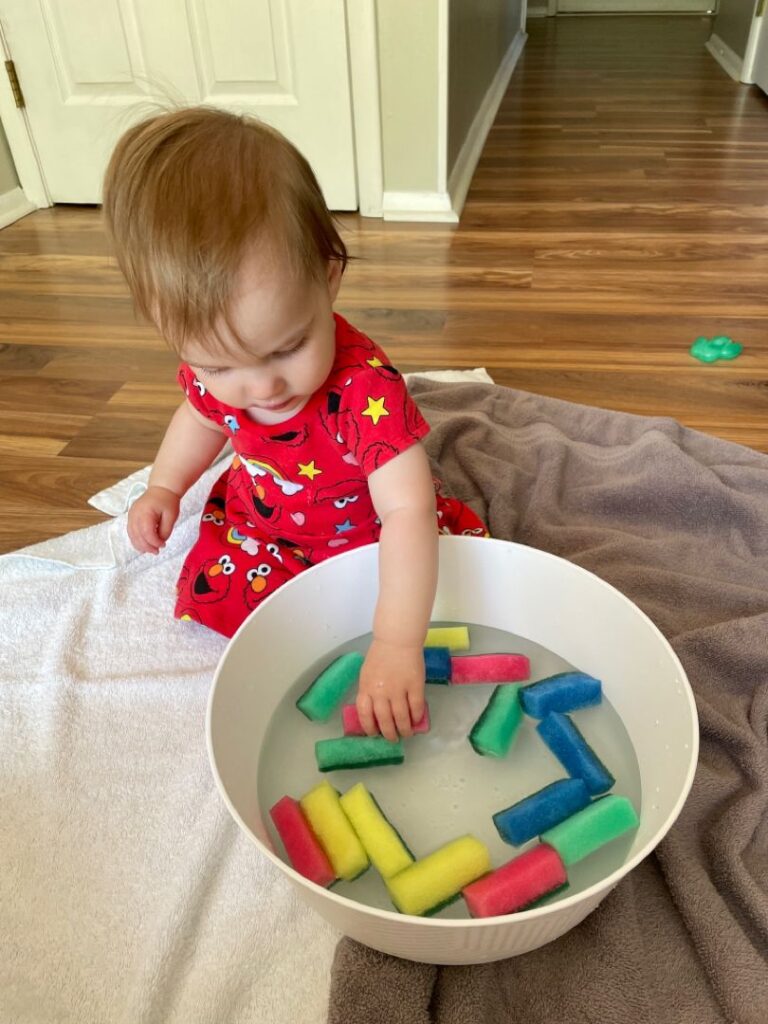
Sitting opens up many new possibilities for play because your baby can now interact with objects from a more upright position.
However, that does not mean every activity needs to involve complicated toys or constant stimulation.A calm environment often works best.
Choose a safe floor space where your baby can sit comfortably. Stay nearby, especially if they are still unsteady, and use cushions only as appropriate for support rather than leaving your baby surrounded by loose objects without supervision.
Simple play can support many parts of early development.
Your baby may practise reaching, grasping, transferring objects between hands, listening to sounds, watching movement, and responding to familiar people.
These moments can become part of educational activities for babies from birth to one year, even though your baby simply experiences them as play.
It is also helpful to follow your baby’s cues. If they are smiling, reaching, and showing interest, you can continue.
If they begin rubbing their eyes, turning away, crying, or becoming frustrated, it may be time for a break. You do not have to complete every activity perfectly.
Some babies will spend ten minutes exploring a basket of objects. Another baby may only be interested for two minutes before crawling away or wanting to be picked up. Both experiences are normal.
The activities below are not a checklist that must be completed. Think of them as ideas you can return to whenever your baby is ready for a calm moment of play.
1. Explore a Basket of Safe Objects
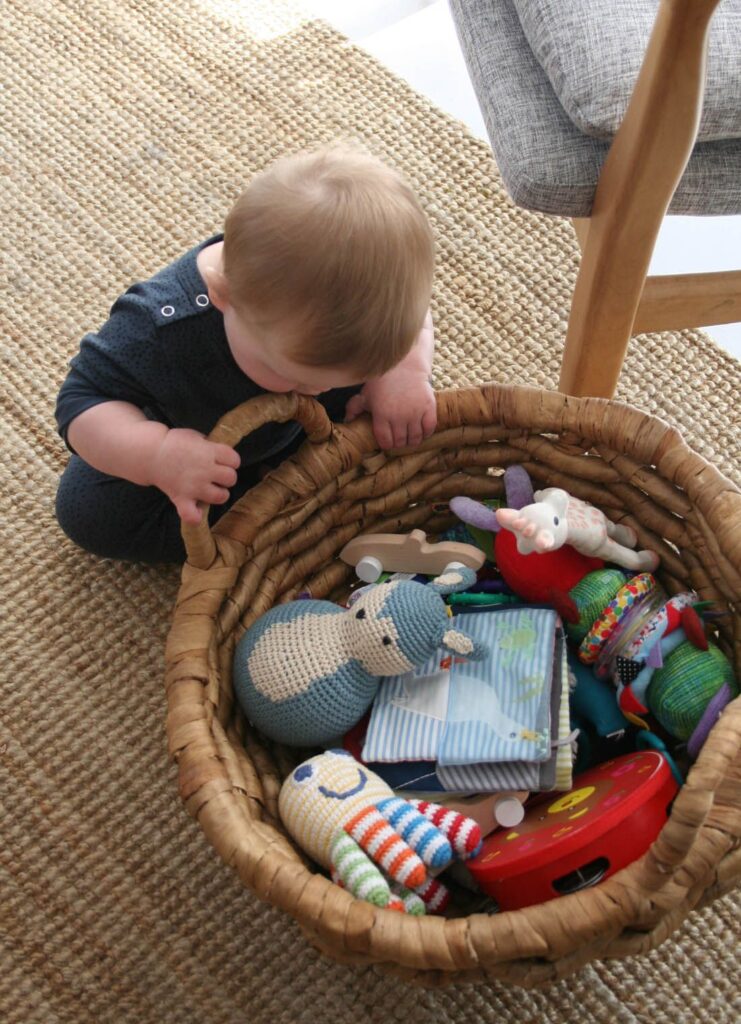
A discovery basket can keep a sitting baby interested without requiring you to constantly introduce something new.
Choose a shallow basket and add several large, baby-safe objects with different textures and shapes
A soft cloth, silicone spoon, large teether, fabric ball, or lightweight plastic cup can all provide something interesting to touch and investigate.
Place the basket within your baby’s reach and let them decide what to pick up first.
Your baby may remove every object from the basket. They may focus on one item for several minutes. They may even ignore the basket completely and become fascinated by something else.
That freedom to explore is part of what makes the activity useful.
Always check the objects carefully and avoid anything small enough to become a choking hazard.
2. Read a Sturdy Board Book Together
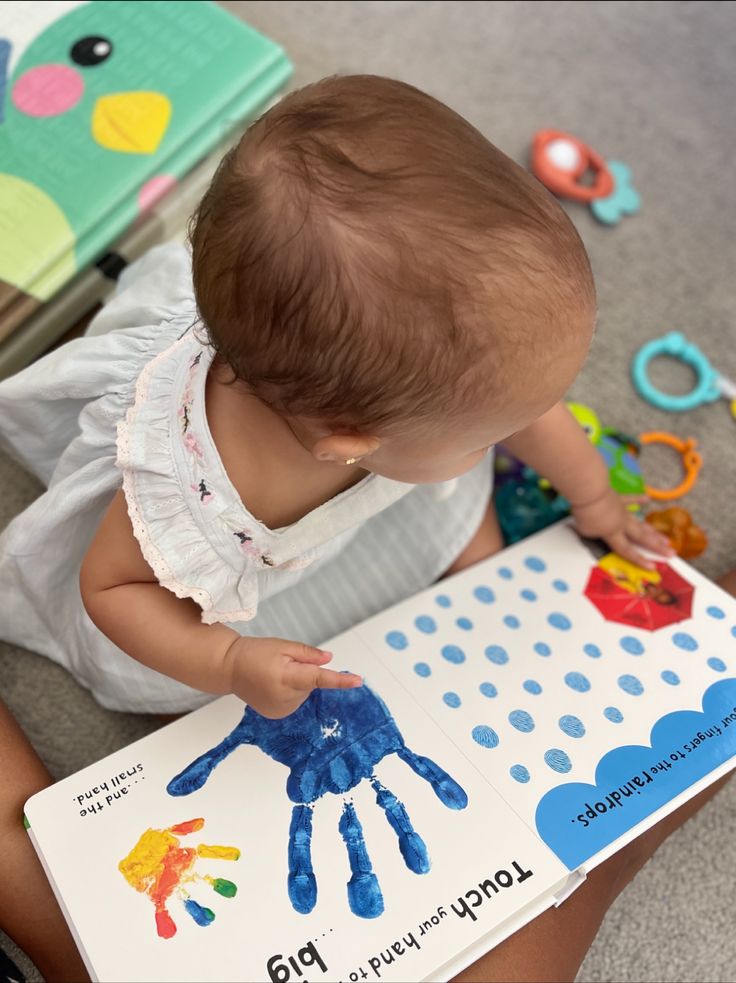
Sitting beside your baby with a board book can create a calm break between more active forms of play.
Choose a book with clear pictures and sturdy pages that can handle grabbing and turning.
Point to pictures and describe what you see in simple language. You do not need to read every word on every page.
Your baby may be more interested in touching the pages than listening to the story, and that is completely fine.
Choosing first books for little hands can make this activity easier because sturdy books allow babies to explore without you worrying about delicate pages tearing.
A few minutes of shared reading can be enough to make the experience enjoyable.
3. Sing and Use Simple Hand Movements
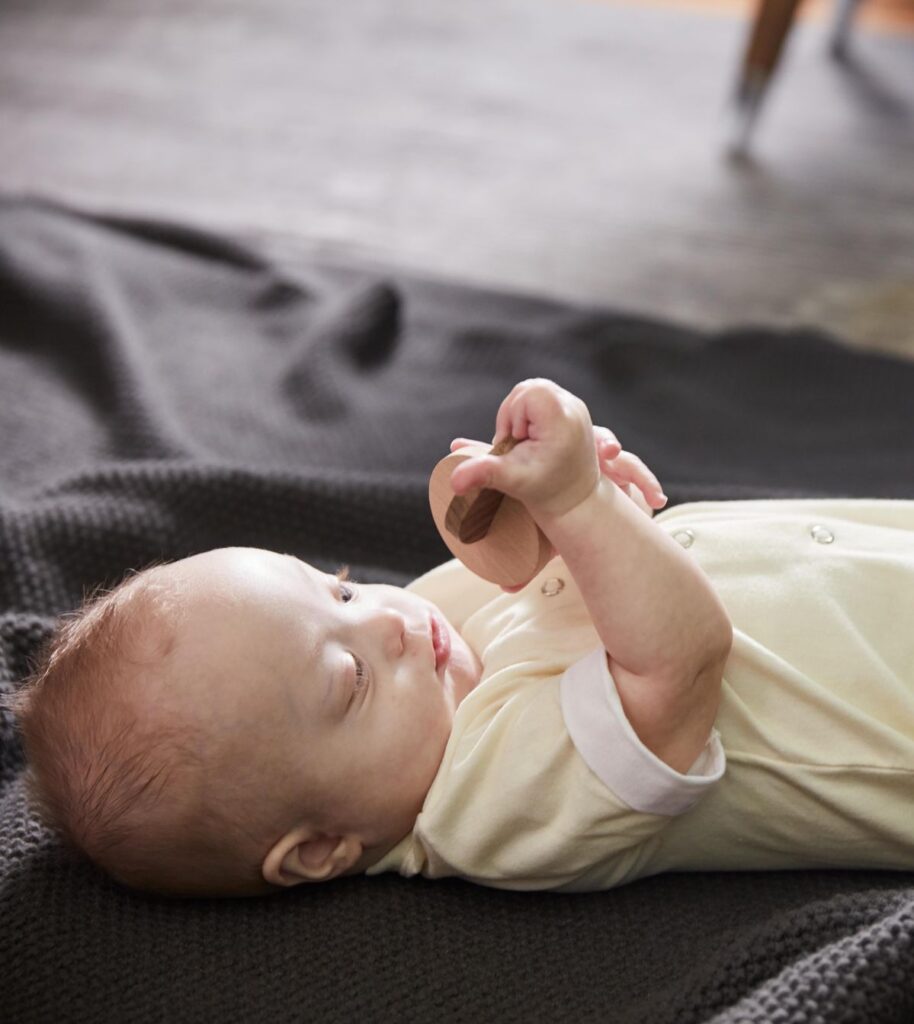
Sit facing your baby and sing a familiar song slowly.
Add simple movements such as clapping gently, waving, or raising your hands.
Your baby may watch your movements, smile, move their arms, or try to copy what you are doing.
You can use songs to sing with your baby as inspiration when you want to introduce something new without making playtime complicated.
The activity does not need to be loud or energetic. A calm song and your familiar voice can be enough to hold your baby’s attention.
4. Play With Soft Blocks
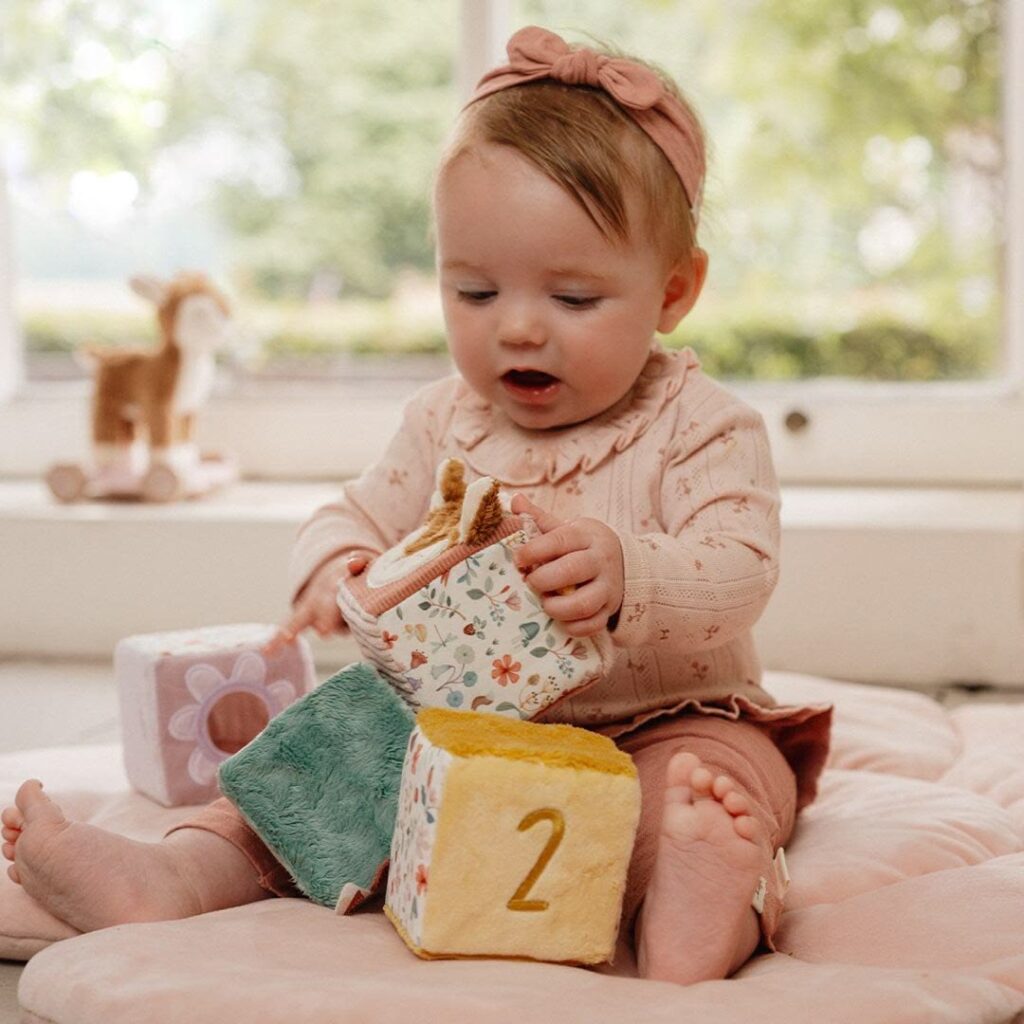
Place two or three soft blocks in front of your baby. Let them touch, hold, knock over, and move the blocks around.
You can stack one or two blocks and allow your baby to knock them down. Many babies enjoy watching something fall and may want you to repeat the action.
This is also a good opportunity to let your baby experiment with their hands without expecting a particular result.
Choose blocks that are appropriate for babies and do not have loose parts.
5. Try a Baby-Safe Mirror
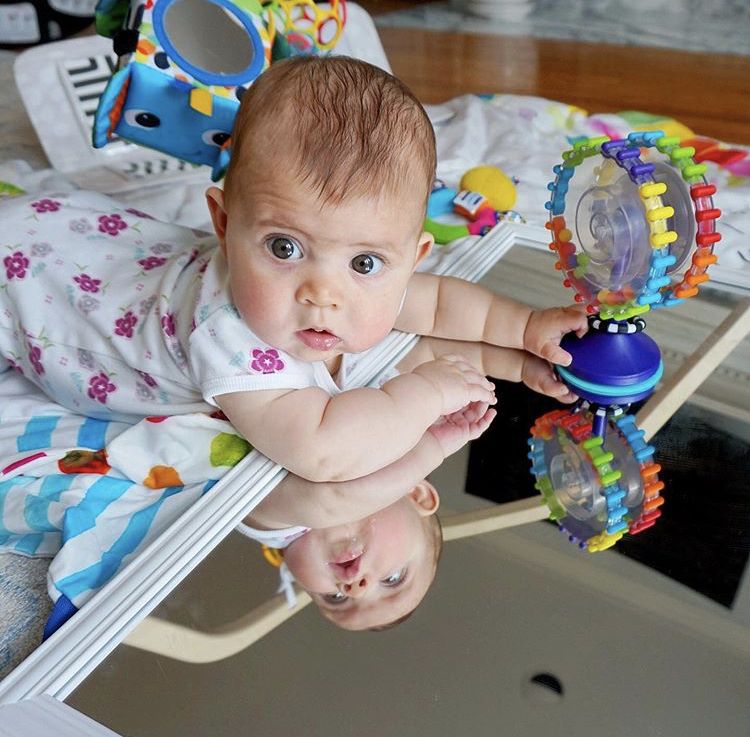
A securely positioned baby-safe mirror can be surprisingly interesting for a sitting baby.
Sit beside your baby and allow them to look at their reflection.
Smile, make simple facial expressions, or point towards the reflection while talking about what your baby can see.
Your baby may reach towards the mirror or look back at you to compare what they are seeing.
Use a mirror designed specifically for babies rather than an ordinary glass mirror.
6. Pass a Soft Ball Back and Forth
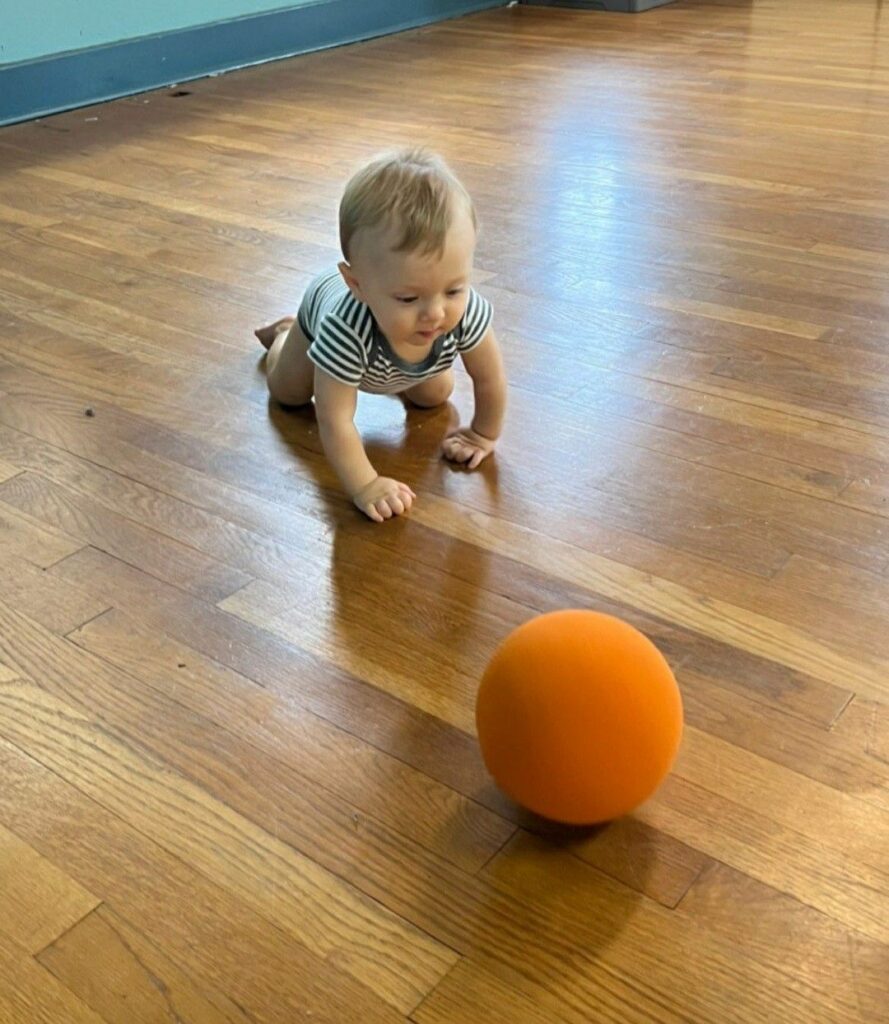
Sit facing your baby and slowly roll a large, soft ball towards them.
Give them time to reach for it.
They may grab it, push it away, or simply watch it move.
When they interact with the ball, gently roll it back towards yourself and repeat.
The movement can help your baby follow objects with their eyes while encouraging reaching and hand movements.
Keep the ball large enough that it cannot become a choking hazard.
7. Let Your Baby Explore Different Textures
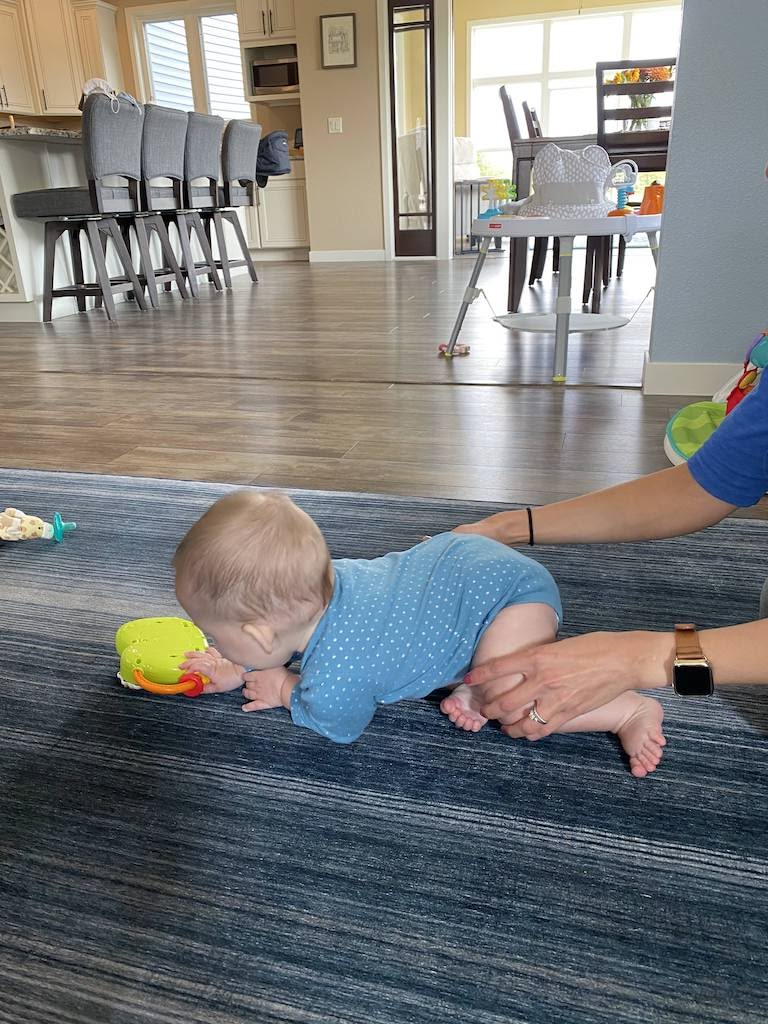
Place a few safe materials in front of your baby, such as a soft cloth, textured ball, smooth silicone toy, or clean fabric with a different feel.
Allow your baby to touch each item at their own pace.
There is no need to tell them how to explore.
This can be a gentle introduction to sensory play ideas by age, particularly when you choose experiences that match your baby’s current developmental stage.
Watch your baby closely because babies often explore objects with their mouths.
8. Make Gentle Music Together
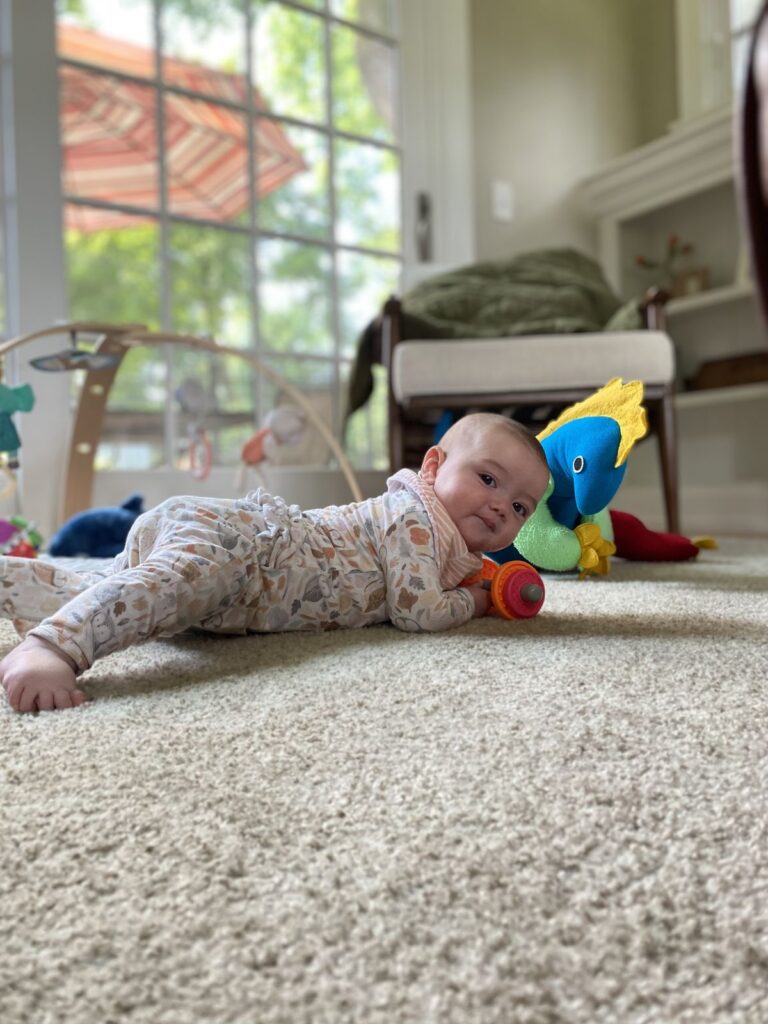
You do not need musical instruments to introduce your baby to sound.
A baby-safe shaker, a soft drum designed for infants, or two lightweight objects that make a gentle sound can be enough.
Let your baby hold or tap an appropriate instrument while you sit nearby. You can also clap along slowly.
This type of play can connect naturally with music activities for babies, especially as your child becomes more interested in making sounds independently.
Keep the environment calm and avoid loud noises that may overwhelm your baby.
9. Play Peekaboo
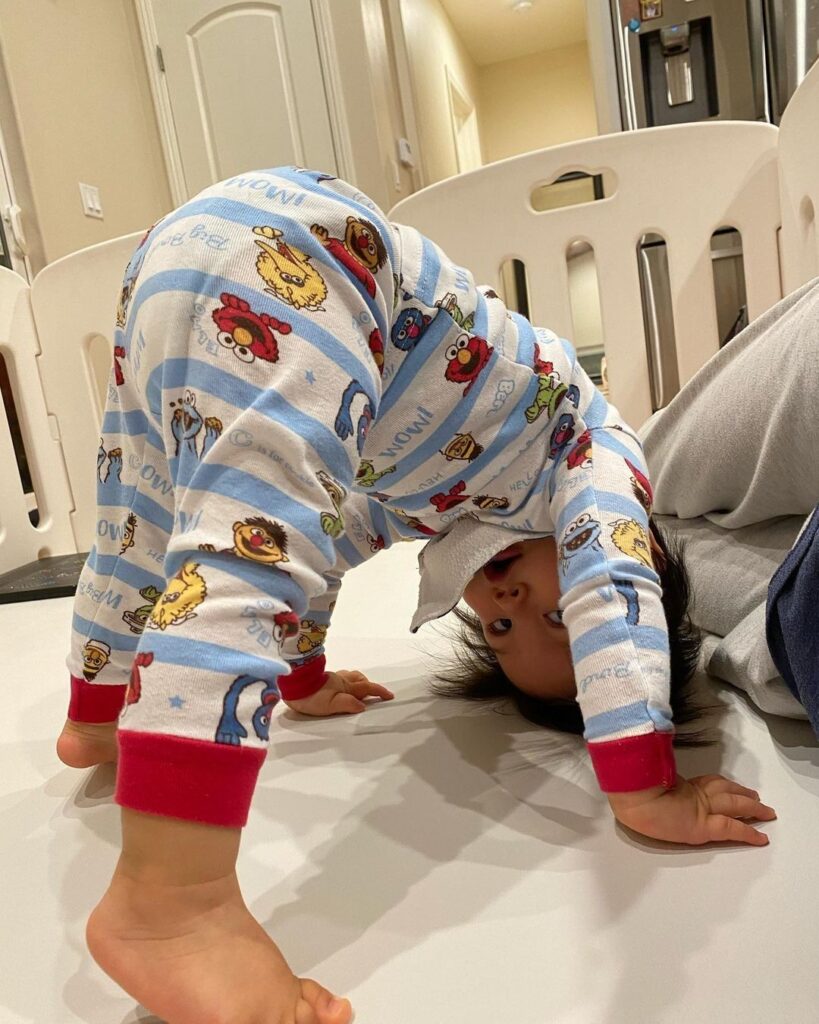
Peekaboo remains popular because it is simple and interactive. Cover your face briefly with your hands and then reveal yourself with a smile.
You can also use a lightweight cloth while making sure your baby is never left with it unsupervised.
Your baby may smile, laugh, or wait for you to repeat the game. You can keep the activity short and stop while your baby is still interested.
10. Offer a Large Stacking Cup
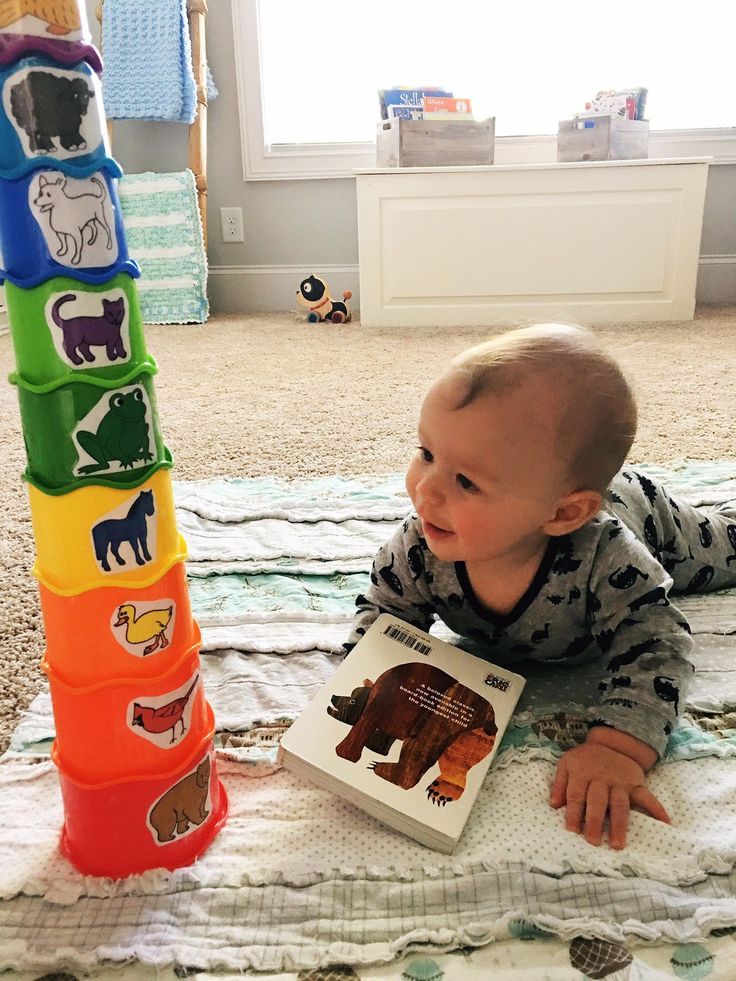
Give your baby one or two large, baby-safe stacking cups. At this stage, they may not be ready to build a tower, but they can still hold, turn, bang, and investigate the cups.
You can stack them for your baby and let them knock the tower over.Then pause and see if they want you to do it again.
Simple cause-and-effect activities like this can be more engaging than toys with many buttons or flashing lights.
11. Make a Family Photo Moment
Sit with your baby and look at printed family photographs or a baby-safe photo book. Point to familiar faces and say their names.
Your baby may recognise some of the people they see, particularly those they spend time with regularly.
You can talk about the pictures without expecting your baby to understand every word. The important part is the shared attention and familiar interaction.
Keep photographs out of your baby’s mouth and use a durable format whenever possible.
12. Explore a Treasure Cloth
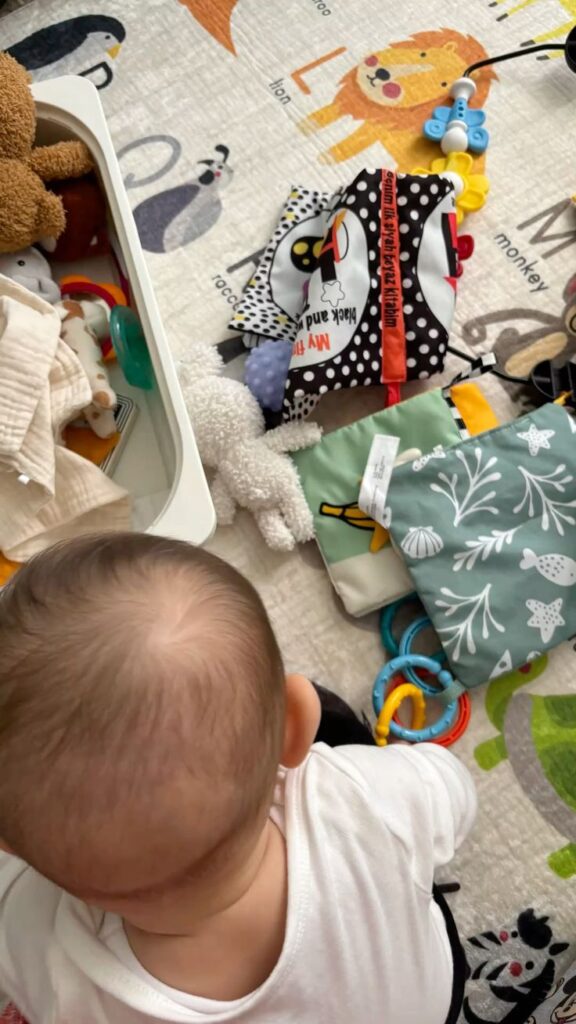
Place several large, safe objects inside a small basket and cover them lightly with a clean cloth.
Leave part of one object visible. Encourage your baby to pull the cloth back and discover what is underneath.
Your baby may reach for the visible object first or grab the cloth. This simple activity allows them to explore movement and discovery without creating a complicated game.
13. Blow Gentle Bubbles

Blow a few bubbles in front of your baby while they sit safely with you nearby. Watch their reaction as the bubbles float through the air.
Your baby may follow them with their eyes, reach towards them, or smile when they disappear.
Keep the bubbles away from your baby’s face and mouth, and use a baby-appropriate bubble solution.
You can stop after a few moments if your baby becomes overstimulated.
14. Try Simple Taste-Safe Exploration
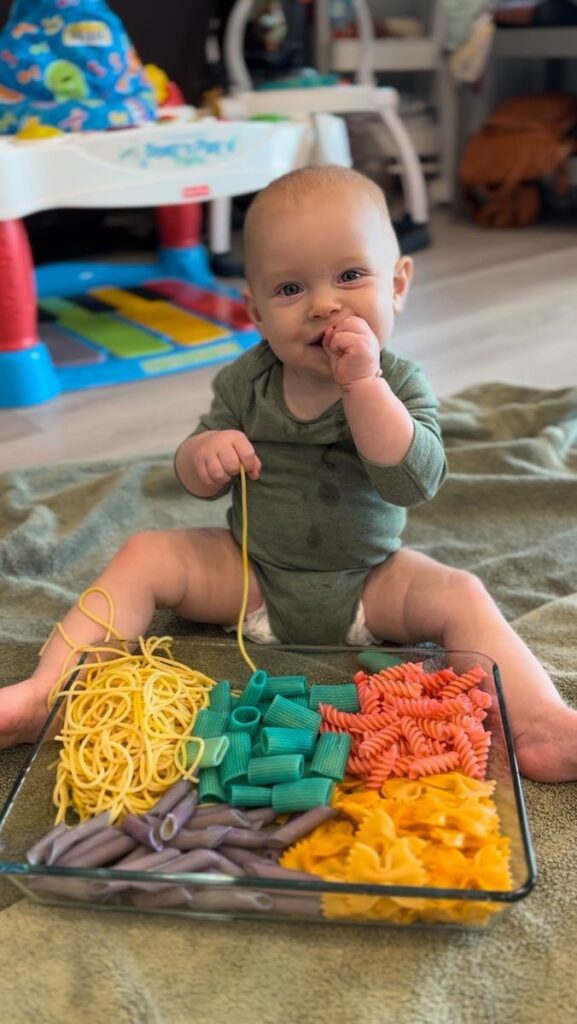
Babies often want to investigate objects with their mouths, which is why sensory activities at this stage require extra care.
You can introduce carefully supervised taste-safe sensory play for babies using materials that are appropriate for your baby’s age and safe to explore.
Always stay with your baby and consider their individual feeding stage and abilities.
Avoid assuming that something is safe simply because it is edible. Some foods can still create choking risks or may not be appropriate for your baby’s developmental stage.
15. Explore a Soft Sensory Bottle
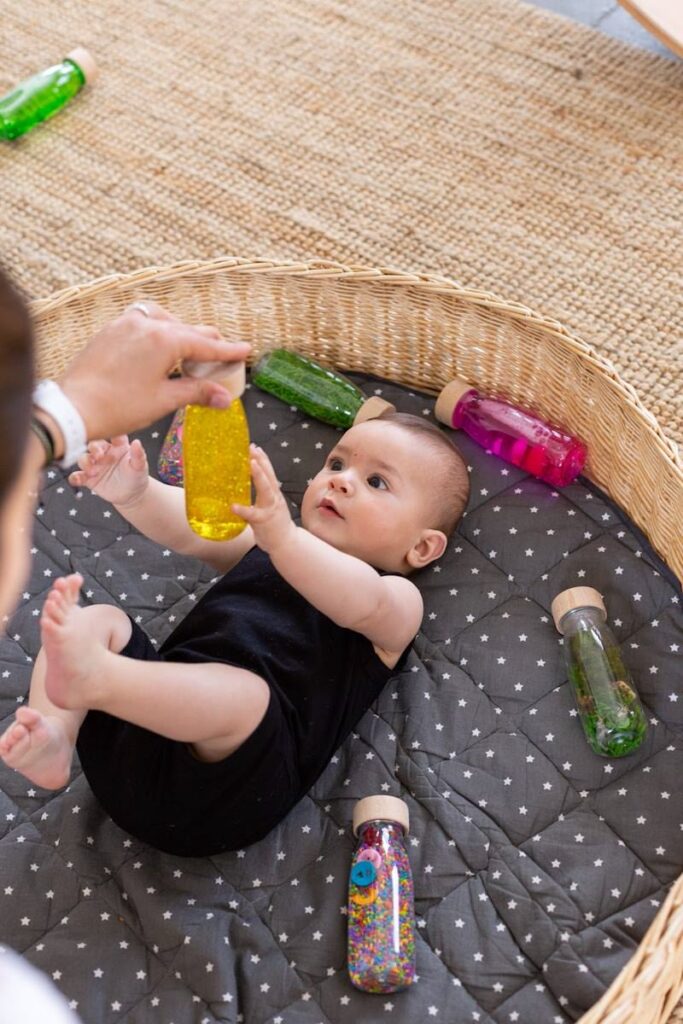
A securely sealed sensory bottle can give your baby something interesting to watch.
Choose a bottle specifically prepared for sensory play and make sure the lid is tightly secured.
Your baby can hold the bottle, turn it, and watch the contents move. Keep the bottle lightweight and inspect it regularly for leaks or damage.
This is a quieter activity that may work well when your baby wants something interesting without too much movement.
16. Make Funny Facial Expressions
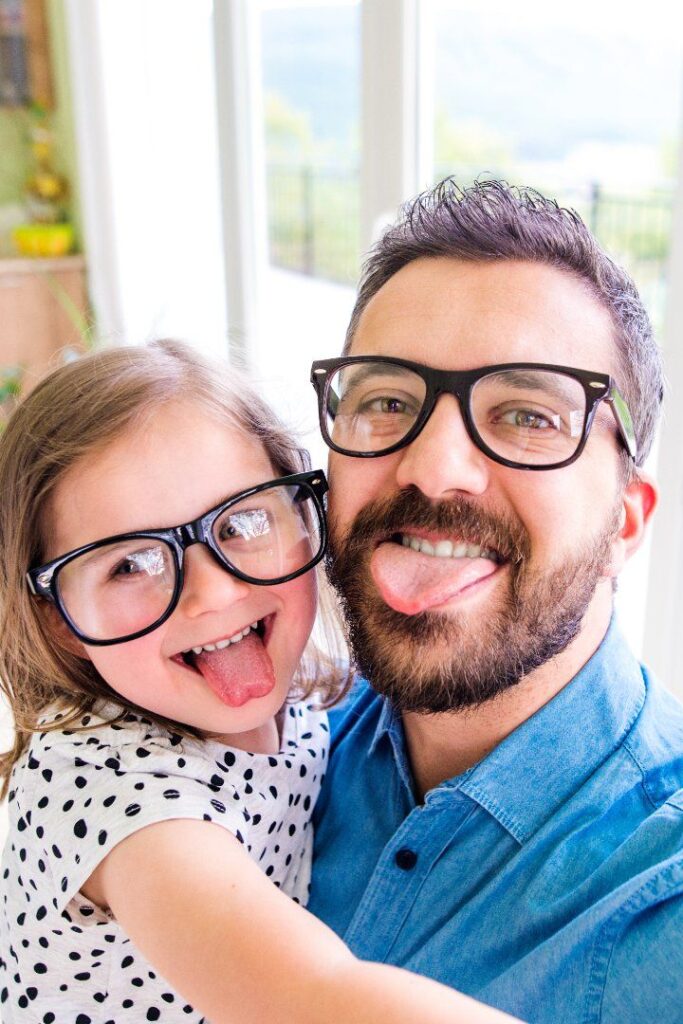
Sit directly in front of your baby and make a few simple facial expressions.
Smile widely, raise your eyebrows, open your mouth in surprise, or gently stick out your tongue.
Pause after each expression and watch how your baby responds. Some babies will stare closely. Others may smile or attempt to copy your movements.
This activity requires nothing except your attention and can become a lovely moment of interaction.
17. Explore a Simple Activity Tray
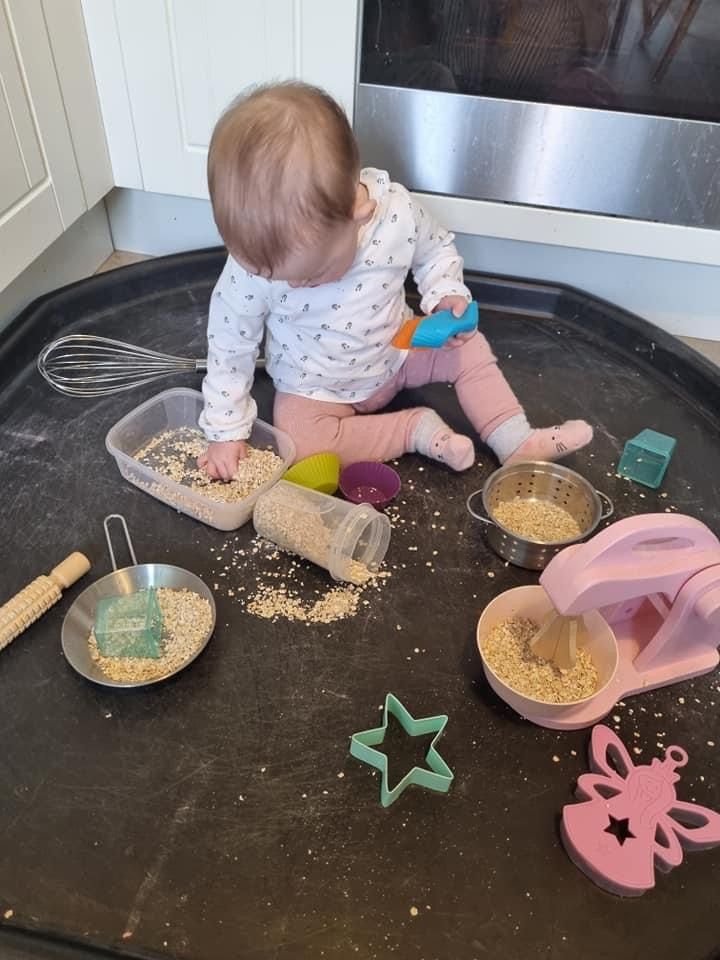
Place two or three safe objects on a low tray in front of your baby. You might include a soft toy, a large cup, and a teether.
Keep the number of objects small so your baby does not become overwhelmed. Let them choose what to explore.
You can change the items occasionally rather than constantly introducing new toys.
This type of calm play can work alongside easy sensory activities at home when you want simple options that do not require much preparation.
18. Tap and Listen
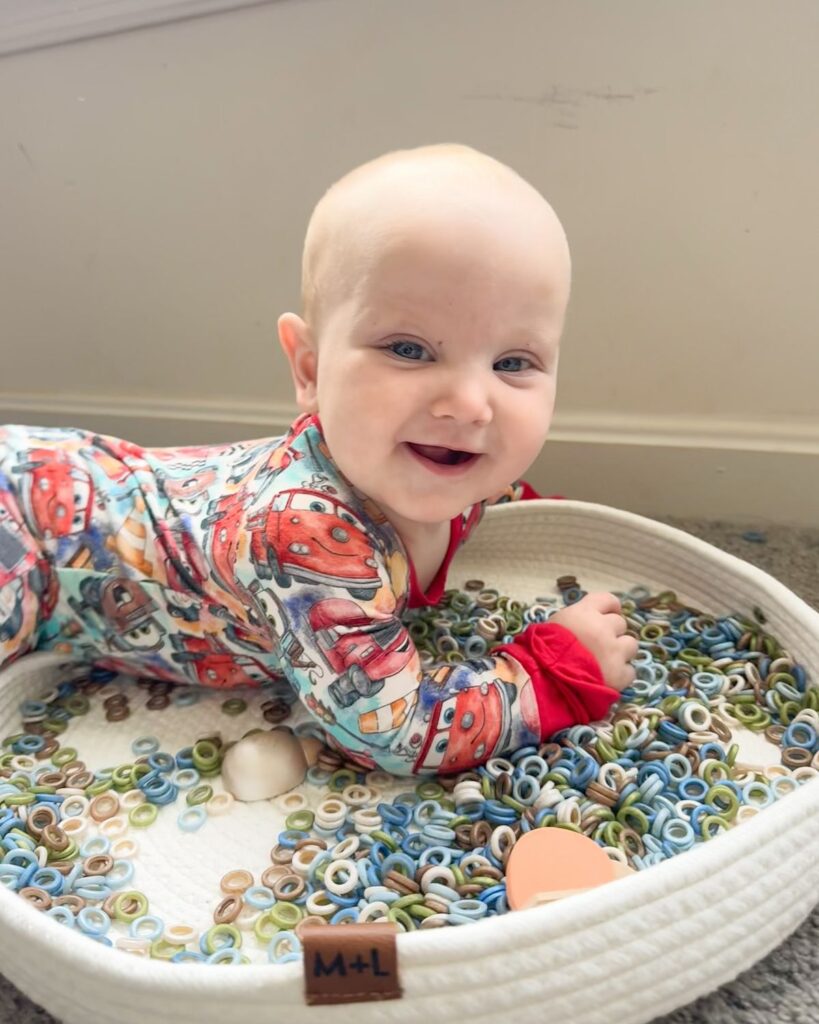
Give your baby a lightweight object that makes a gentle sound when tapped against another safe surface.
You can demonstrate once and then allow your baby to experiment. They may tap the object repeatedly or simply hold it.
Try not to take over the activity. Your baby is learning through their own exploration, even when the result looks simple.
Stay nearby and make sure the objects are safe for mouthing.
19. Play With a Favourite Soft Toy
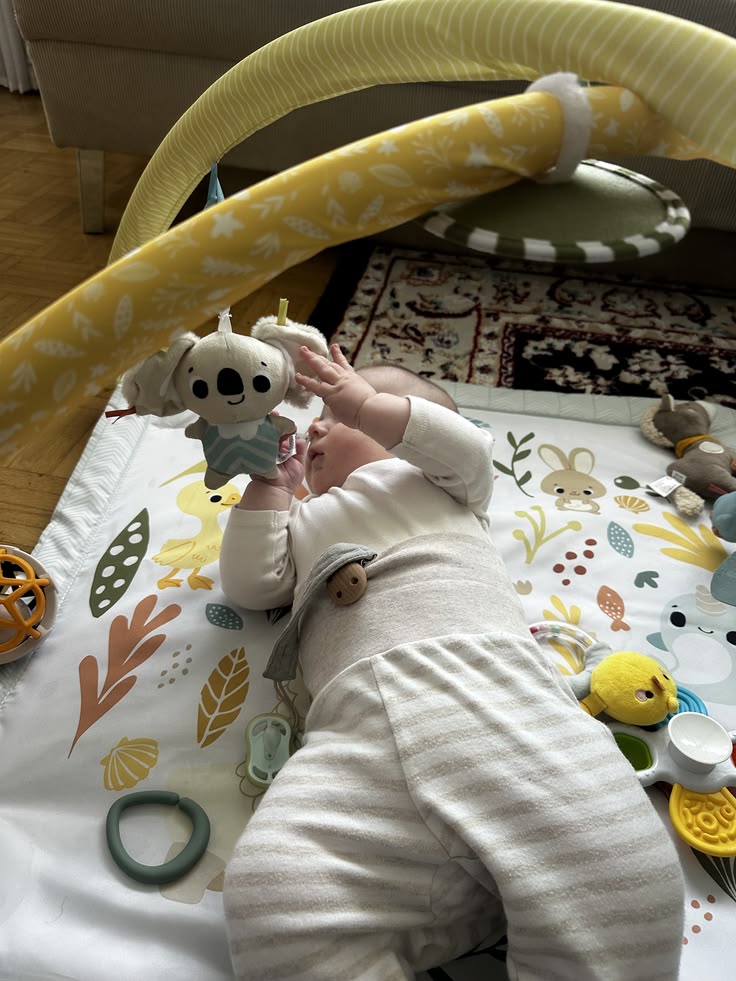
Sometimes the best activity is simply spending time with a familiar toy. Place your baby’s favourite soft toy in front of them and let them touch, hold, hug, or investigate it.
You can talk about the toy or make simple sounds. If your baby loses interest, there is no need to force them to continue.
The goal is relaxed play, not keeping your baby occupied for a specific amount of time.
20. Sit Outside and Observe
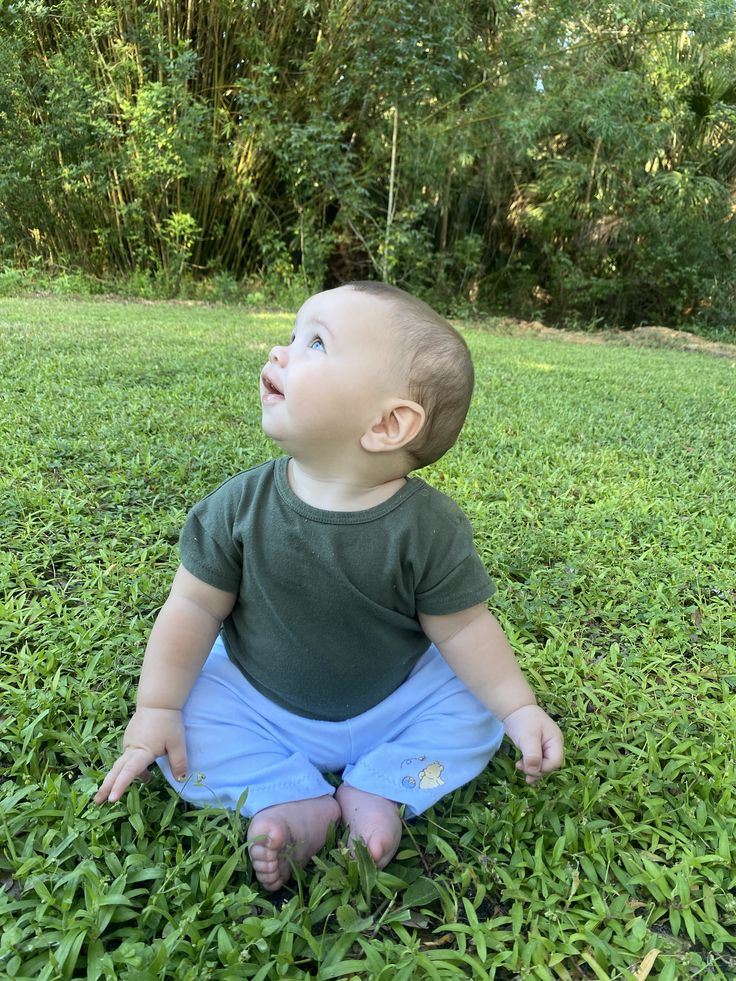
If conditions are suitable, sit with your baby in a safe outdoor area and simply observe what is happening around you.
Your baby may notice birds, trees moving, people walking, or new sounds.
You do not need to turn the outing into a structured activity.
Quiet observation can introduce your baby to the outside world while connecting with nature walk ideas for babies that can become useful as your child grows.
Keep your baby protected from unsafe weather conditions and stay close at all times.
21. Hide a Toy Partly Under a Cloth
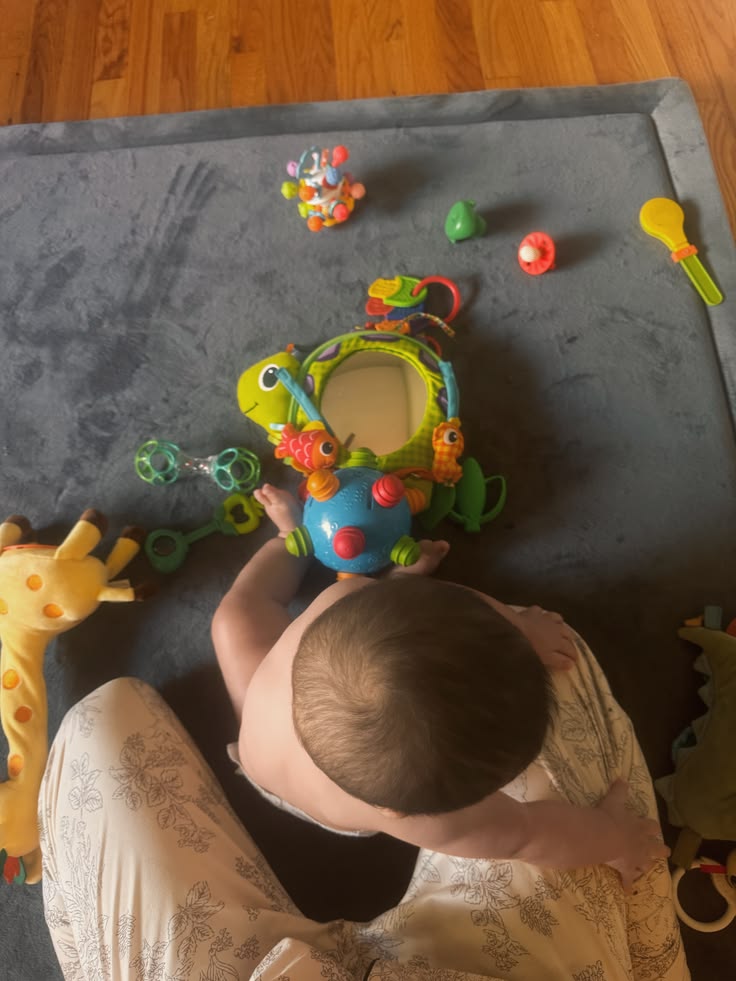
Place a favourite toy under a lightweight cloth, leaving a small part visible. Your baby may reach for the toy or pull the cloth.
Give them time to investigate without immediately showing them the answer. This activity introduces a simple sense of discovery.
Keep the cloth lightweight and supervise your baby closely throughout the activity.
22. Copy Your Baby’s Sounds
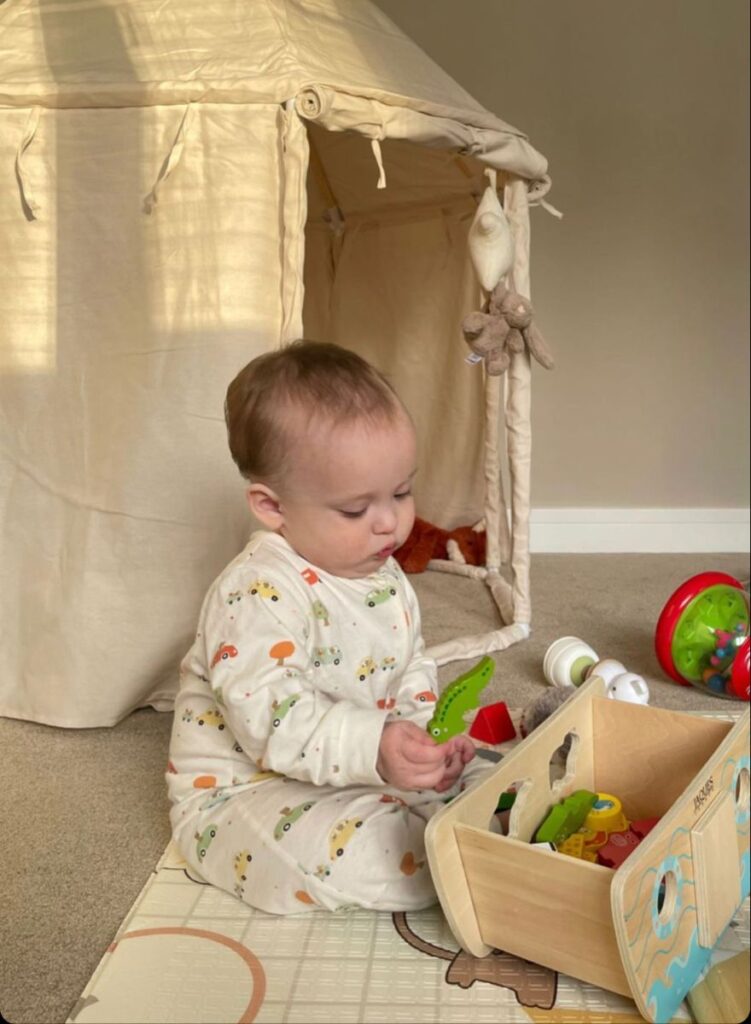
When your baby babbles, respond by copying the sound back to them. Then pause.
Your baby may make another sound, giving you another opportunity to respond. This can feel like a playful exchange between you and your baby.
You can also add a few simple words, but there is no need to turn it into a language lesson.
Following your baby’s sounds helps make the interaction feel natural and responsive.
23. Give Your Baby Time for Quiet Independent Play
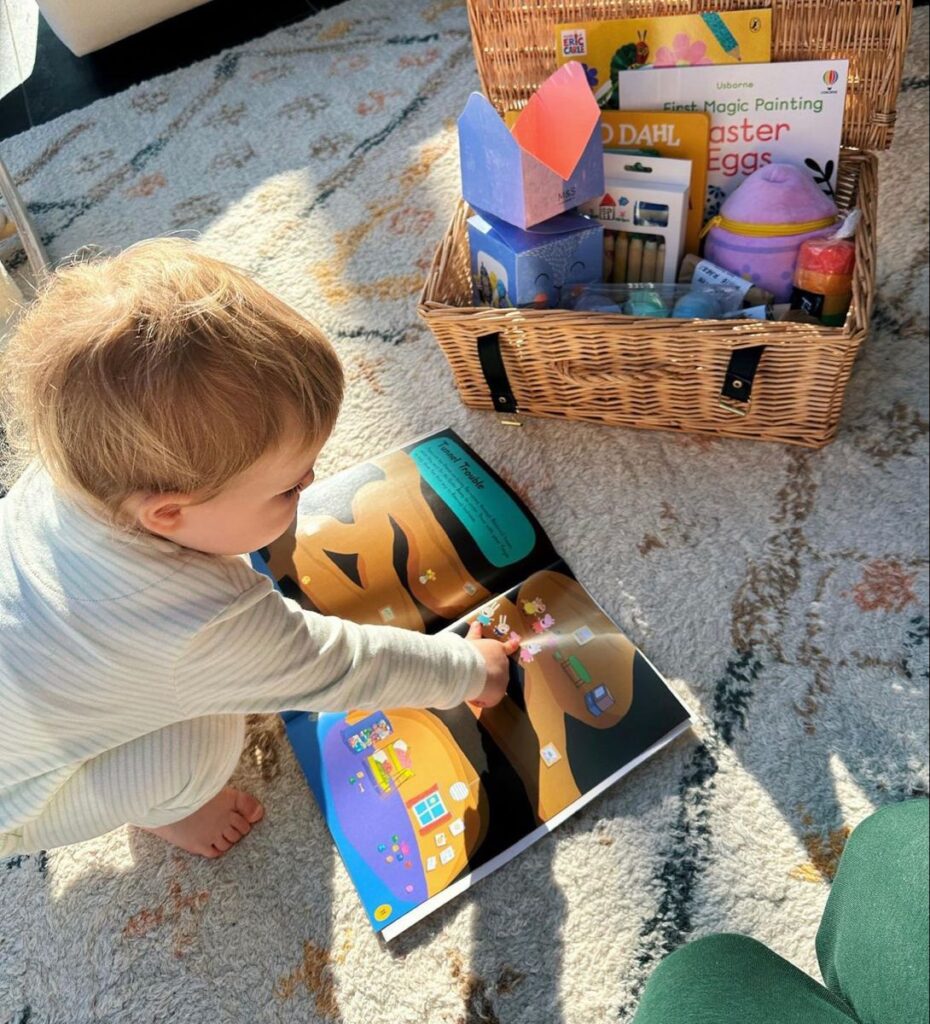
Not every activity needs your direct involvement.
Once you have created a safe space, sit close enough to supervise while allowing your baby to explore a few appropriate toys independently.
They may pick something up, drop it, examine it, and move on to something else. You can watch without constantly interrupting.
Independent exploration can help your baby become comfortable spending short periods focused on their own interests while knowing you are nearby.
As your baby’s mobility increases, their interests will naturally change. Activities that work well while sitting may eventually lead into safe activities for crawling babies when they become ready to move around more independently.
Making Playtime Feel Calm and Enjoyable
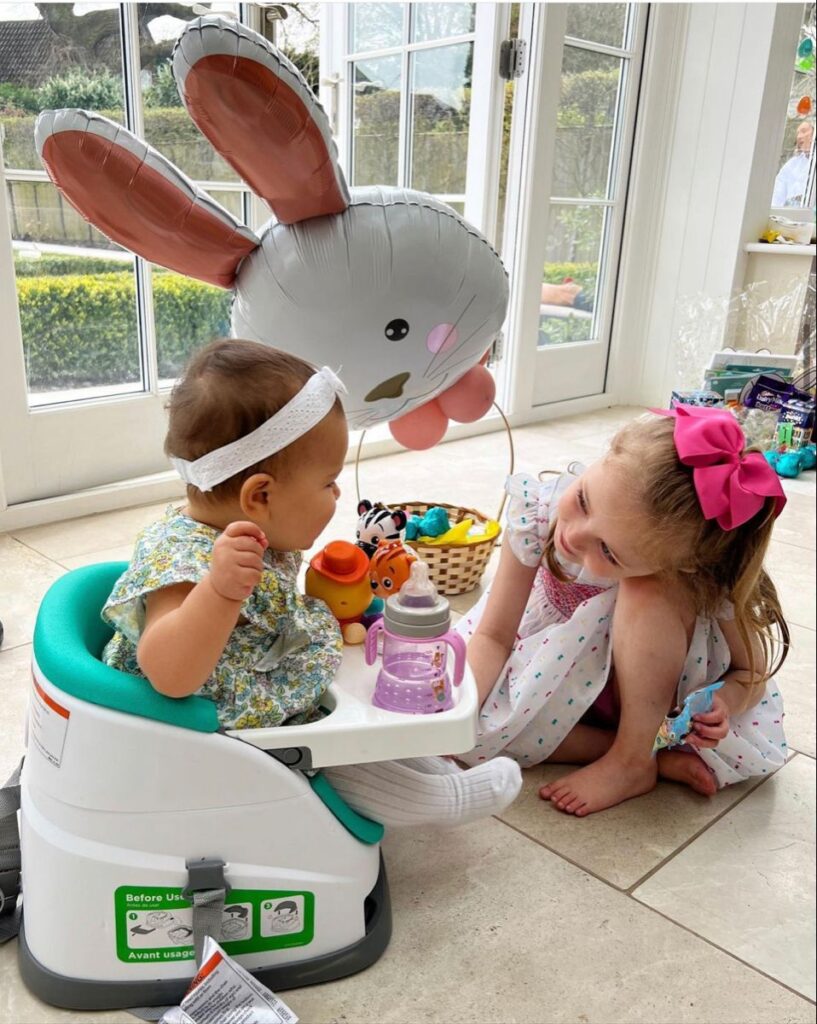
The sitting stage can be exciting because your baby is becoming more independent, but there is no need to fill every moment with a planned activity.
Your baby also needs time to rest, observe, cuddle, and simply take in what is happening around them.
Pay attention to their mood.
A baby who is tired, hungry, uncomfortable, or overstimulated may not enjoy an activity that they usually love. Sometimes the best choice is to stop and try again later.
You can rotate these activities rather than doing them all at once.
A few minutes of reading in the morning, some gentle music later in the day, and quiet independent play before bedtime can be more than enough.
As your baby continues developing, you will notice new interests and abilities appearing naturally. The activities you choose can grow alongside them.
The most meaningful play does not have to involve expensive toys or a perfectly organised routine. Your presence, a safe environment, and a little room for exploration can give your baby exactly what they need.
Let play remain simple. Follow your baby’s pace, enjoy the small moments together, and remember that there is no pressure to turn every day into a lesson.