

Best Play Activities for Newborn Babies
Disclosure: Some of the links in this post are affiliate links. This means if you click on the link and purchase an item, I will receive an affiliate commission at no extra cost to you.
Newborn babies don’t need complicated toys, elaborate playrooms, or hours of structured activities. In the first weeks of life, play is mostly about connection, movement, sounds, faces, and discovering the world around them.
A newborn may spend much of the day sleeping, feeding, and being cared for. During short periods when your baby is awake and comfortable, simple interactions can provide opportunities to look, listen, move, and respond.
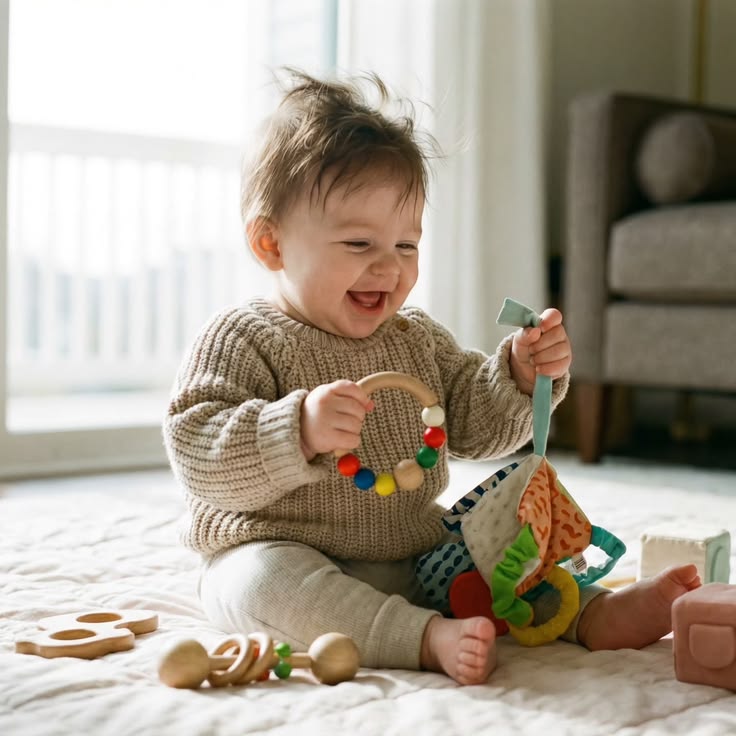
Something as ordinary as talking to your baby while changing a diaper can become a play experience.
Singing during a cuddle, making different facial expressions, or allowing your baby to look at a colorful object can all encourage early interaction.
The best approach is to keep activities short, gentle, and appropriate for your baby’s age and state of alertness.
A newborn who is hungry, tired, overstimulated, or uncomfortable probably isn’t looking for a game. A calm, alert baby may be much more interested in your face, your voice, or something interesting nearby.
If you’re following a newborn milestones: what to expect in the first month guide, you’ll quickly notice that newborn development happens in small steps. Play should follow those changes rather than expecting your baby to do things they aren’t ready for.
What Play Looks Like for a Newborn
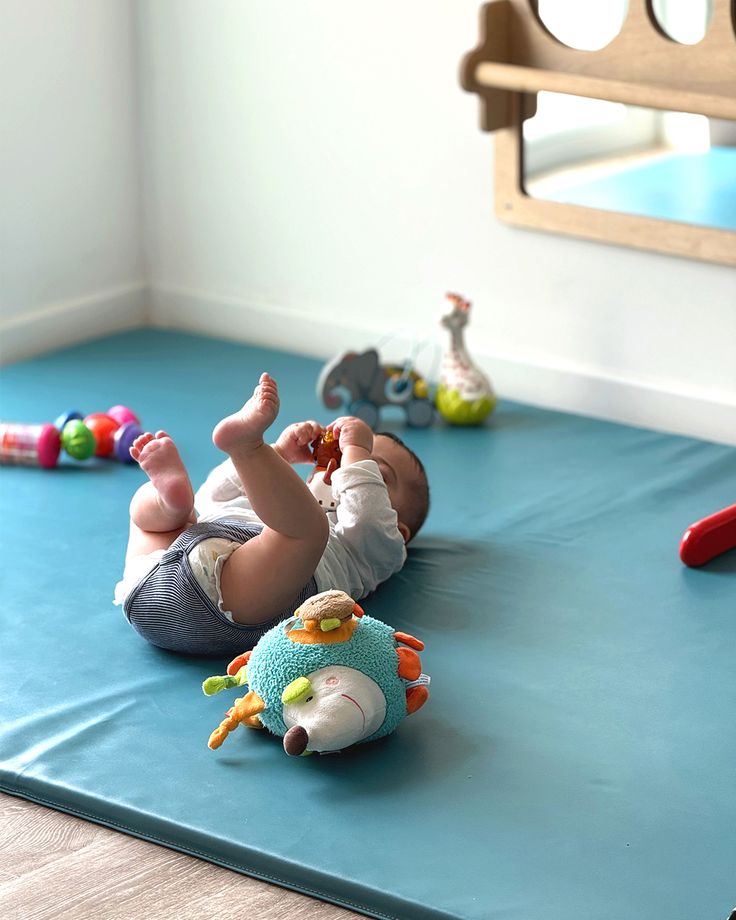
Play with a newborn doesn’t look like play with an older baby.
Your newborn isn’t going to crawl toward a toy, stack blocks, or play independently for long periods. Instead, early play is largely based on sensory experiences and interaction with caregivers.
Your baby may watch your face while you talk.
They may turn toward your voice.
They may briefly follow an object with their eyes.
They may move their arms and legs.
They may make small sounds in response to you.
They may become quiet and attentive when something catches their interest.
All of these moments can be part of play.
Rather than thinking about play as entertaining your baby, think of it as giving your baby opportunities to notice and respond to the world.
This makes everyday caregiving surprisingly valuable. Feeding, dressing, cuddling, bathing, and changing can all contain small moments of interaction.
Face-to-Face Play
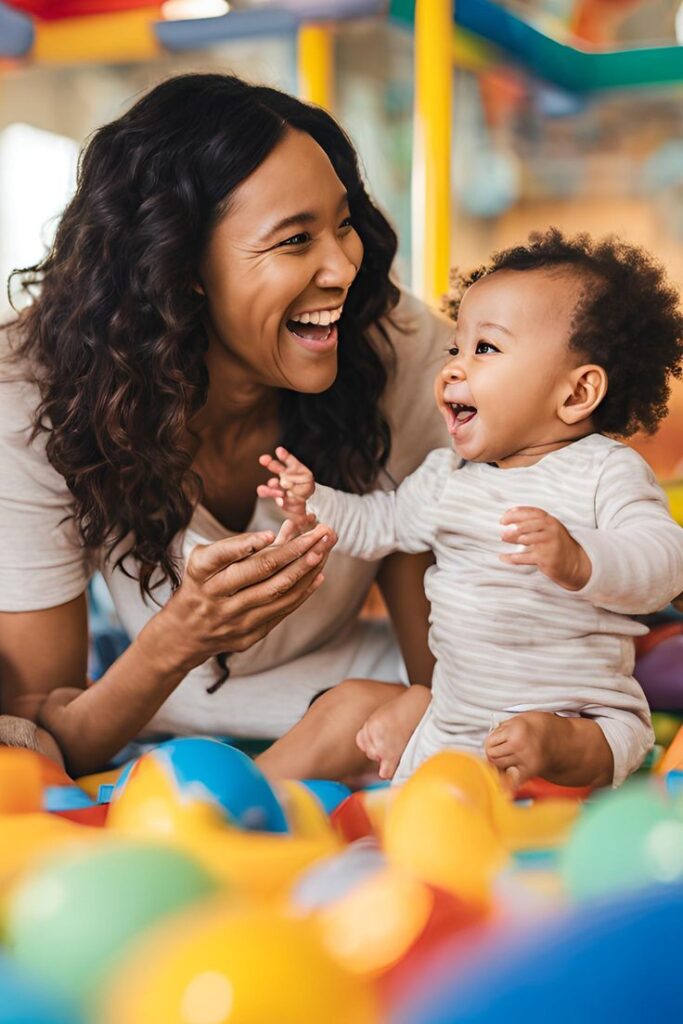
Your face is one of the most interesting things your newborn can look at.
During a calm, awake period, hold your baby securely and position your face where they can comfortably see you. Talk softly, smile, and make simple facial expressions.
You don’t need to perform an entire routine.
Simply pause and give your baby time to look at you.
You might raise your eyebrows, smile, open your mouth, or gently stick out your tongue. Your baby may stare, move their eyes, make a sound, or simply remain quiet.
Follow their response.
If they continue looking, keep interacting. If they turn away, give them a break.
This kind of face-to-face interaction can become one of your easiest simple bonding activities for newborns because it requires no equipment and can happen almost anywhere.
Talking to Your Baby
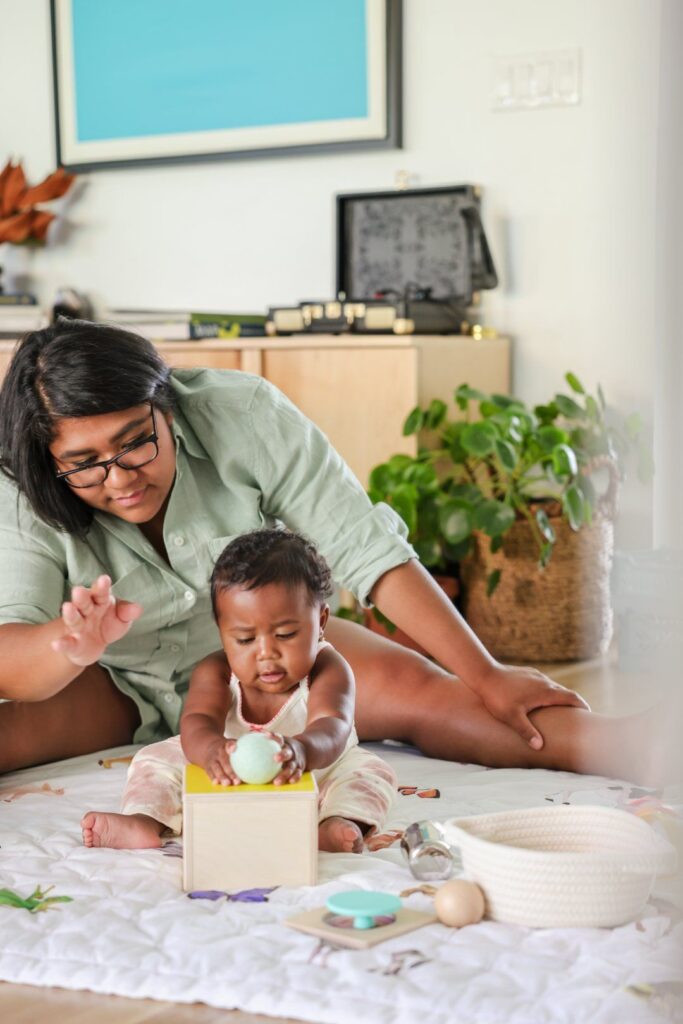
Newborns may not understand your words yet, but talking gives them valuable exposure to language.
You can describe what you’re doing throughout the day.
“Now we’re changing your diaper.”
“Let’s put on your little shirt.”
“Here comes your bath.”
“You’re looking at Mommy.”
You can also talk about things around the room.
There is no need to use complicated vocabulary or create a special lesson.
Your baby benefits from hearing the rhythm and variety of your voice.
Pause occasionally as though you’re having a conversation. Your baby may respond with a facial expression, movement, or sound.
Those early exchanges can become more interactive as your baby’s communication skills develop.
For parents interested in educational activities for babies from birth to one year, talking is one of the simplest activities to start immediately.
Singing to Your Newborn
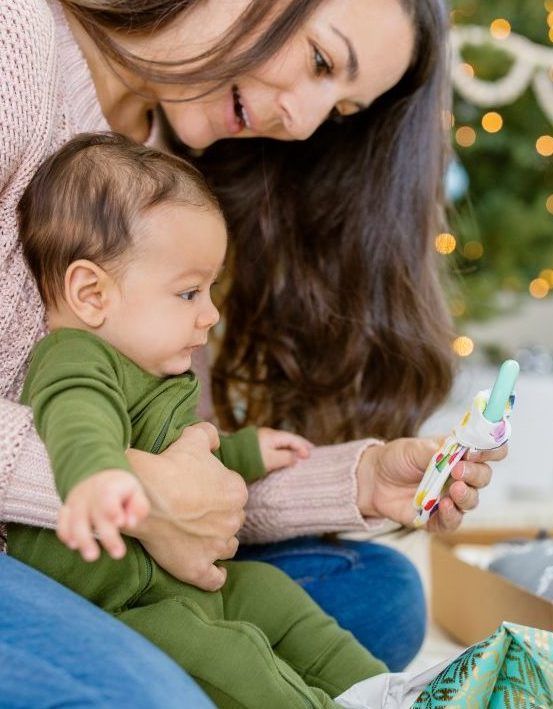
Babies often respond to changes in rhythm and tone, which makes singing a natural addition to newborn play.
You don’t need a beautiful singing voice.
Your baby is familiar with your voice, so even simple songs can become comforting and engaging.
You can sing during cuddles, diaper changes, feeding breaks, or while gently rocking your baby.
Try repeating the same song regularly. Your baby may eventually become familiar with its rhythm and sound.
You can also combine singing with gentle movement, such as slowly moving your baby’s hands while you sing.
If you want more ideas, best songs to sing to your baby can give you a starting point for building a simple music routine.
Reading a Short Book Together
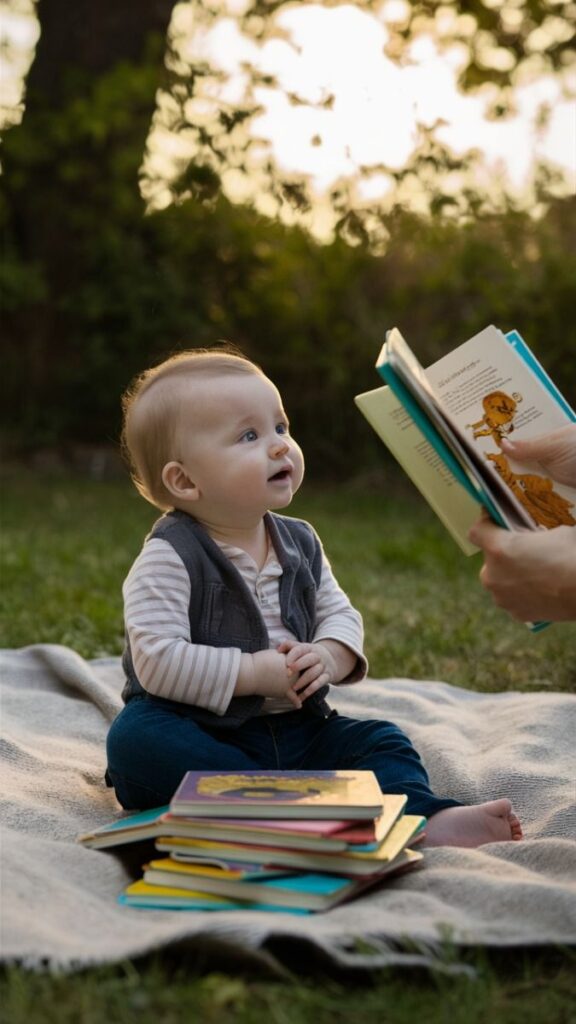
Reading is another easy newborn activity.
Your baby doesn’t need to understand the story. At this stage, the experience is primarily about hearing your voice, looking at pictures, and sharing an interaction with you.
Choose books with simple images, clear shapes, faces, or high-contrast designs. Hold the book where your baby can comfortably see it and talk about what you notice.
You don’t even have to finish the book.
If your baby becomes interested in one picture, spend time there.
If they turn away, stop and try again later.
Reading can eventually become part of a longer family habit, and early exposure makes books a familiar part of your baby’s environment.
Parents building a small home library may want to explore best first books for babies when choosing simple books for the earliest months.
High-Contrast Picture Play
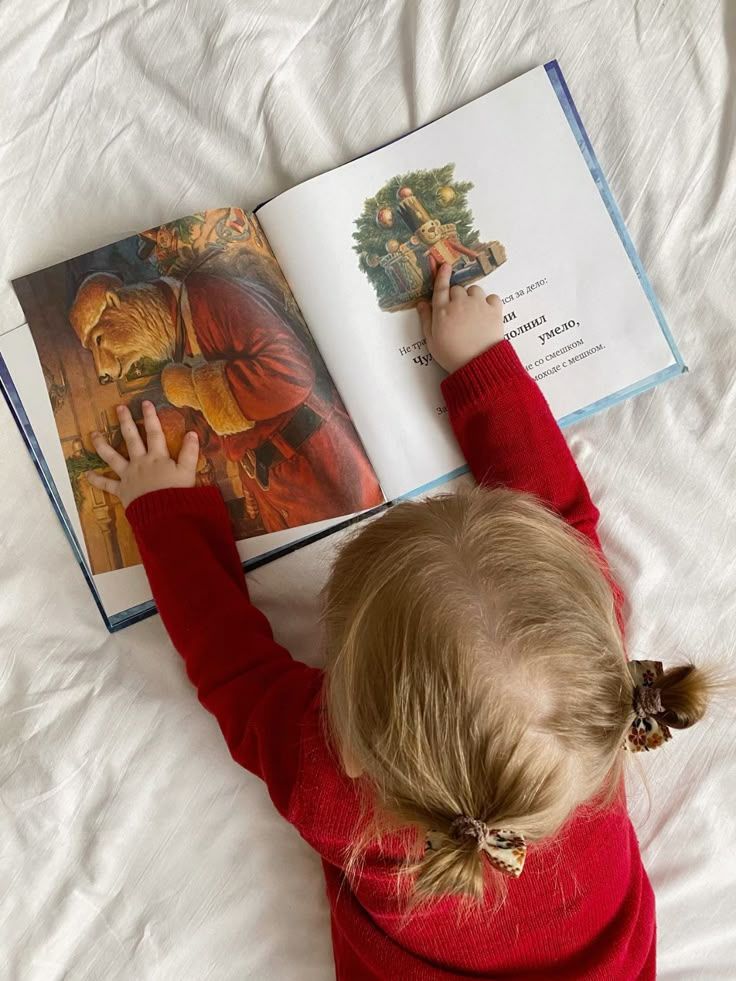
Newborn vision is still developing, so simple high-contrast images can be easier for some babies to notice than complicated pictures.
You can use a high-contrast board book or baby-safe image and place it at an appropriate distance while your baby is awake and supervised.
Move it slowly from one side to another and watch whether your baby attempts to follow it with their eyes.
Keep the movement gentle.
You aren’t testing your baby’s eyesight or trying to make them track an object for a specific amount of time.
The activity is simply an opportunity to look.
If your baby loses interest, move on to something else.
Gentle Tummy Time

Tummy time is an important opportunity for babies to practice movement and develop strength while awake and supervised.
For a newborn, tummy time may begin with very short periods.
You can place your baby on a firm, safe surface while they are awake and remain close by. You can also get down at their level and talk to them.
Your face can become the “toy.”
A high-contrast picture can give them something interesting to look toward.
Your voice can encourage them to lift or turn their head.
Don’t worry if your newborn doesn’t seem to enjoy tummy time immediately. Some babies need time to become comfortable with the position.
Keep sessions brief and follow your baby’s cues.
Tummy time should always be supervised, and babies should be placed on their backs for sleep.
Chest-to-Chest Interaction
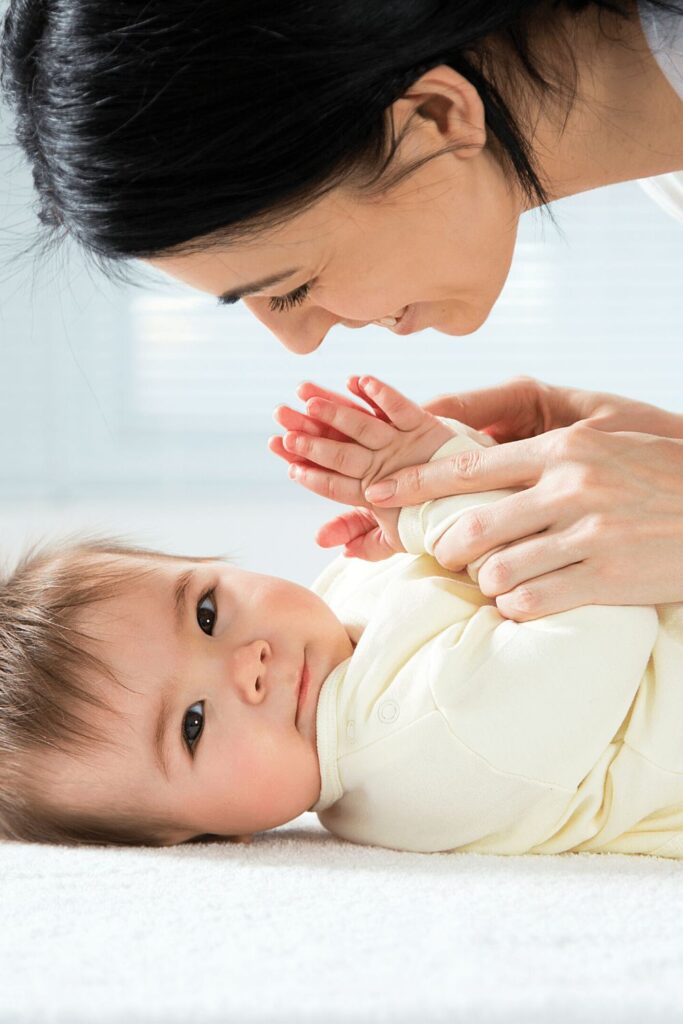
You can turn quiet cuddling into a simple play experience by positioning your baby safely against your chest while talking or singing.
Your baby can hear your voice and experience your presence while you interact. You might gently describe what you’re doing, sing a familiar song, or simply talk about your day.
This can be especially useful when your baby isn’t interested in more active play.
Not every developmental activity needs to involve a toy. Sometimes your voice and physical presence are enough.
Gentle Movement Games
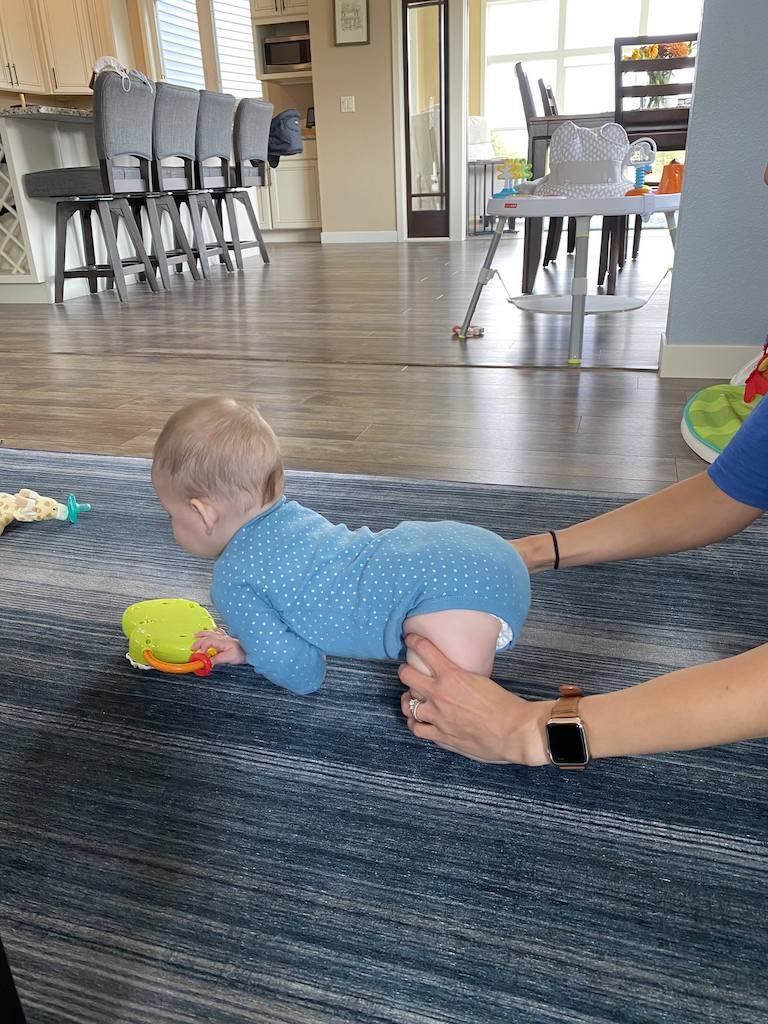
Newborns naturally move their arms and legs, and you can make those movements part of a simple interaction.
While your baby is awake and comfortable, you can gently move their arms or legs through small, natural movements without forcing a range of motion.
For example, you might gently move their hands toward the center of their body while talking or singing.
You can also simply place your hands nearby and allow your baby to move independently.
The goal is not exercise. It is awareness.
Your baby is gradually learning about their own body and how movement feels. If your baby resists a movement, stop rather than trying to continue.
Bicycle Legs
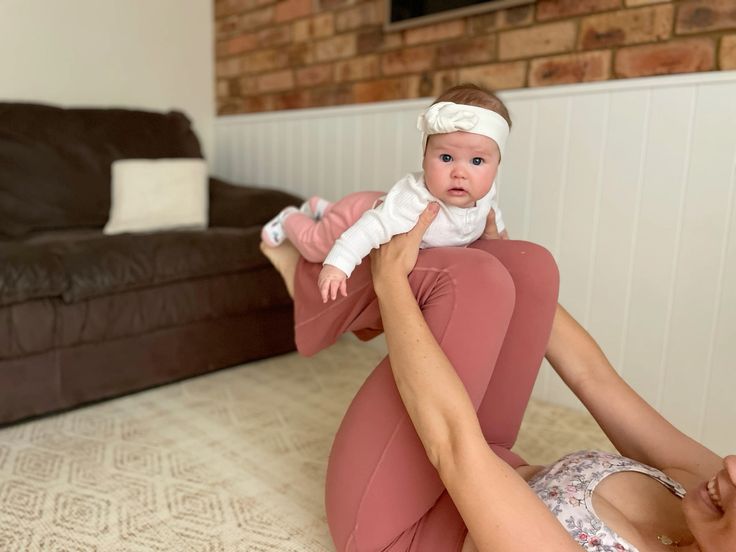
Some parents enjoy gentle bicycle-leg movements as an interactive game.
With your baby lying safely on their back while awake, you can gently move their legs in an alternating cycling motion.
Keep the movement slow and comfortable. Never force your baby’s legs into a position or continue if they seem uncomfortable.
You can talk or sing while doing it, turning a simple movement into a social interaction.
This is a good example of how an ordinary physical interaction can become playful without requiring special equipment.
Mirror Exploration
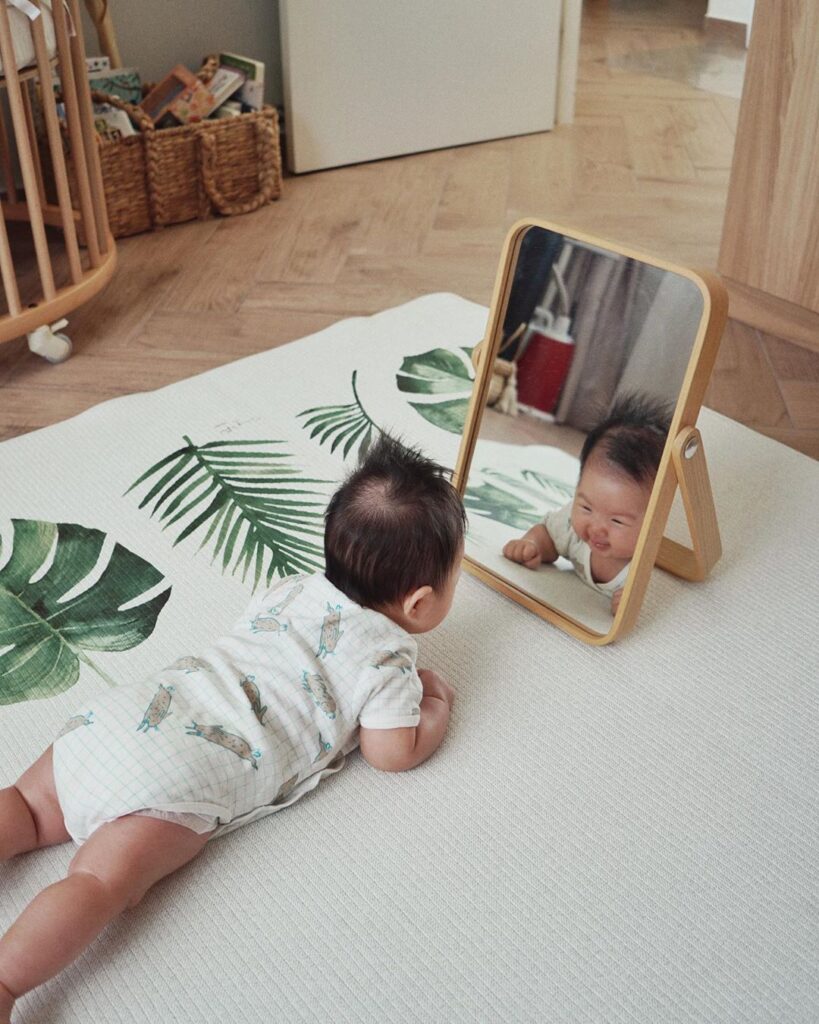
A baby-safe mirror can provide an interesting visual experience.
Place the mirror securely where your baby can look at it while supervised. You can sit beside your baby and talk about what they see.
You might say, “Look at the baby.”
Your newborn won’t understand that the reflection is themselves, but they can still observe the face and movement.
As they grow, their reactions may change. You may notice them staring longer, moving their arms, or becoming more interested in the reflection.
Always use an appropriate baby-safe mirror and keep supervision close.
Follow My Voice

You can create a very simple game using your voice. While your baby is calm and awake, talk from one side and then another.
Use a soft voice and give your baby time to respond. As your baby develops, they may begin turning their head toward familiar voices.
You can also use this activity during everyday routines.
If your baby is lying safely nearby while you prepare something, talk to them so they can hear where you are.
Your voice can provide reassurance as well as stimulation.
Explore Different Textures
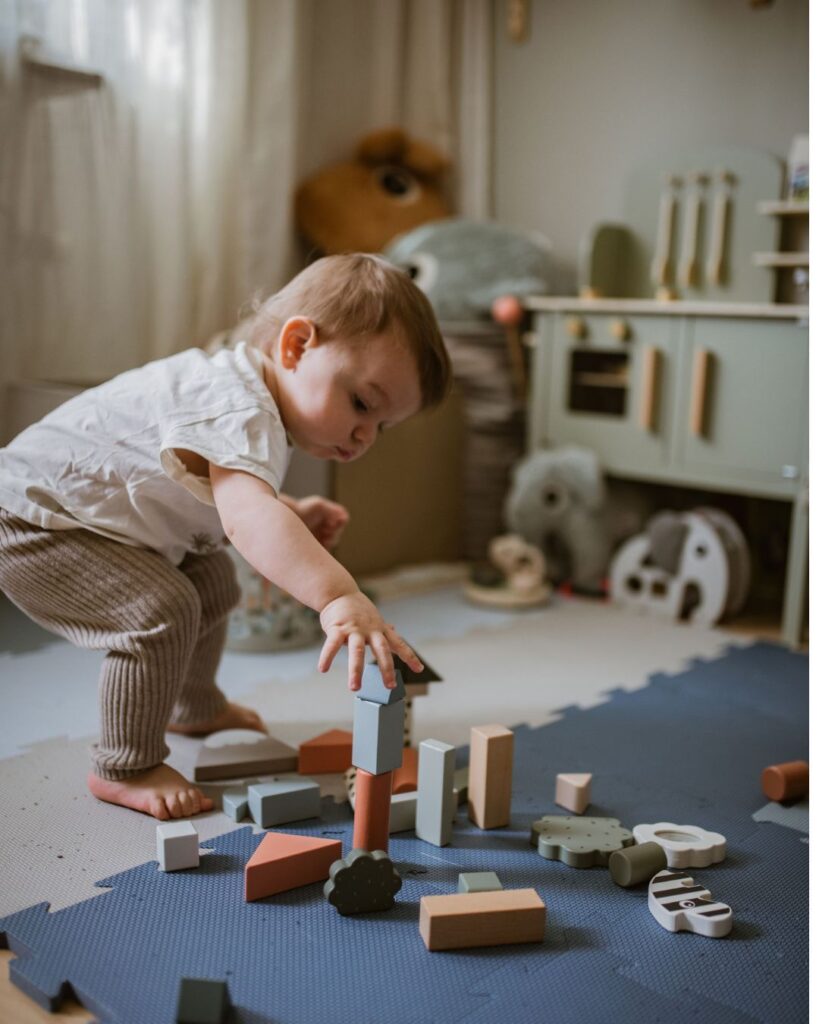
Newborn sensory experiences can be very simple.
During supervised awake time, you can allow your baby to experience safe differences in texture through appropriate clothing, blankets, or baby-safe materials.
For example, you might gently let your baby’s hand touch a soft cotton blanket and then a different smooth fabric.
Don’t place loose objects in your baby’s hands if they could become a choking hazard.
The experience should always be controlled and supervised.
As your baby grows, you can introduce more age-appropriate activities through sensory play ideas for babies by age.
For newborns, less is usually more.
Play With Light and Shadows
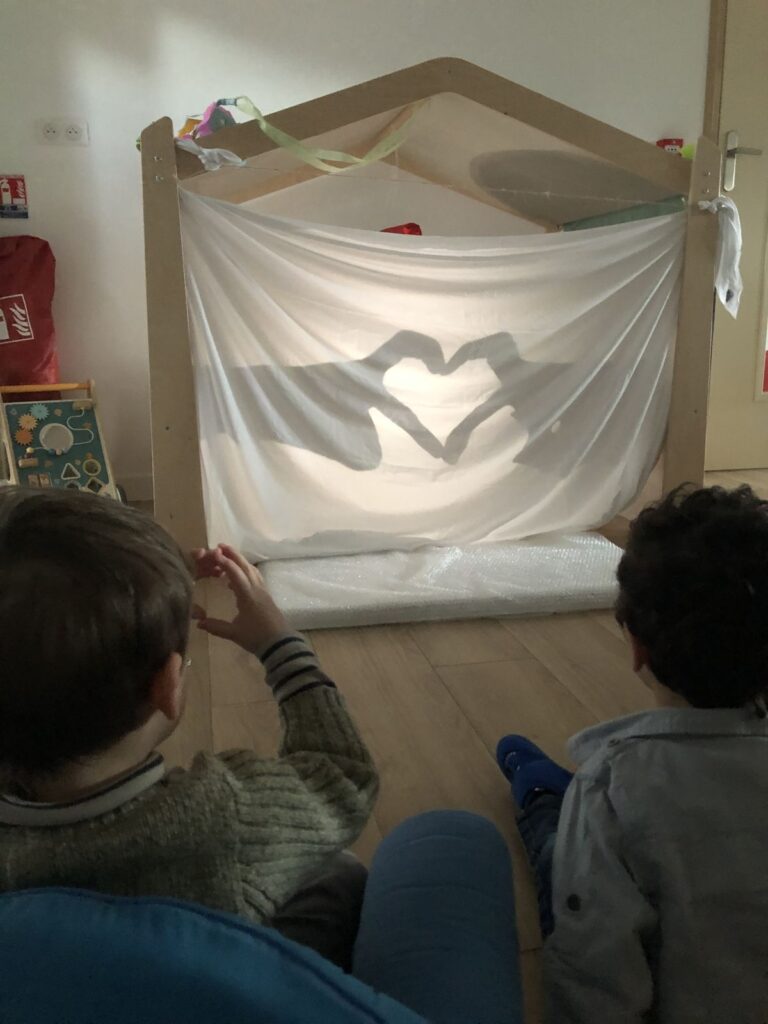
You can create simple visual interest by allowing your baby to observe natural light and gentle shadows.
For example, during daytime, you might sit near a window and let your baby observe changing light patterns while you remain close.
You don’t need bright lights, flashing objects, or complicated equipment. Avoid shining lights directly into your baby’s eyes.
The point is simply to give your baby something safe and visually interesting to observe.
Use Everyday Objects as Conversation Starters
You don’t need a house full of developmental toys. A clean, safe household object can become something to look at while you talk.
You might show your baby a soft blanket and describe its color. You can point toward a lamp and name it.
You can hold up a clean piece of clothing and describe what you’re about to put on them.
This kind of everyday narration helps turn ordinary moments into opportunities for language exposure.
It also keeps newborn play simple and affordable.
Parents looking for ways to save money on baby essentials can apply the same philosophy to toys: buy only what you genuinely need and use everyday experiences whenever they are appropriate.
Nursery Observation Time
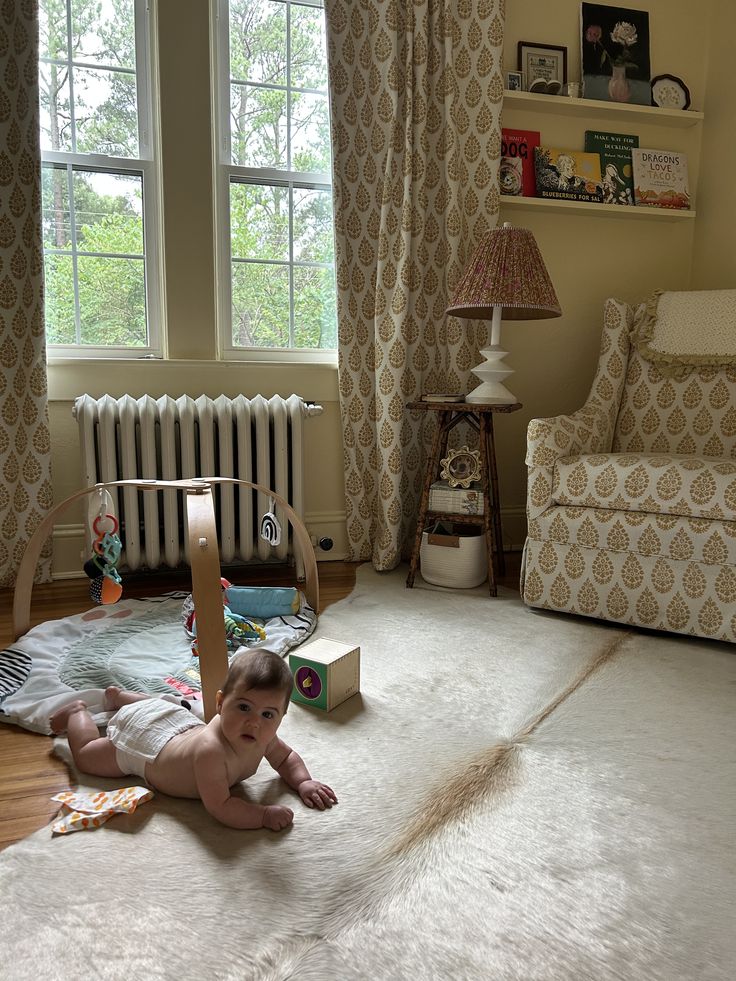
Your baby can also spend supervised awake time simply looking around.
You can place your baby safely on an appropriate surface and stay nearby while they observe the room.
Talk about what they can see, point toward the window, name familiar objects.
Let them look at the ceiling, walls, or nearby decorations. This is not “doing nothing.”
Your baby is gradually learning to process visual information.
A calm environment can be especially useful when your baby has already had more active interaction and needs something quieter.
Outdoor Observation With Your Baby
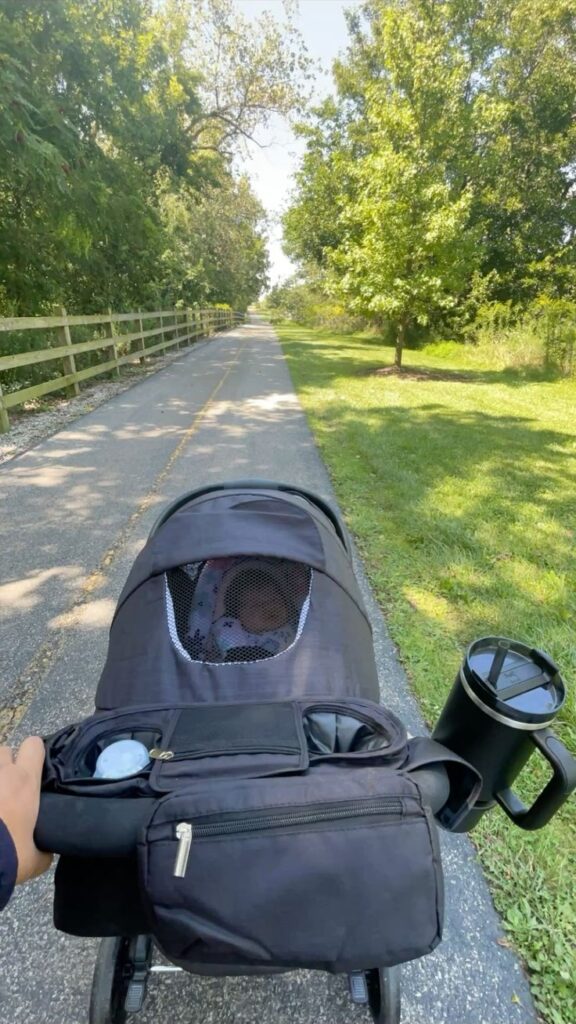
As long as conditions are appropriate and your baby is protected from excessive heat, cold, and direct sun, spending a little time outside can provide new sensory experiences.
Your baby may hear birds, notice moving leaves, feel a gentle breeze, or observe changing light.
You don’t need to turn the outing into an elaborate activity.
A short, calm outdoor experience with your baby can be enough.
As your baby becomes older and more mobile, you can expand these experiences through outdoor activities for babies under one year.
For a newborn, however, keeping the outing short and comfortable is often best.
Music and Rhythm Play
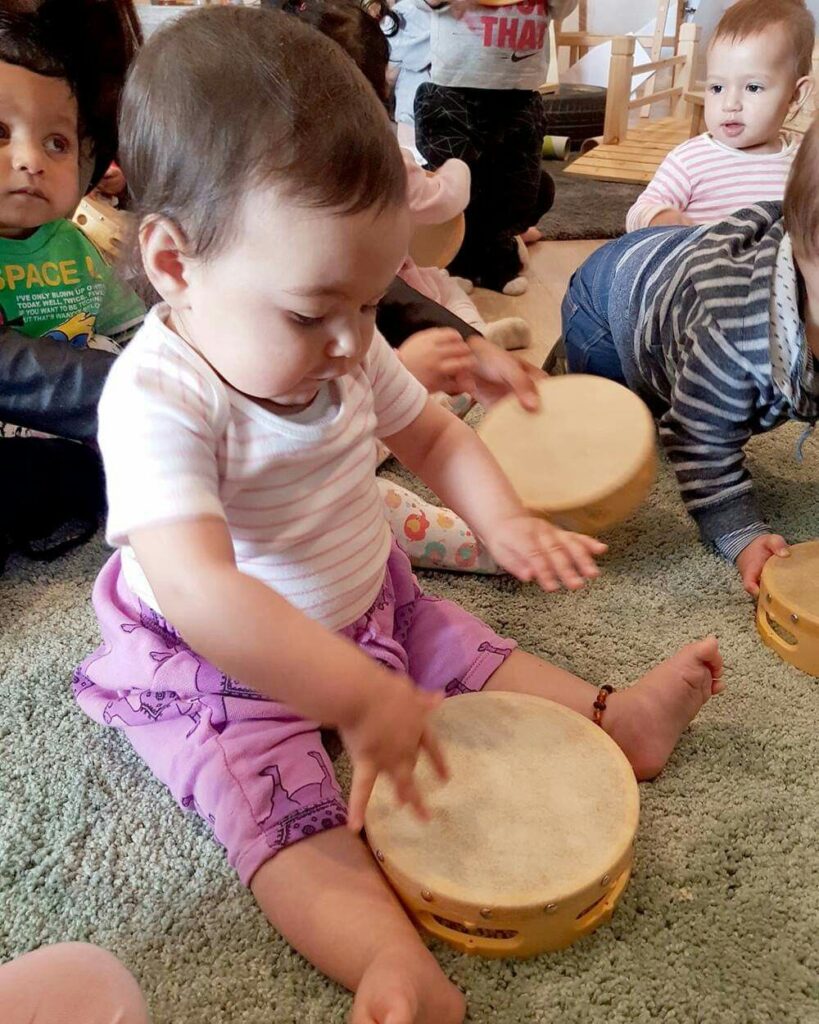
Music can be another easy way to engage a newborn.
You can sing, clap softly, tap a gentle rhythm, or play calm music at a comfortable volume.
Your baby may respond to changes in rhythm or become more attentive when they hear your voice.
Keep the experience simple. You don’t need loud music or complicated instruments.
A quiet song while holding your baby can be enough.
As your child grows, music can become more interactive, eventually leading into activities such as music activities for babies.
Play During Diaper Changes

Diaper changes happen many times a day, so they provide plenty of natural opportunities for interaction.
While changing your baby, talk to them.
Make eye contact.
Sing a short song.
Describe what you’re doing.
You can make a funny facial expression or pause to let your baby look at you.
This doesn’t add another task to your schedule.
You’re simply making an ordinary caregiving moment more interactive.
The same approach can work during dressing, bathing, and feeding.
Follow Your Baby’s Cues
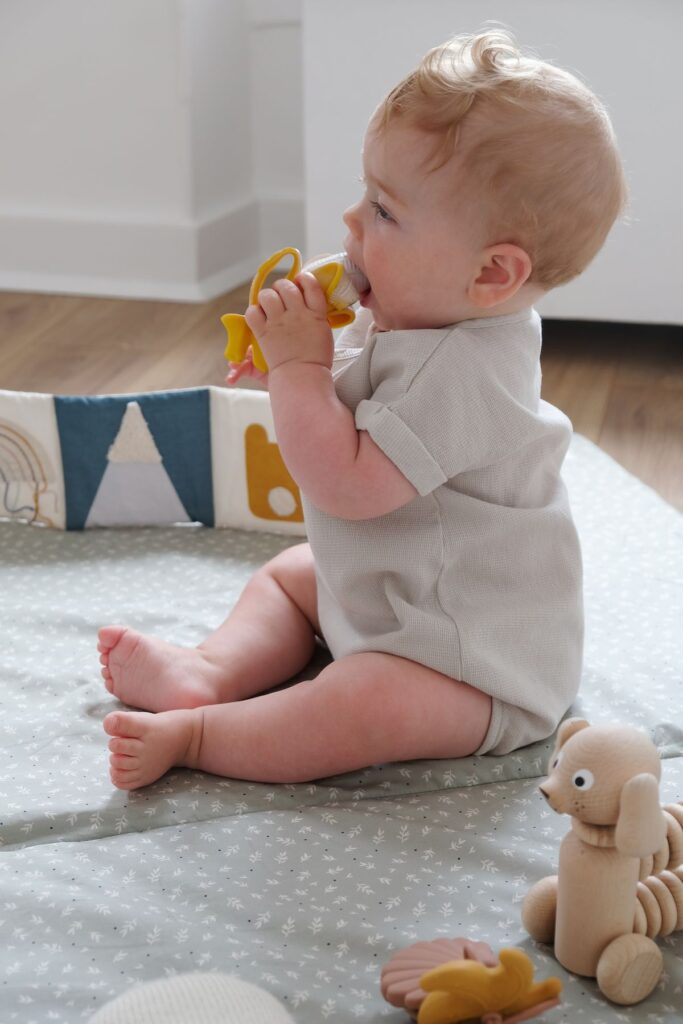
Your baby’s behavior can tell you when they have had enough.
Signs that your baby may need a break can include turning away, becoming fussy, yawning, closing their eyes, becoming unusually still, or avoiding interaction.
When you notice those signals, stop the activity.
Play should not become a competition to see how long your baby can stay engaged.
Newborns need plenty of rest, and their awake periods may be short.
The goal is quality interaction, not quantity.
Keep Play Safe
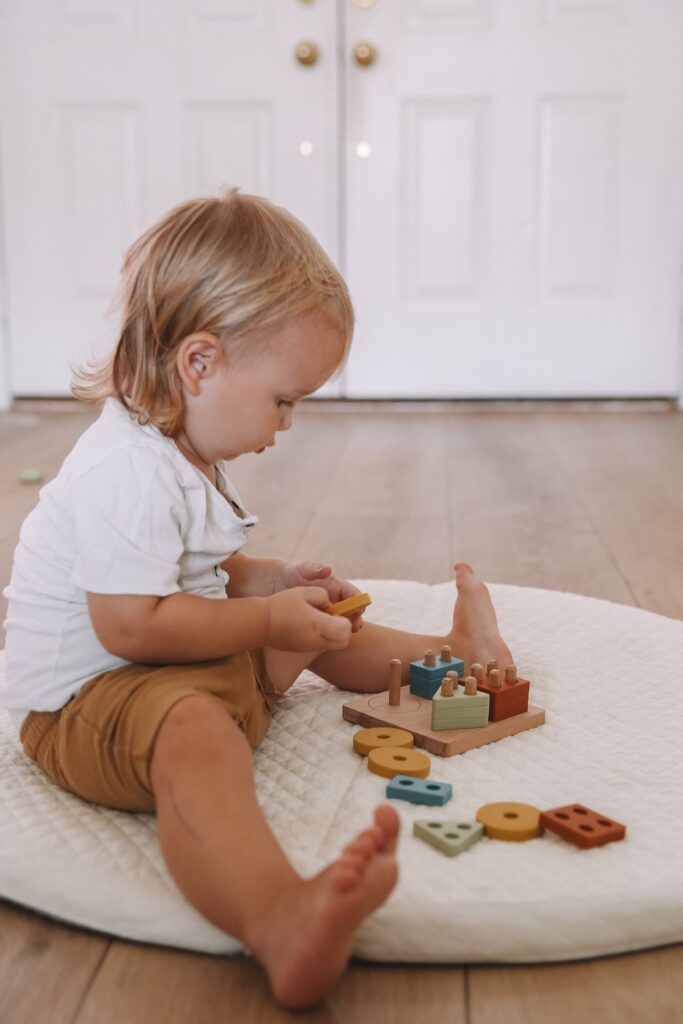
Safety should always come before entertainment.
During play, keep your baby within reach and supervise them closely.
Avoid small objects that could become choking hazards. Keep loose items, cords, and unsuitable toys away from your baby’s sleep space.
Do not place toys, pillows, blankets, or other objects in the crib for unsupervised sleep.
For broader preparation, an ultimate baby proofing checklist for new parents can help you think through safety beyond the play area.
Also remember that newborn play should happen when your baby is awake and supervised.
Sleep is for a safe sleep environment, not an activity station.
How Long Should Newborn Play Last?
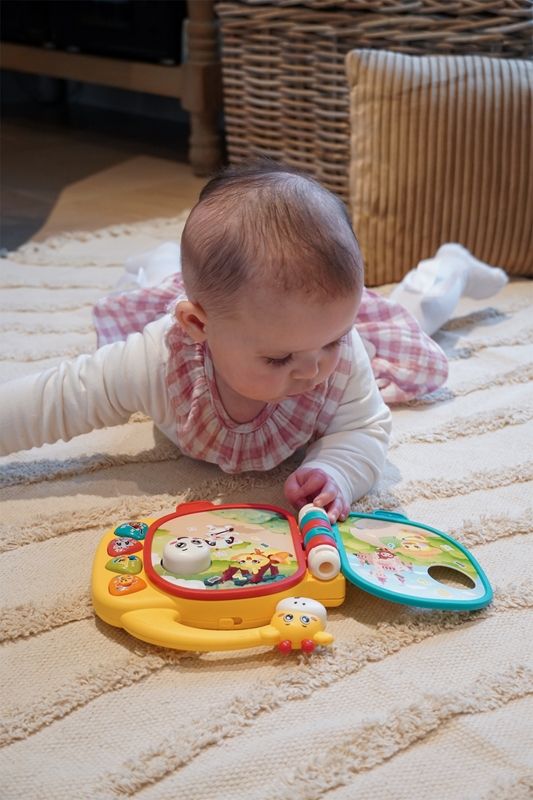
There is no single perfect amount of playtime for every newborn.
One baby may happily interact for several minutes while another becomes tired after only a short period.
Follow your baby’s cues. You can have several tiny play sessions throughout the day instead of trying to schedule one long session.
For example, you might talk during a diaper change, sing after a feed, practice a brief period of supervised tummy time later, and read a short book before a nap.
These moments add up naturally. You don’t need to fill every awake period with planned activities.
Simple Play Ideas for Tired Parents
Newborn care is exhausting, so activities should be realistic.
You don’t need to prepare a sensory bin or create a complicated play schedule.
Try:
- Talking while changing your baby.
- Singing during cuddles.
- Looking at a board book together.
- Making gentle facial expressions.
- Letting your baby look at a safe mirror.
- Practicing short periods of supervised tummy time.
- Responding to your baby’s sounds.
- Looking at family photographs.
- Taking a calm outdoor walk when conditions are suitable.
- Describing ordinary objects around the room.
The simplest activities are often the easiest to repeat consistently.
Building a Simple Newborn Play Routine
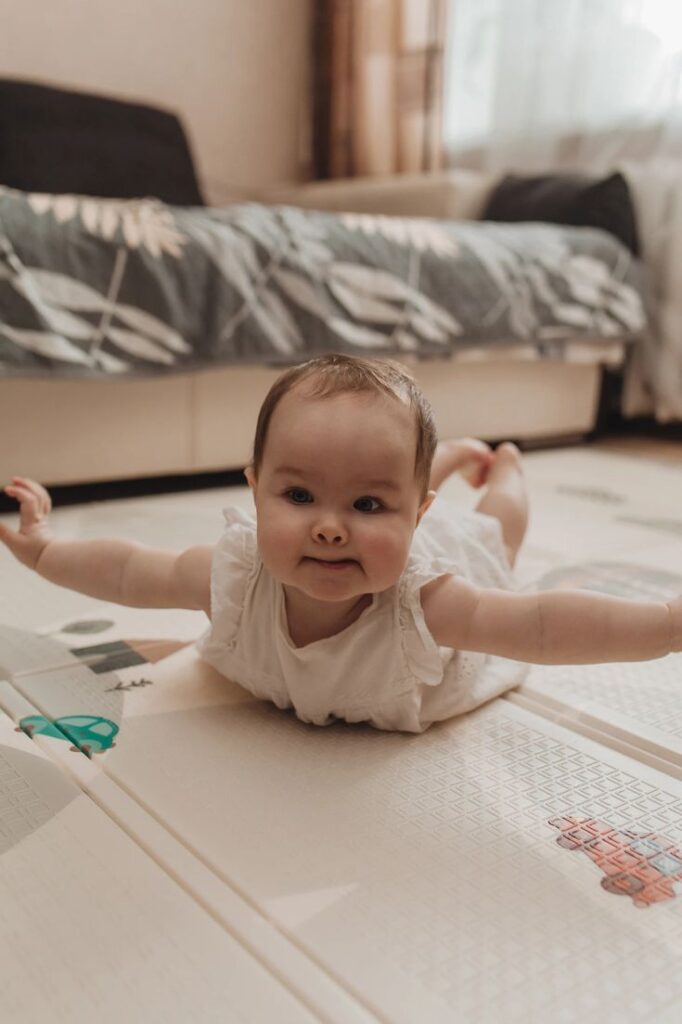
A newborn play routine can be flexible. You might start the morning with talking and face-to-face interaction.
After a later feed, you might sing a song or read a short book.
During another awake period, you could try a few minutes of supervised tummy time.
Later, you might simply cuddle and talk.There is no need to repeat the exact same routine every day.
The purpose is to create regular opportunities for your baby to interact with you and their surroundings.
As your baby develops, you can gradually introduce more movement, sensory exploration, and interactive activities.
This is where week-by-week newborn development guide resources can be helpful for understanding how your baby’s abilities are changing.
A Simple Newborn Play Checklist
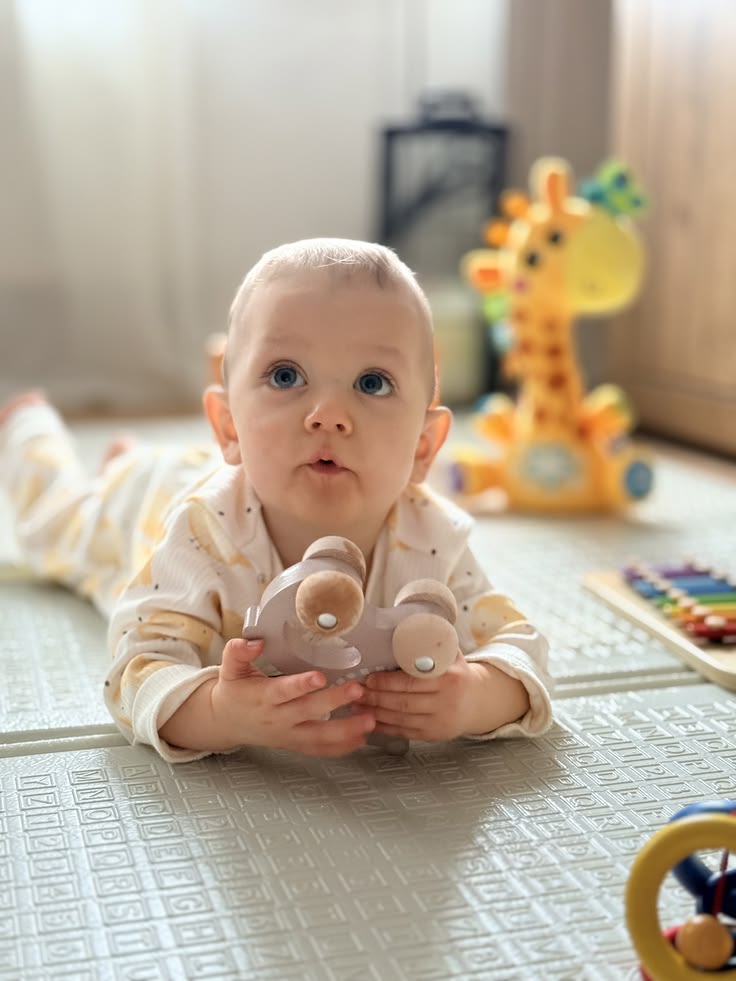
When you aren’t sure what to do with your baby during awake time, return to the basics.
Look:
Give your baby something simple and safe to observe.
Talk:
Describe what you’re doing and respond to your baby’s sounds.
Sing:
Use familiar songs and gentle rhythms.
Move:
Allow natural movement and include brief, supervised tummy time when appropriate.
Read:
Share a short book without worrying about finishing every page.
Touch:
Offer safe, gentle sensory experiences.
Connect:
Make eye contact, smile, cuddle, and respond to your baby’s cues.
Rest:
When your baby becomes tired or overstimulated, stop and let them rest.
You don’t need to complete every category every day. One or two simple interactions may be all your baby wants.
Making Everyday Moments Count
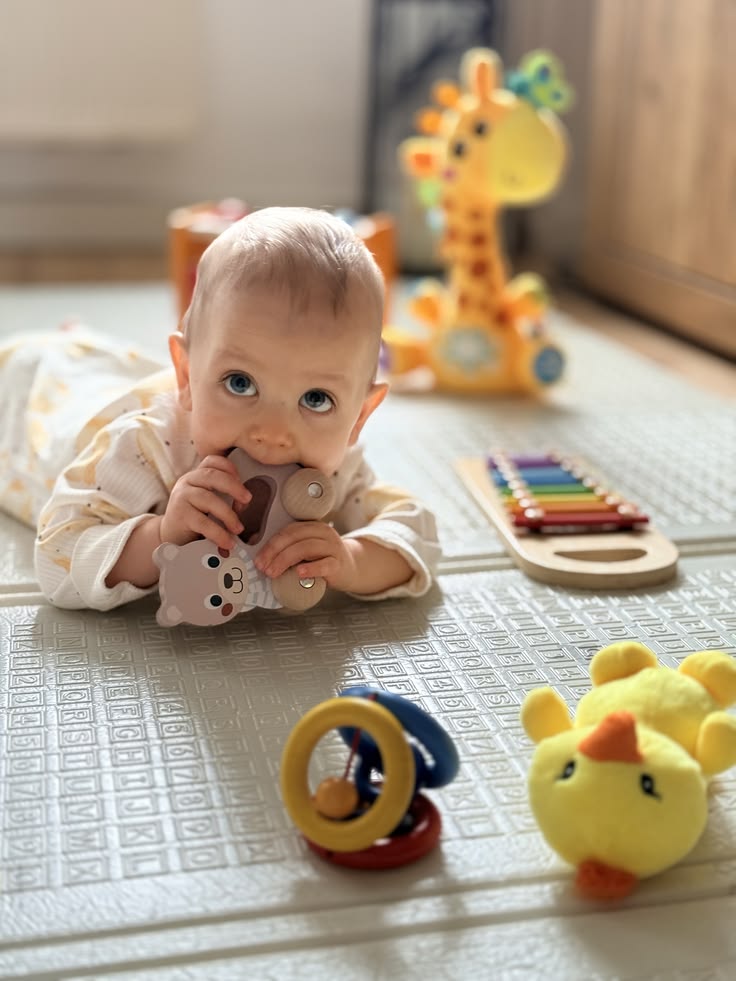
The best newborn play activities are often already hiding inside your daily routine.
Your baby can learn from the sound of your voice while you get them dressed.
They can watch your face while you talk.
They can listen while you sing.
They can look at a book while you cuddle.
They can observe the world during a supervised outdoor outing.
They can respond to your expressions during a diaper change.
None of these moments requires an expensive toy or a complicated schedule.
As your baby grows, their responses will gradually become more obvious. They may begin smiling more intentionally, making more sounds, following objects, reaching toward things, and becoming increasingly interested in the people and environment around them.
You can simply follow those changes.
Read More
If you’re looking for more ideas as your baby’s abilities develop, these guides may also be useful:
- How to Play With Your Newborn Baby
- Benefits of Reading to Babies Daily
- 17 Sensory Play Ideas for Babies by Age
- 10 Montessori Activities for Newborns
- 30 Outdoor Activities for Babies Under One Year



10 Comments