
25 Nursery Organization Ideas That Keep Baby Essentials Within Reach
Setting up your baby’s nursery is one of the most exciting parts of preparing for parenthood.
Every tiny outfit, blanket, and stuffed animal makes the arrival of your little one feel even more real.
Before long, however, you’ll realize that babies may be small, but they come with a surprising amount of stuff.
Diapers, wipes, burp cloths, bottles, swaddles, creams, extra clothes, toys, and blankets can quickly take over every drawer and shelf if they don’t have a designated place.
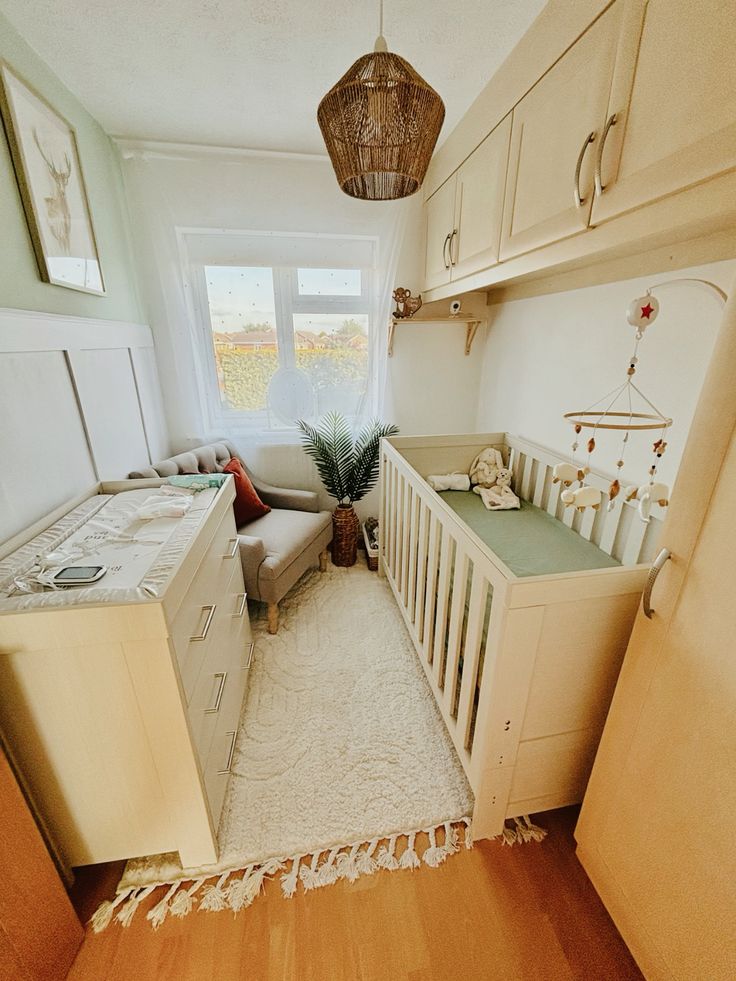
An organized nursery isn’t about creating a picture-perfect room that stays untouched. It’s about designing a space that works for you during the busiest moments of the day.
When your baby needs a diaper change at 3 a.m. or you’re trying to soothe a hungry newborn, having everything within reach saves time, reduces stress, and makes caring for your baby much easier.
The good news is that you don’t need a huge nursery or expensive storage systems to stay organized.
A few smart storage solutions, thoughtful furniture placement, and simple routines can completely transform the way your nursery functions.
The following ideas will help you create a practical, clutter-free space where every baby essential has a home and every inch of your nursery works harder for your family.
25 Nursery Organization Ideas That Keep Baby Essentials Within Reach
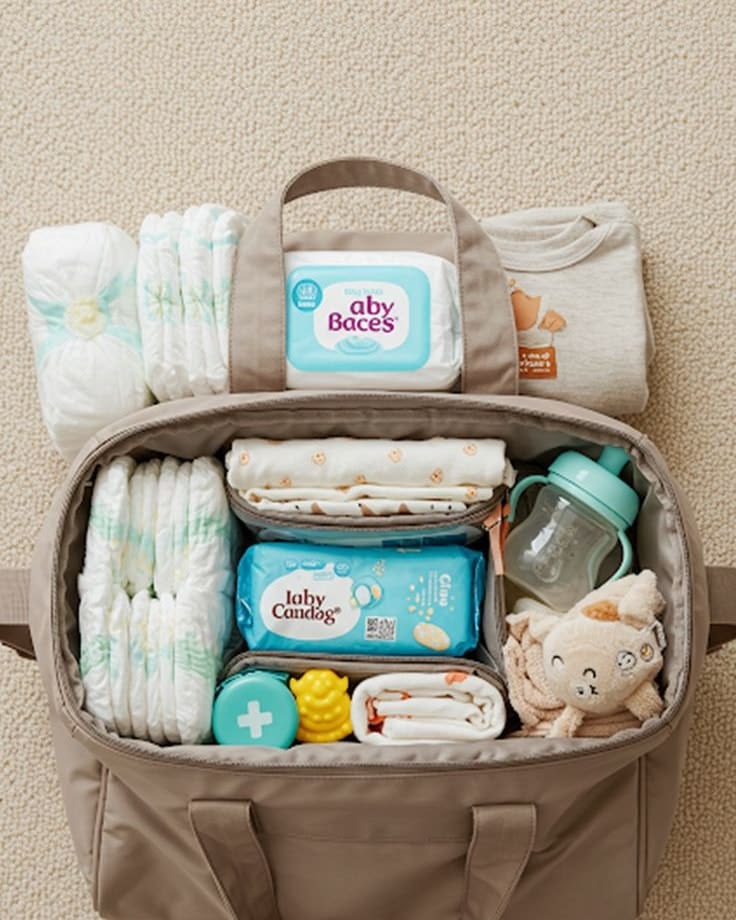
Creating an organized nursery starts with understanding how you use the room every day.
Instead of filling every corner with storage bins and baskets, focus on arranging essentials around your daily routine.
Keep frequently used items close to where you’ll need them, make use of unused spaces, and choose storage solutions that grow with your baby.
These 25 ideas will help you organize your nursery in ways that are practical, attractive, and easy to maintain.
1. Create a Dedicated Diaper Station
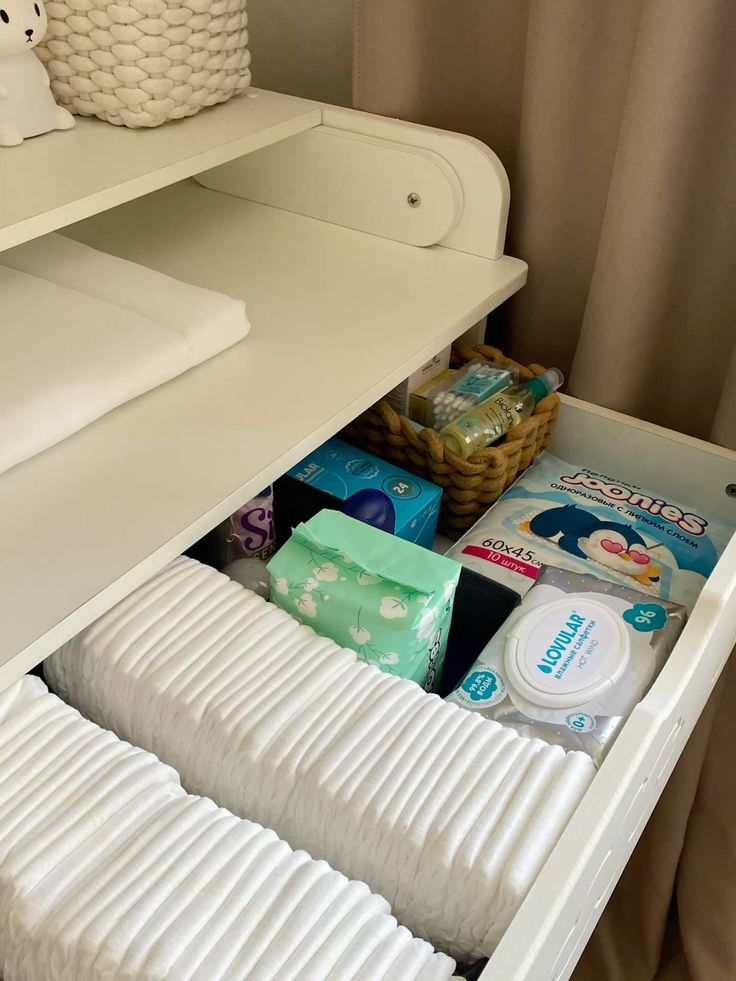
One of the easiest ways to stay organized is by keeping every diaper-changing essential together.
Place diapers, wipes, diaper cream, changing pads, extra onesies, and disposable bags inside a basket or portable caddy beside your changing table.
Having everything in one location means you won’t need to search through drawers while changing your baby.
If you’re still planning your nursery, choosing the essential nursery furniture first makes it easier to decide where your changing station should be located.
2. Organize Baby Clothes by Size
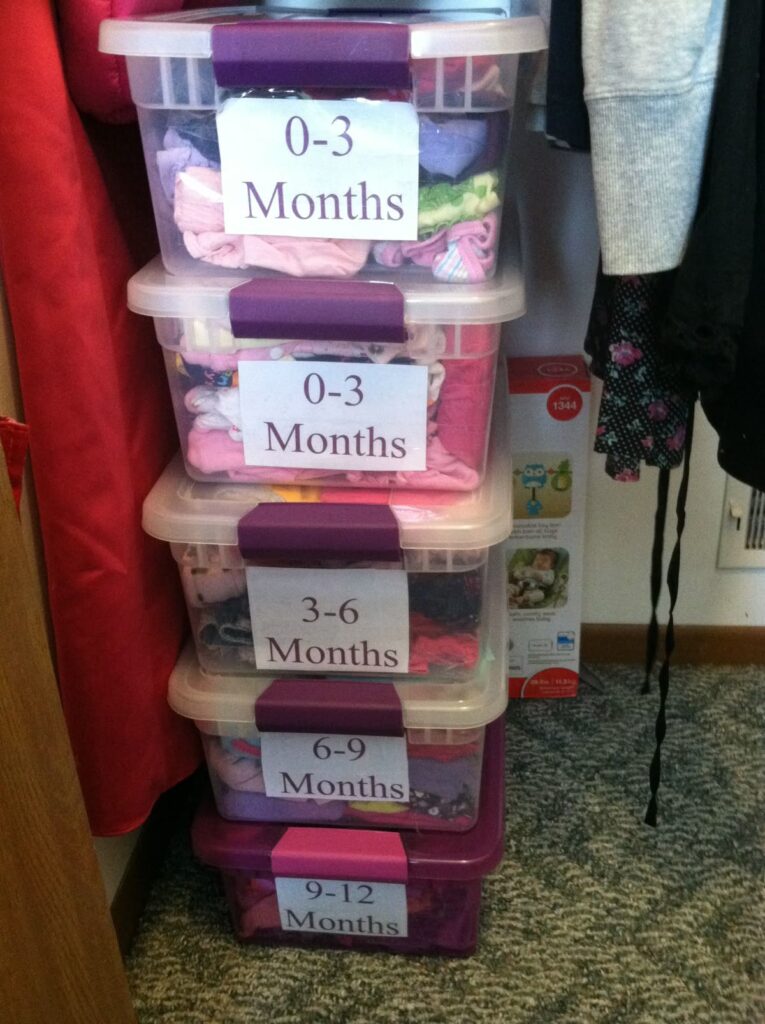
Sorting baby clothes by size saves you from digging through drawers every time your little one has a growth spurt.
Create separate sections for newborn, 0–3 months, 3–6 months, and larger sizes.
Closet dividers, labeled baskets, or drawer organizers make it easy to see exactly what fits your baby now and what should be stored for later.
Keeping clothes organized also helps you avoid buying duplicate outfits because you’ll always know what you already have.
3. Use Drawer Dividers for Everyday Essentials
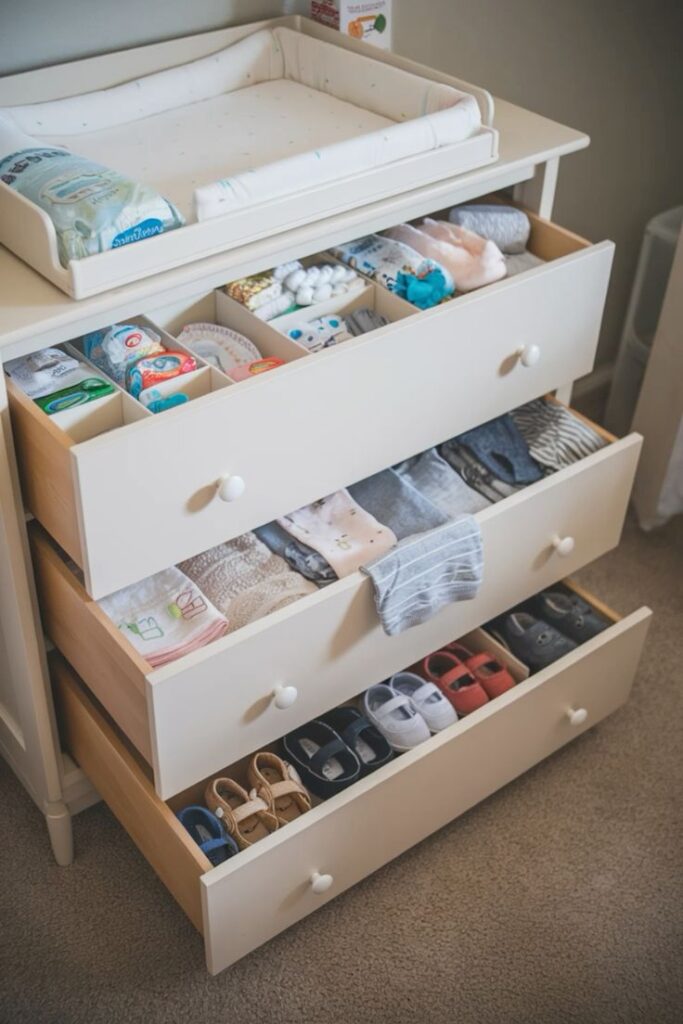
A dresser quickly becomes cluttered when socks, bibs, mittens, burp cloths, and hats are tossed into the same drawer.
Drawer dividers create designated spaces for each category, making it much easier to find what you need during busy mornings or late-night diaper changes.
Even inexpensive adjustable dividers can completely transform the way your dresser functions.
This simple system also works well when organizing essential newborn outfits, since every clothing item stays neatly separated and easy to access.
4. Store Daily Essentials in Open Baskets
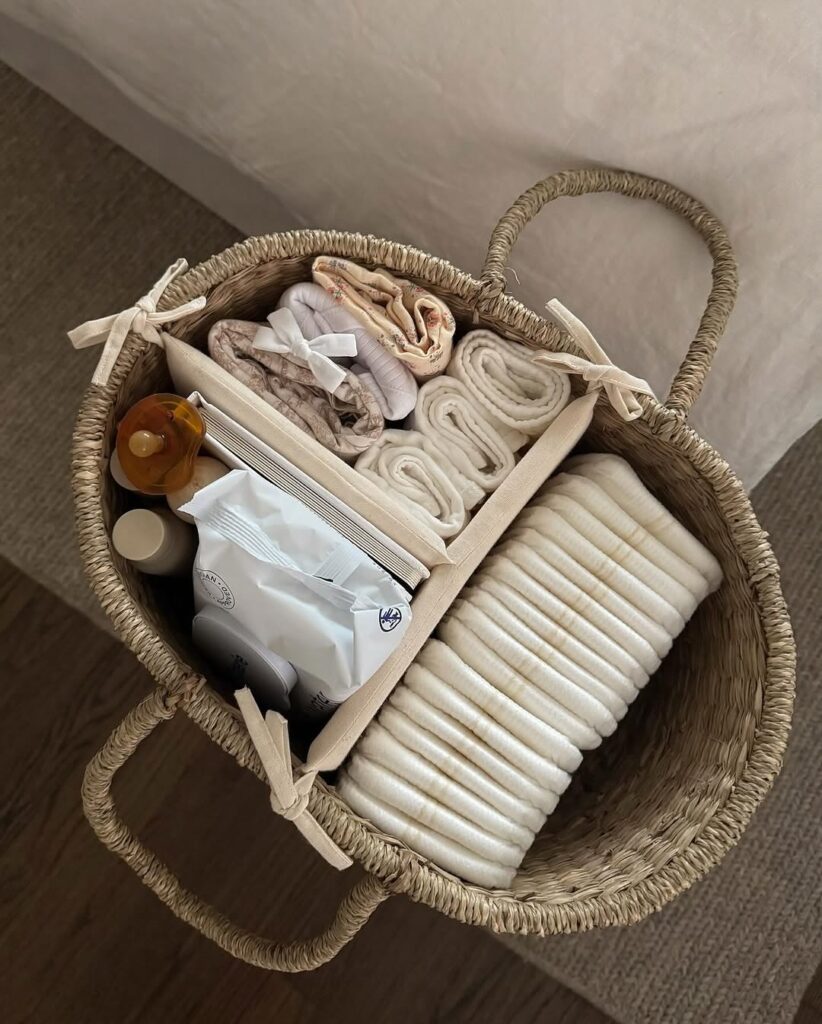
Not everything belongs inside a drawer.
Open baskets are perfect for items you reach for several times a day, including swaddle blankets, burp cloths, muslin cloths, pacifiers, and extra diapers.
Place them on open shelves, inside cubbies, or beside your nursing chair so everything remains visible and within reach.
Matching baskets also create a cleaner, more organized appearance without making the nursery feel overly decorated.
5. Make the Most of Vertical Space
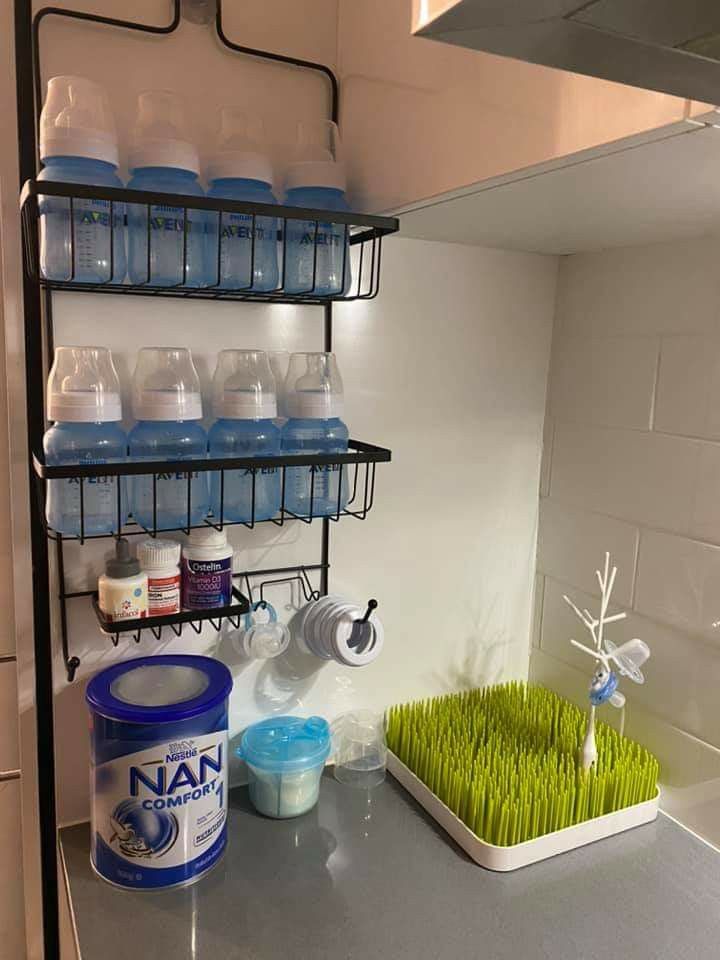
When floor space is limited, your walls become valuable storage areas.
Floating shelves, wall-mounted organizers, pegboards, and hanging baskets provide additional storage without making the nursery feel crowded.
Display books, keepsakes, and decorative storage bins while leaving valuable floor space open for movement.
Families decorating compact rooms often rely on small nursery ideas to make every inch count without sacrificing style or functionality.
6. Keep Feeding Supplies Beside Your Chair

Your feeding station should work just as efficiently as your changing station.
Place a small side table or rolling cart beside your glider with bottles, burp cloths, nursing pads, snacks, water, and extra bibs.
Keeping everything nearby means fewer interruptions during feeding sessions.
Whether you’re breastfeeding or bottle-feeding, having supplies within easy reach creates a calmer experience for both you and your baby.
7. Label Every Storage Bin
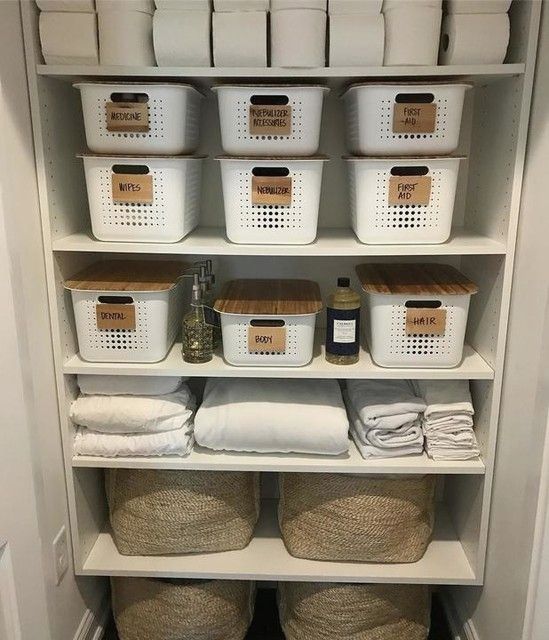
Labels remove the guesswork from staying organized.
Instead of opening multiple bins looking for one item, you’ll immediately know where everything belongs.
Labels are especially helpful for storing seasonal clothing, blankets, toys, extra diapers, and keepsakes.
Clear labels also make it easier for your partner, grandparents, or babysitters to help keep the nursery tidy.
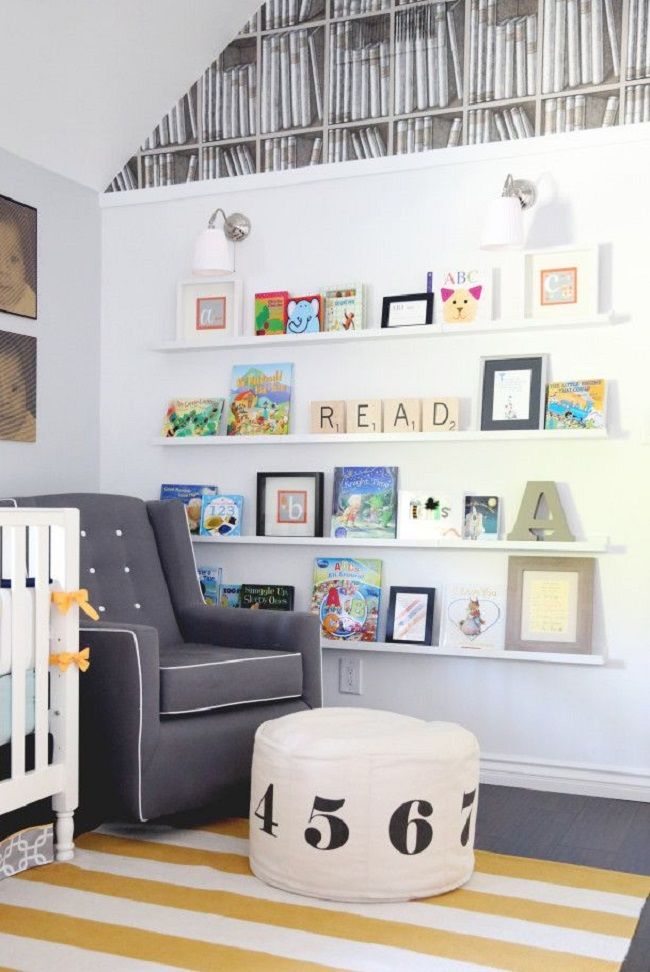
8. Create a Small Nursery Library
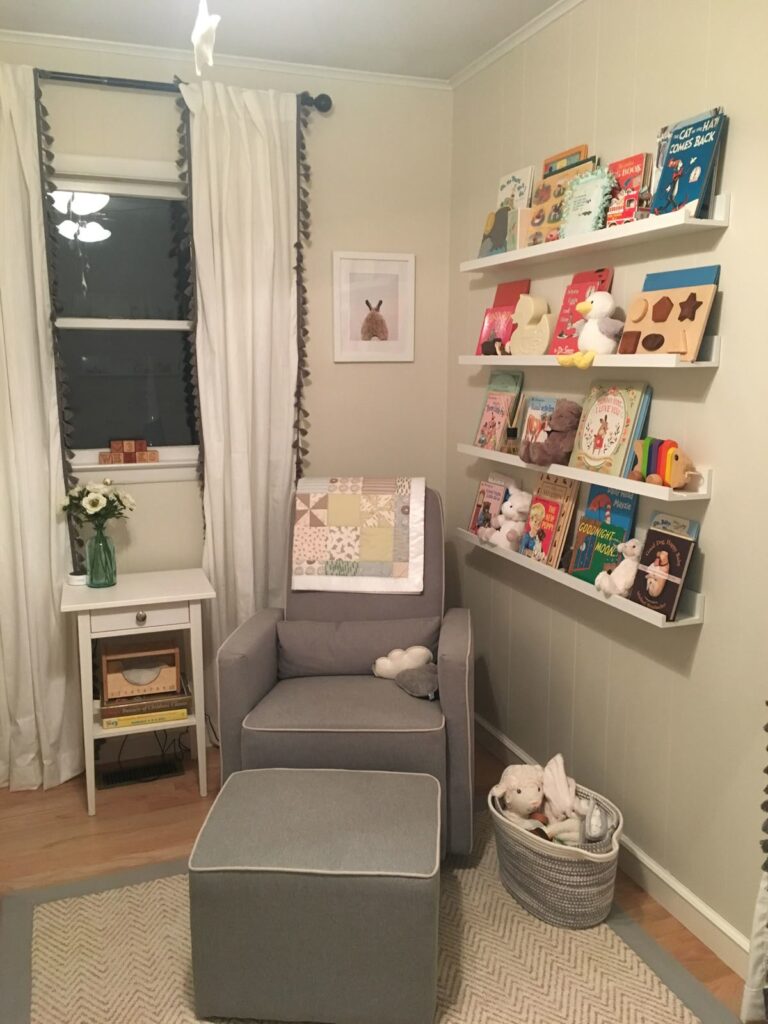
Books deserve their own space instead of being stacked inside baskets or drawers.
A forward-facing bookshelf encourages reading from the very beginning while making storytime part of your daily routine.
Keep favorite books within easy reach so reading naturally becomes part of naps and bedtime.
Building your baby’s first library with the best first books for babies encourages language development while creating meaningful bonding moments together.
9. Use Clear Storage Containers for Clothing You’ll Need Later
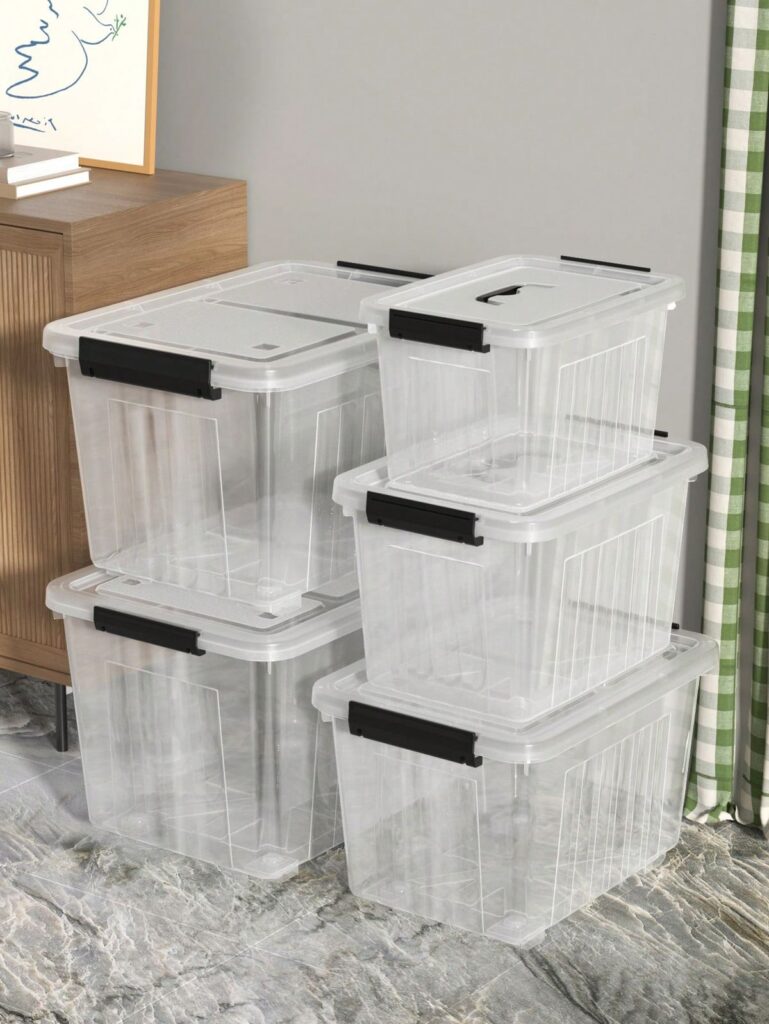
Babies outgrow clothes surprisingly fast, making it important to store larger sizes in an organized way.
Clear storage containers let you see what’s inside without opening every box.
Group clothing by size, season, or purpose, then place labels on each container for even quicker access.
This system makes it much easier to rotate clothes as your baby grows while keeping your closet neat throughout the year.
10. Organize the Nursery Closet by Category
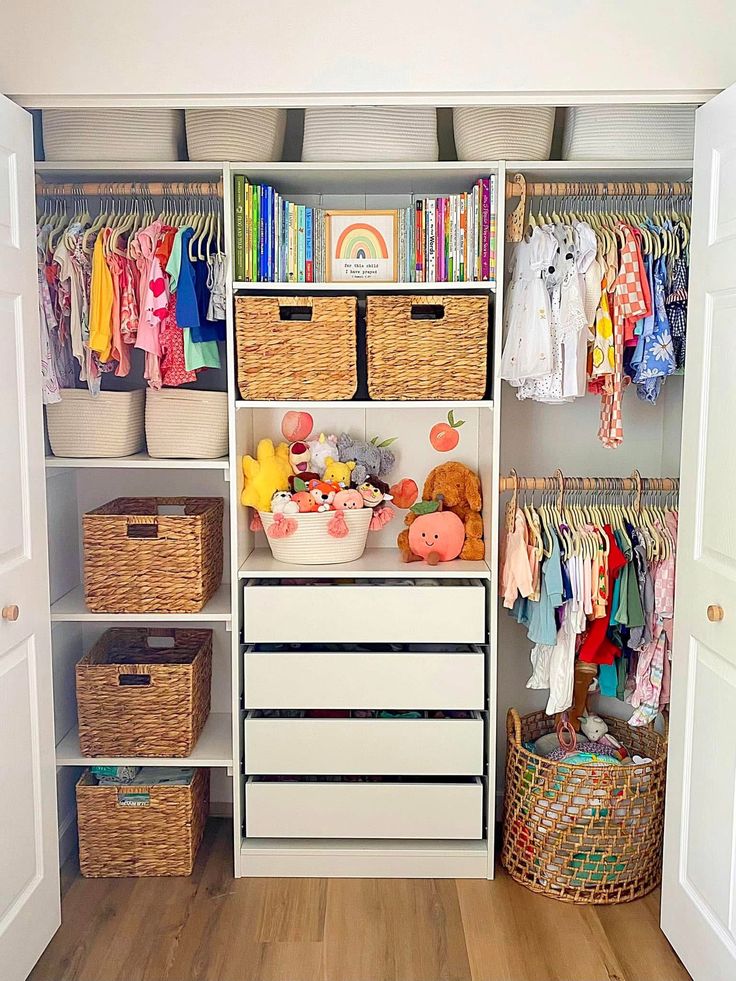
Instead of hanging everything together, divide the closet into simple categories.
Keep everyday outfits together, group sleepwear in another section, and store jackets, special occasion clothing, and blankets separately.
Shelf organizers and hanging baskets can hold shoes, hats, and accessories without taking up valuable hanging space.
An organized closet also leaves room for future purchases without creating unnecessary clutter.
11. Keep a Portable Nursery Caddy Nearby
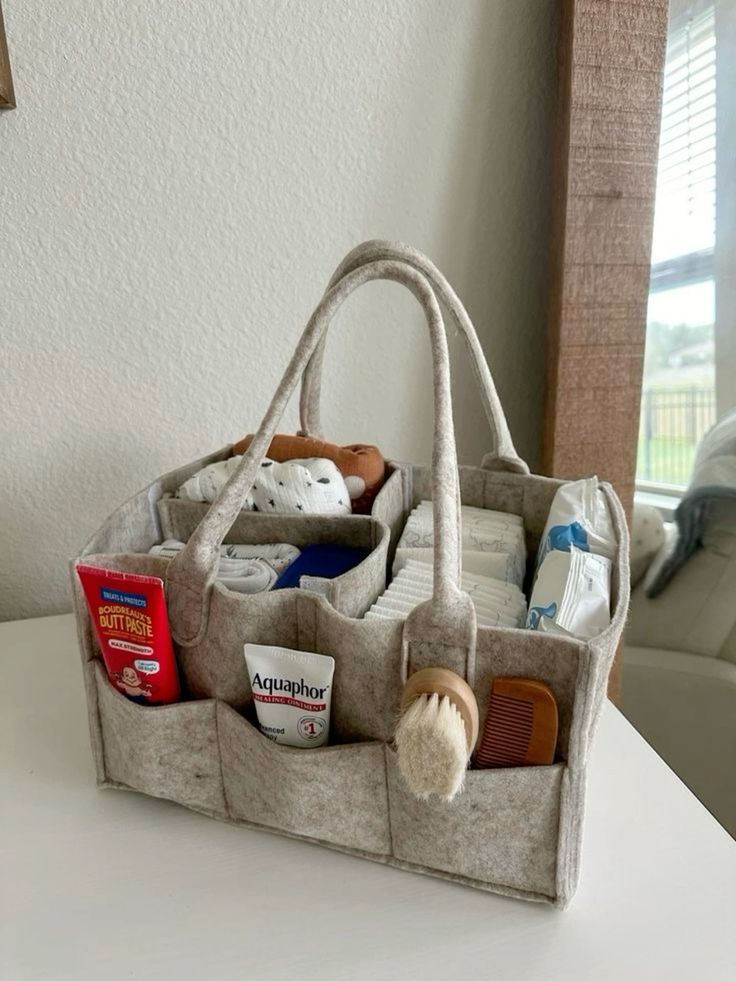
Some days you’ll care for your baby outside the nursery more than inside it.
A portable nursery caddy stocked with diapers, wipes, burp cloths, diaper cream, and an extra outfit allows you to move around the house without making repeated trips back to the nursery.
It’s especially helpful during the newborn stage when frequent diaper changes become part of your daily routine.
12. Add Storage Beneath the Crib
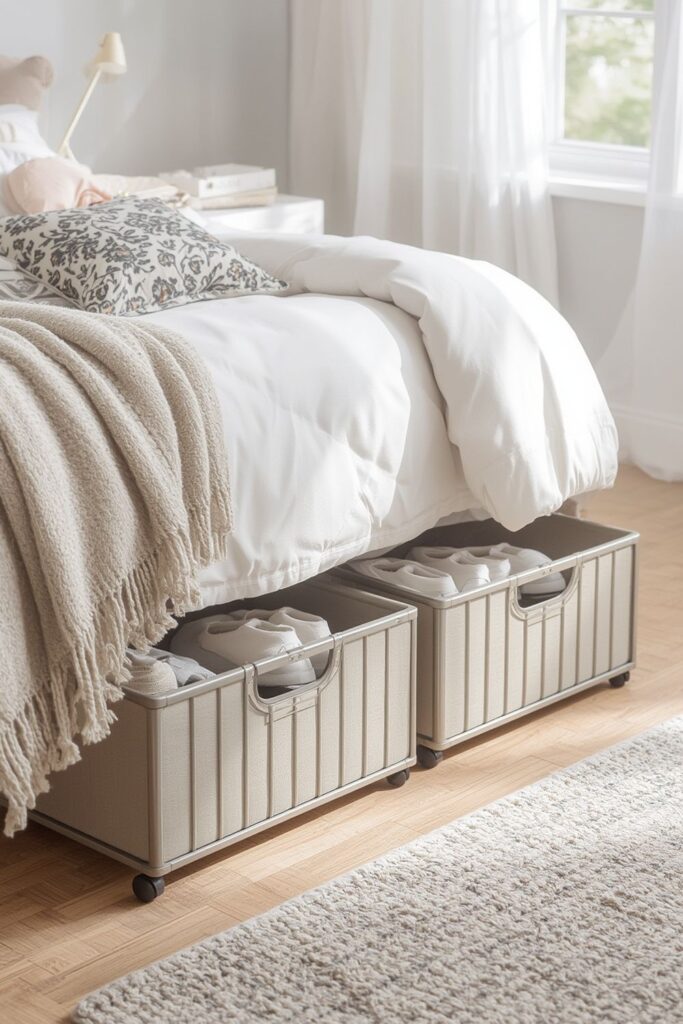
The space beneath the crib often goes unused.
Low-profile storage bins are perfect for storing extra crib sheets, seasonal blankets, baby keepsakes, or clothing your baby hasn’t grown into yet.
Choose containers with lids to keep everything clean and dust-free.
This hidden storage solution helps maximize every available inch without adding more furniture to the room.
13. Store Toys in Separate Categories

Even newborns quickly collect rattles, plush toys, teething toys, activity cards, and sensory items.
Instead of placing everything in one large basket, organize toys by category.
This makes cleanup faster while helping you find exactly what you need during playtime.
As your little one grows, organized toy storage encourages independence because it’s easier for toddlers to help put toys back where they belong.
14. Create a Dedicated Reading Corner
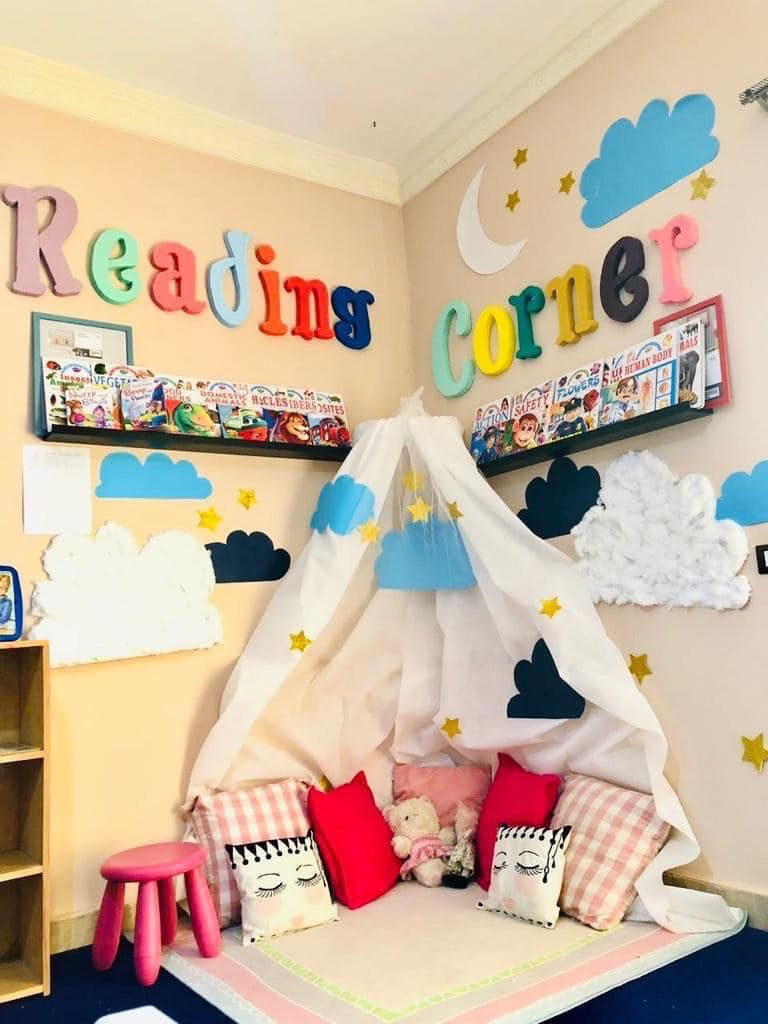
A cozy reading corner doesn’t require a large nursery or expensive furniture.
Even a quiet corner with a comfortable chair and a few books can become one of the most meaningful spaces in your baby’s room.
Place a comfortable glider or armchair beside a small bookshelf or book ledge, then add a soft pillow and a basket for blankets to make the space feel warm and inviting.
Keep your baby’s favorite books within easy reach so reading becomes a natural part of your daily routine rather than something you have to plan for.
Reading together every day supports early language development, encourages listening skills, and introduces your baby to new words long before they can speak.
It also creates a predictable bedtime routine that helps your little one wind down before sleep.
As your child grows, this reading corner will become a place where you share stories, build memories, and nurture a lifelong love of books.
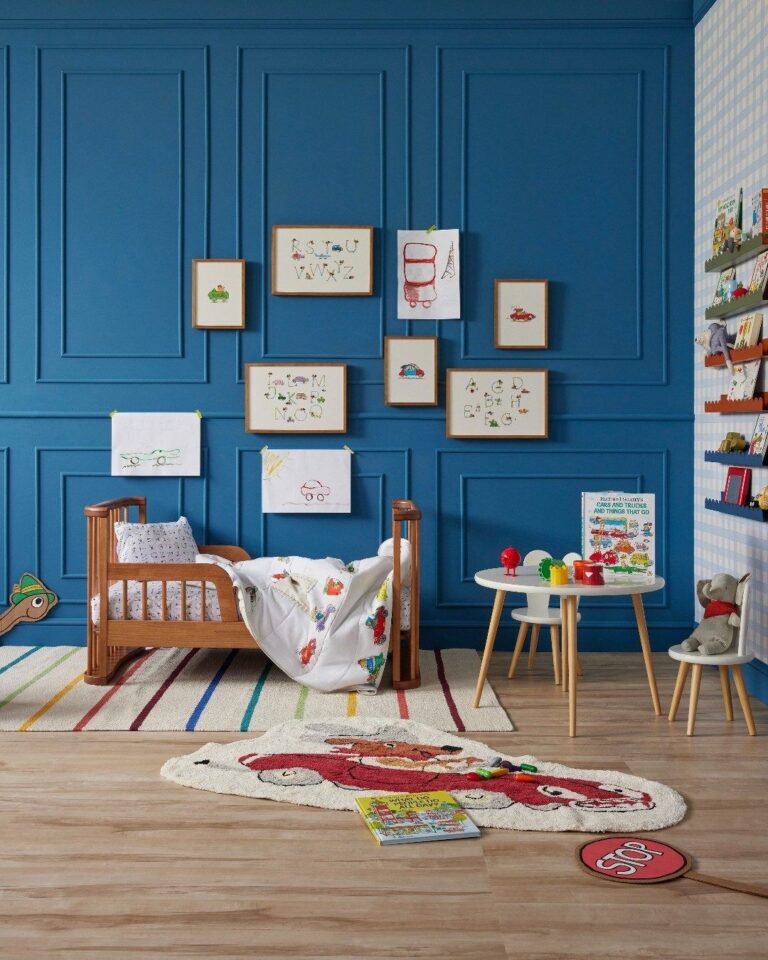
15. Install Floating Shelves Above Furniture

Floating shelves provide valuable storage without using additional floor space, making them an excellent choice for both large and small nurseries.
Install them above the dresser, changing station, or reading corner to display decorative baskets, framed photos, keepsakes, small plants, or baby books that you don’t need every day.
They also provide extra room for storing backup supplies while keeping countertops and furniture free from clutter.
When installing shelves, always secure them properly to the wall and avoid placing heavy objects directly above the crib.
Store decorative pieces on higher shelves and place lightweight baskets or frequently used items on lower ones where they’re easier to reach.
Besides improving storage, floating shelves help draw the eye upward, making the nursery feel more spacious while adding personality to the room.
16. Organize Linens in Separate Baskets
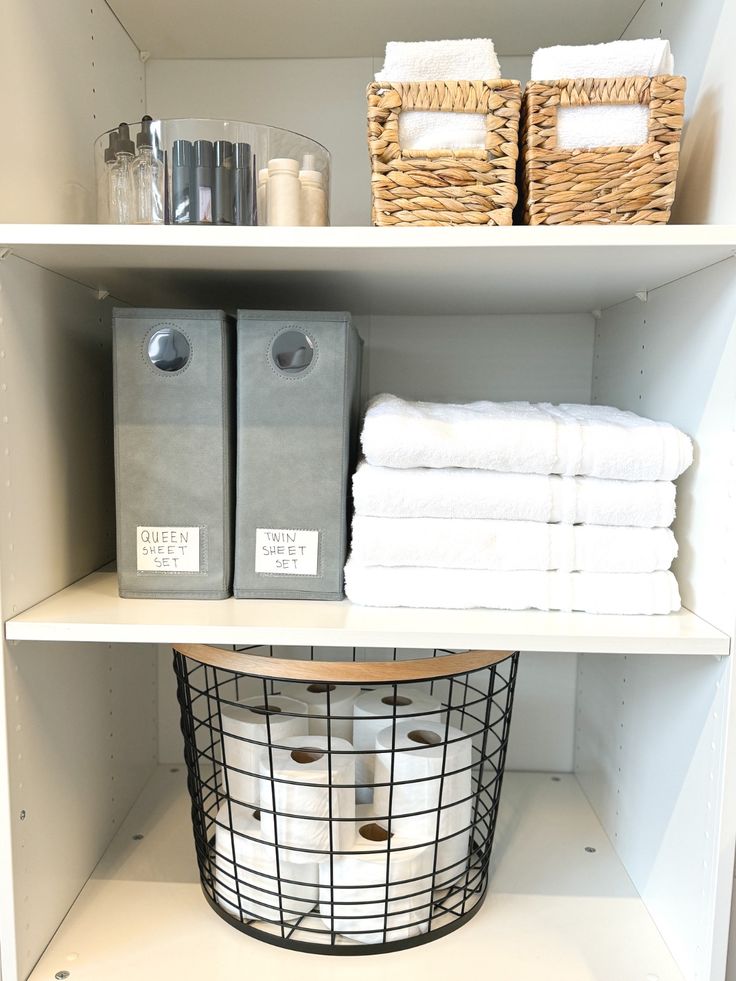
Crib sheets, changing pad covers, swaddles, receiving blankets, towels, and burp cloths each deserve their own storage space.
Keeping them together in one pile may seem convenient at first, but it often leads to unnecessary searching when you need something quickly.
Use separate woven baskets, fabric bins, or labeled containers to group similar linens together.
Store everyday items like crib sheets and burp cloths where they’re easy to reach, while placing seasonal blankets or spare bedding on higher shelves or inside the closet until they’re needed.
Rolling or folding linens neatly not only saves space but also makes each basket look tidy and organized.
This simple system helps you restock supplies more easily after laundry day and ensures you’ll always know exactly where to find a clean sheet or blanket when your baby needs one.
17. Use the Back of the Nursery Door
The back of the nursery door is valuable storage space that’s often overlooked. Instead of leaving it empty, turn it into a practical storage area for items you use every day.
An over-the-door organizer can hold diapers, lotions, washcloths, bibs, baby shoes, pacifiers, teething toys, extra burp cloths, and other small essentials without taking up additional floor space.
Choose one with sturdy, deep pockets that are easy to reach and simple to wipe clean.
Clear pockets can also help you quickly spot what you need, especially during busy moments.
Keeping smaller items behind the door frees up drawers, shelves, and baskets for larger nursery essentials.
It also helps reduce countertop clutter, making the room feel cleaner and more organized.
This simple storage solution works particularly well in smaller nurseries where every inch of space matters.
18. Set Up a Rolling Storage Cart
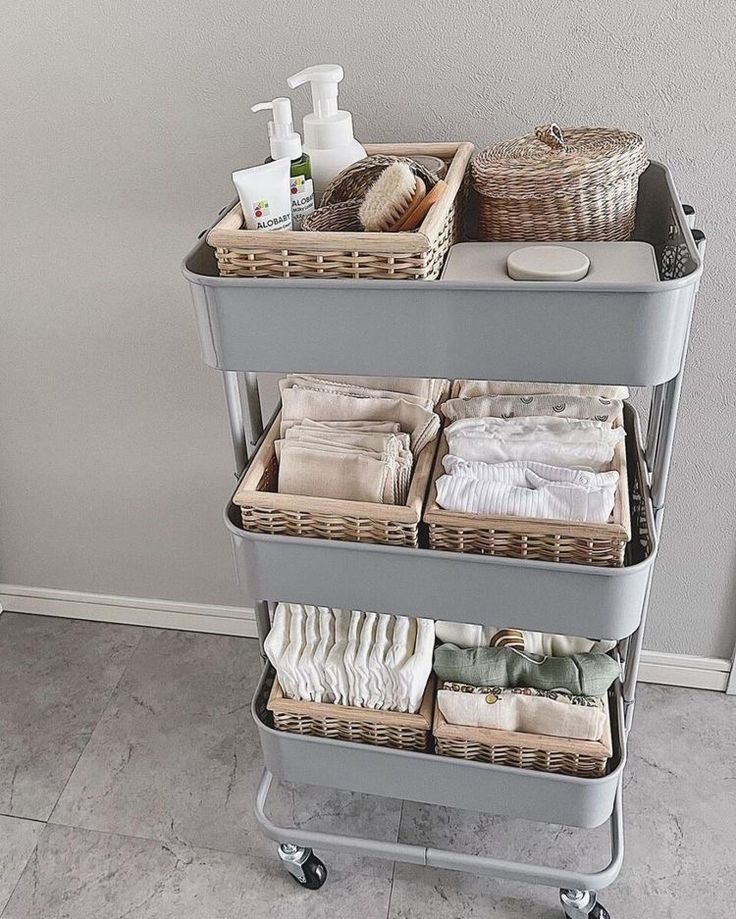
A rolling storage cart is one of the most practical and versatile additions you can make to your nursery.
Since it isn’t fixed in one place, it can move with you throughout the day, making baby care much more convenient.
Assign each tier a specific purpose to keep everything organized.
The top shelf can hold diapers, wipes, creams, and changing supplies, while the middle shelf stores bottles, burp cloths, bibs, nursing pads, or snacks.
Use the bottom shelf for extra blankets, pajamas, swaddles, or backup supplies that you don’t need as often.
The biggest advantage of a rolling cart is its flexibility.
During the day, it can stay beside your nursing chair, then move next to your bed for overnight feedings or diaper changes.
As your child grows, the same cart can easily be transformed into a book cart, craft station, or toy organizer, making it a worthwhile investment that continues serving your family for years.
19. Keep a Small Laundry Station Inside the Nursery

Baby laundry has a way of piling up faster than most parents expect.
Between outfit changes, spit-up, diaper leaks, burp cloths, and bibs, you’ll likely have dirty laundry every single day.
Placing a hamper with a removable, washable liner near the changing station or closet encourages everyone to toss dirty clothes into one designated spot instead of leaving them on chairs, or the crib.
If you have enough room, consider using two hampers, one for everyday laundry and another for heavily soiled clothes, towels, or blankets that may need special attention.
You can also keep a small basket nearby for clean washcloths and reusable items that need to be restocked after laundry day.
Creating a dedicated laundry station keeps dirty clothes from spreading throughout the nursery, helps your baby’s room stay fresh, tidy, and ready for the next busy day.
20. Rotate Toys Instead of Displaying Everything

Your baby doesn’t need every toy available at once.
Store some toys away and rotate them every week or two.
This keeps the play area organized, reduces clutter, and helps toys feel new and exciting when they reappear.
It also makes cleanup much faster because there are fewer items scattered around the room.
Rotating toys works especially well once your baby begins exploring sensory activities at home, giving them fresh experiences without constantly buying new toys.
21. Create a Simple Bedtime Basket
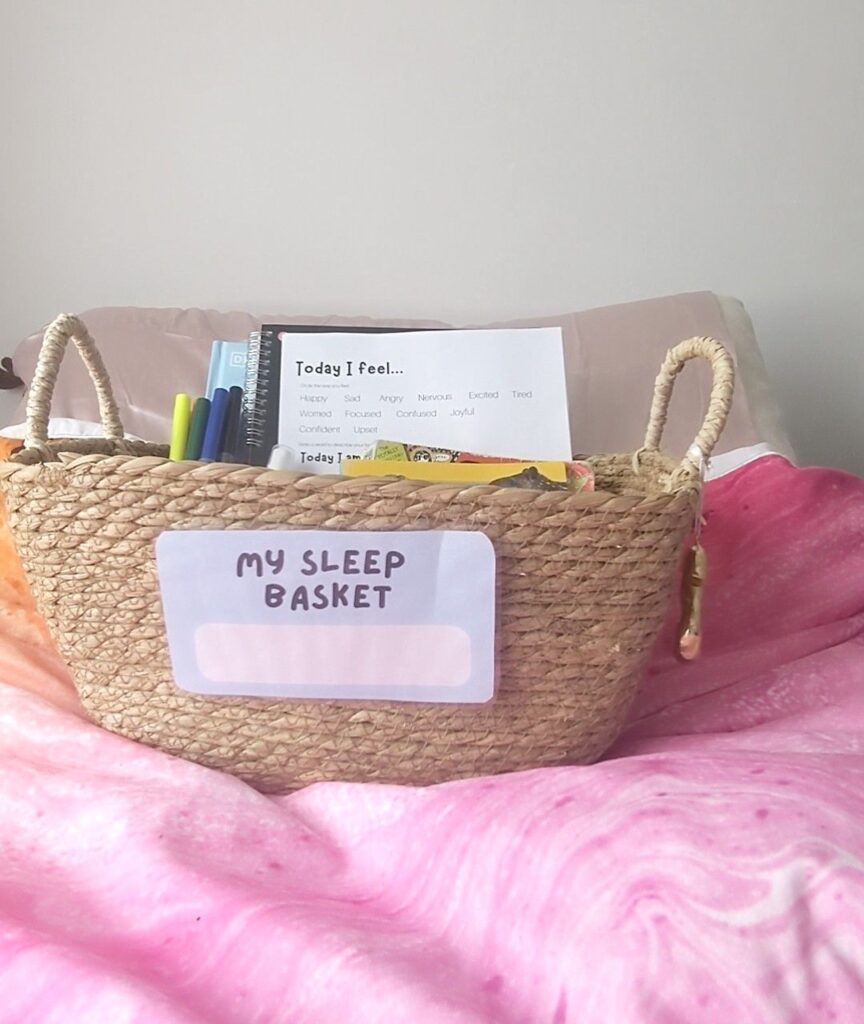
Keeping bedtime essentials together helps create a smoother nighttime routine.
Fill a basket with pajamas, sleep sacks, bedtime books, lotion, a hairbrush, and anything else you regularly use before putting your baby to sleep.
Place it near the crib so everything is within easy reach.
Pairing this routine with soft nursery lighting helps create a calm environment that signals it’s time to wind down for the night.
22. Organize Baby Care Products by Purpose

Instead of placing all baby care products in one container, group them according to how you use them.
Keep grooming supplies together, place medicines in a separate labeled container, and store bath products in another basket.
This system makes it much easier to find exactly what you need without searching through dozens of small bottles and tubes.
Always keep medications and healthcare products well out of your child’s reach.
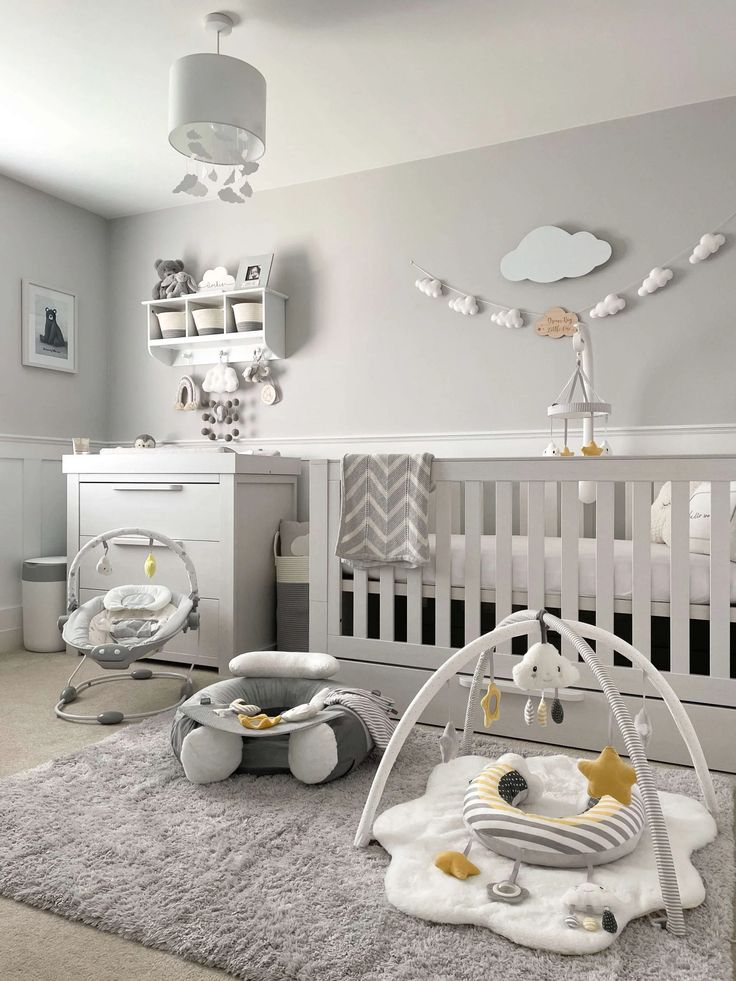
23. Use Decorative Storage That Matches Your Nursery
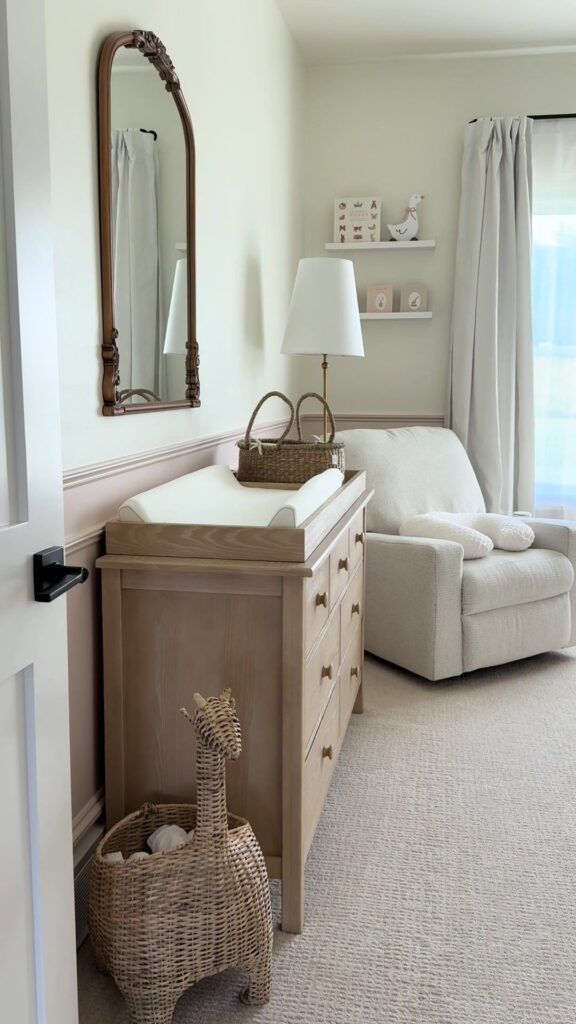
Storage can be practical without sacrificing style.
Choose woven baskets, fabric bins, wooden crates, or decorative boxes that complement your nursery’s colors and décor.
Coordinating your storage solutions creates a cleaner, more polished appearance while keeping everyday essentials neatly hidden.
If you’re decorating from scratch, selecting storage that matches your nursery furniture helps create a cohesive space that feels intentional rather than cluttered.
24. Declutter the Nursery Every Month

Organization isn’t something you do once and forget. As your baby grows, their needs change, and so will the items you keep in the nursery.
Clothes that fit a few weeks ago may already be too small, new toys will replace old ones, and you’ll probably receive gifts that need a place of their own.
Set aside a little time at the end of each month to go through drawers, baskets, shelves, and the closet.
Remove clothing your baby has outgrown, donate items you no longer use, and store keepsakes separately so they don’t take up valuable everyday storage.
Check expiration dates on baby care products, restock diapers and wipes if needed, and reorganize anything that’s no longer in its proper place.
This monthly reset prevents clutter from building up, helps you make better use of your storage space, and ensures your nursery continues to support your family’s daily routine.
Spending just a few minutes each month can save you countless hours searching for essentials later, making the room feel calm, functional, and ready for every new stage of your baby’s growth.
25. Give Every Baby Essential a Permanent Home
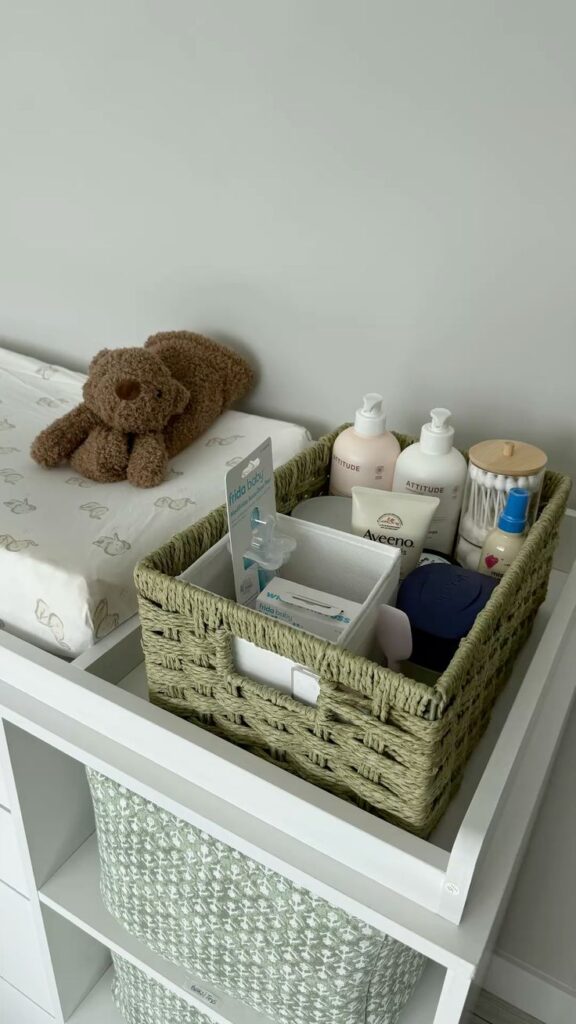
The easiest way to maintain an organized nursery is by making sure every item has a designated place.
When diapers always return to one basket, blankets stay on one shelf, toys belong in one bin, and clothes have assigned drawers, tidying the nursery takes only a few minutes each day.
Everyone in the family will know where to find things and where to put them back.
A simple system like this creates a nursery that’s easier to maintain, less stressful to use, and ready for whatever each day brings.
Create a Nursery That’s Easy to Maintain Every Day

A well-organized nursery isn’t measured by how perfect it looks. It’s measured by how well it supports your daily routine.
The goal is to create a space where diaper changes, feeding sessions, bedtime, and playtime happen smoothly because everything you need is exactly where you expect it to be.
Start with a few organization ideas that solve your biggest challenges, then build from there.
Small changes, like adding drawer dividers, labeling baskets, or creating dedicated stations for daily essentials, can make a remarkable difference over time.
As your baby grows, your organization system can grow too, helping your nursery remain functional, welcoming, and ready for every new stage of childhood.