

How to Choose the Best Night Light for a Nursery
Disclosure: Some of the links in this post are affiliate links. This means if you click on the link and purchase an item, I will receive an affiliate commission at no extra cost to you.
Choosing a night light may seem like a small decision while preparing your baby’s room, but it has a bigger impact than many parents expect.
During the first few months, you’ll likely wake several times each night for feedings, diaper changes, soothing, or simply checking that your baby is sleeping comfortably.
The right night light makes those moments easier by providing enough visibility without flooding the room with bright light that fully wakes everyone.
A nursery night light isn’t only for parents. As babies grow into toddlers, a gentle glow can help create a familiar bedtime environment and reduce anxiety around darkness.
The best night lights also support healthy sleep by providing soft illumination that feels calming instead of stimulating.
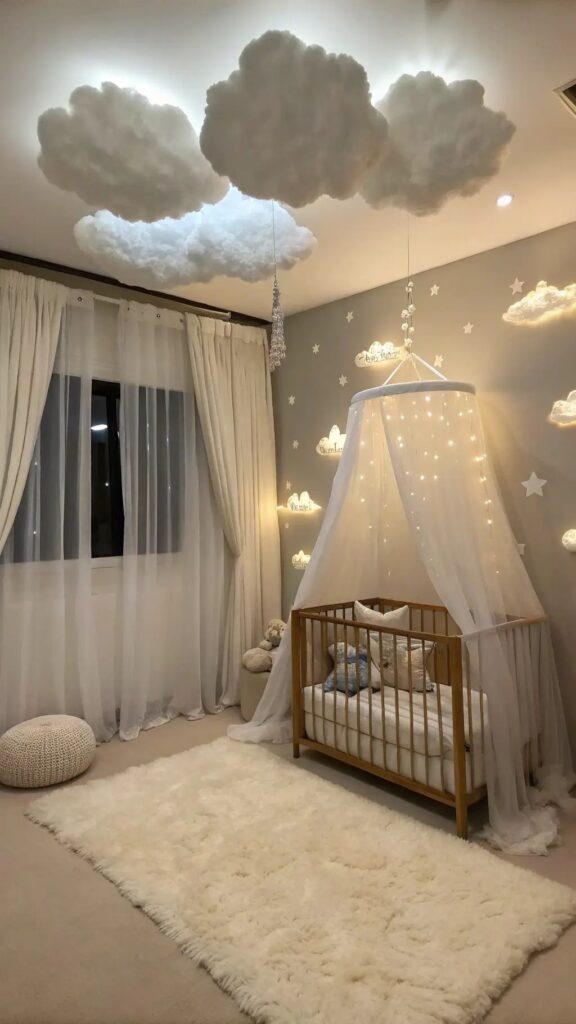
With so many styles available from plug-in lights and portable lamps to smart lighting systems and sound machines with built-in lights it can be difficult to know which one truly fits your family’s needs.
Some prioritize brightness, while others focus on color, portability, timers, or rechargeable batteries. The best choice depends on how you plan to use it every day.
As you begin planning your baby’s room, choosing essential nursery furniture alongside your lighting setup creates a space that feels practical, organized, and comfortable from the very beginning.
A thoughtfully designed nursery allows every item including your night light to work together in supporting your daily routine.
Start by Understanding How You’ll Use It

Before comparing different models, think about your nightly routine.
Ask yourself a few simple questions:
- Will the light mainly be used for feeding?
- Do you need enough brightness for diaper changes?
- Will it stay beside your nursing chair?
- Do you travel frequently?
- Will your toddler eventually use it too?
Answering these questions narrows your options considerably. Instead of buying the product with the longest list of features, you’ll choose one that genuinely fits your family’s lifestyle.
Parents creating a calming sleep environment often begin by exploring nursery lighting ideas for better sleep and comfort, making it easier to understand how different types of lighting work together throughout the day and night.
Why Every Nursery Benefits From a Night Light and How to Choose
Many parents assume a night light is optional until the first few sleepless nights arrive.
Imagine trying to change a diaper at 2 a.m. using only your phone’s flashlight or turning on a bright ceiling light that instantly wakes your baby. Neither option makes nighttime care easier.
A well-chosen baby night light provides gentle illumination exactly where it’s needed.
It allows you to move around safely, prepare bottles, check on your baby, and settle them back to sleep without disrupting the peaceful atmosphere you’ve created.
Night lights also become useful long after the newborn stage.
Toddlers often appreciate a familiar source of comfort at bedtime, making this one nursery purchase that continues providing value for years.
1. Choose Soft, Adjustable Brightness

Brightness is the first feature to consider.
A nursery night light should provide enough illumination for practical tasks without making the room feel like daytime.
Lights with adjustable brightness allow you to increase the light during diaper changes and reduce it during feedings or bedtime cuddles.
Very bright lights can make it difficult for babies and parents to fall asleep again after nighttime wake-ups.
Dimmable lighting gives you much more flexibility and often becomes one of the most appreciated features after your baby arrives.
2. Look for Warm Light Instead of Cool Light

Color temperature influences how relaxing a room feels.
Warm white or amber lighting creates a cozy atmosphere that encourages winding down before sleep.
Cooler blue or bright white lights are excellent for offices and workspaces, but they tend to increase alertness, making it harder to return to sleep after overnight care.
Many sleep specialists recommend warmer lighting during the evening because it feels gentler on tired eyes while creating a more peaceful nursery environment.
When shopping for a nursery night light, look for products labeled as warm white or those with adjustable color temperatures.
This allows you to maintain a soothing glow during nighttime feedings while still having the flexibility to brighten the room slightly if you need more visibility for diaper changes or other tasks.
A softer light also helps preserve your own night vision, so you won’t feel fully awake every time you enter the nursery.
Warm lighting can also make the nursery feel more inviting.
Instead of creating a harsh or clinical atmosphere, it adds a sense of comfort that benefits both parents and babies during quiet nighttime routines.
Even simple moments like rocking your baby back to sleep or reading a bedtime story become more relaxing under a gentle, warm glow.
Parents decorating their nursery often pair warm lighting with timeless nursery color palette ideas, creating a space that feels calm throughout every season.
3. Think About Placement Before Buying
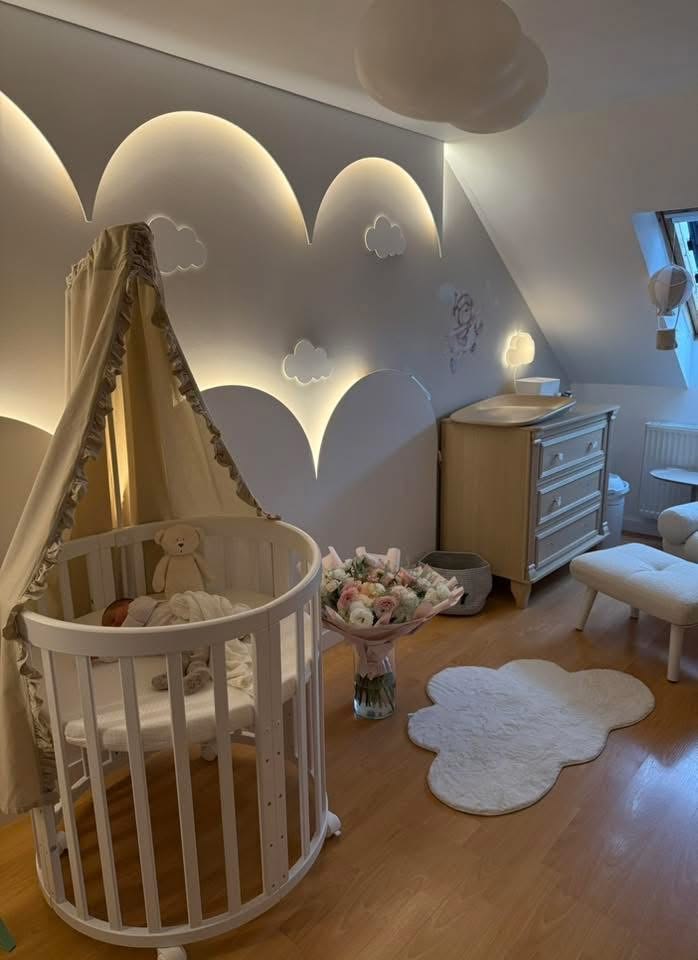
The best night light won’t perform well if it’s placed in the wrong location.
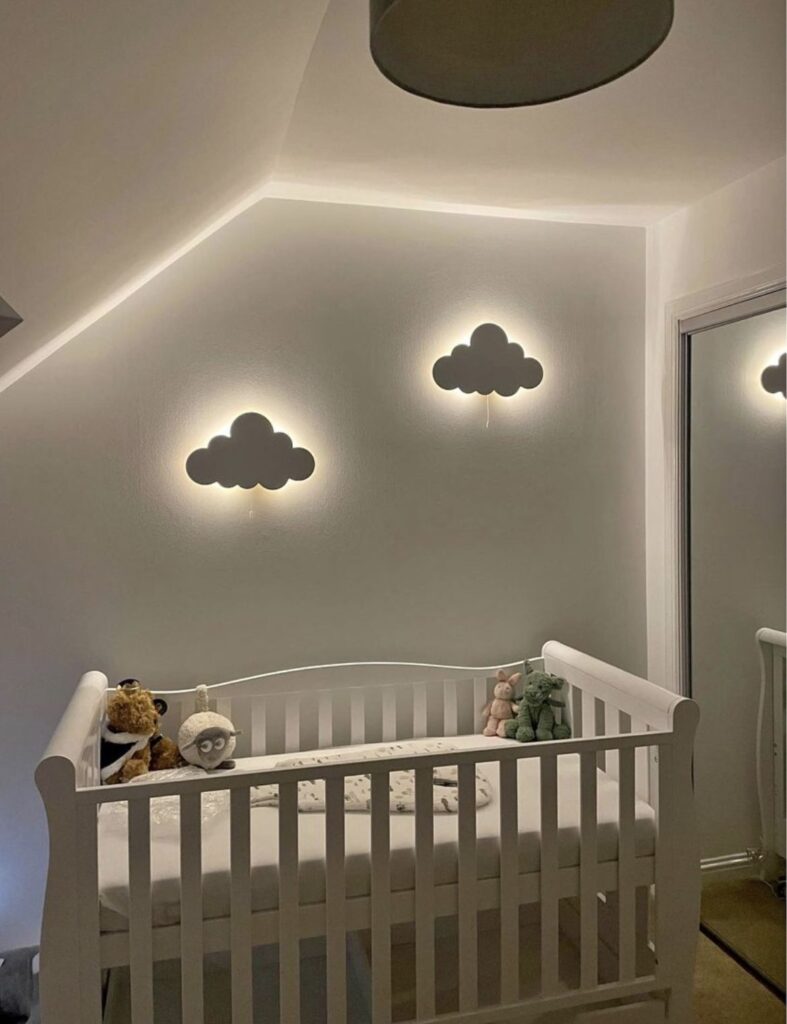
Think about how you move around the nursery at night. Ideally, the light should illuminate your walking path, changing area, or feeding chair without shining directly into your baby’s eyes.
Some families prefer placing a small lamp on a nearby table, while others choose wall-mounted or plug-in lights that stay completely out of the way.
Planning placement before shopping helps you choose the right size, style, and brightness from the beginning.
It’s also worth considering the outlets and furniture already in your nursery.
Choosing a location near your baby’s sleep area can make nighttime care more convenient, but the light should never shine directly into the crib.
Position it slightly to the side or behind your feeding chair so it provides enough visibility while keeping the sleeping area calm and dim.
If you’re using a portable or rechargeable night light, test a few different locations before settling on one.
You may find that moving it just a few feet changes how evenly the light spreads throughout the room.
The goal is to create enough visibility for nighttime tasks without filling the entire nursery with bright light that could make it harder for your baby to settle back to sleep.
As your baby grows and becomes more mobile, remember to review the placement again.
A spot that works well during the newborn stage may become easier for a crawling or curious toddler to reach.
Keeping the light safely positioned while maintaining easy access for parents helps ensure it remains both practical and safe for years to come.
4. Decide Between Plug-In, Portable, or Rechargeable Models

Night lights come in several designs, and each one offers different advantages.
Plug-in night lights remain in one location and require very little maintenance.
They’re ideal if you want continuous lighting near the crib, hallway, or nursery entrance.
Portable models can move around the house, making them useful for nighttime feeds in the living room or when traveling.
Rechargeable lights eliminate the need to replace batteries regularly and often provide greater flexibility because they aren’t tied to a wall outlet.
Think about how your family lives day to day.
If you frequently move between rooms while caring for your baby, a portable or rechargeable night light may serve you better than a fixed model.
5. Prioritize Safety Above Everything Else
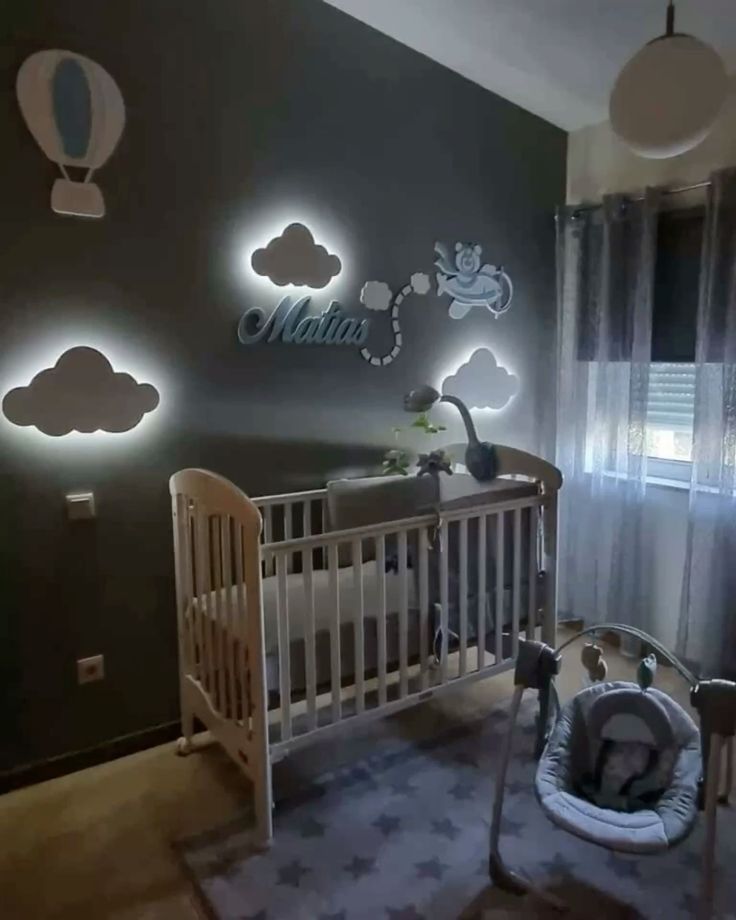
Every item inside a nursery should meet high safety standards, and night lights are no exception.
Choose products made from durable, non-toxic materials that stay cool to the touch, even after several hours of use.
Electrical cords should remain out of your baby’s reach, and portable lights should be sturdy enough to withstand accidental bumps without breaking easily.
As your baby begins rolling, crawling, and eventually pulling up to stand, anything within reach quickly becomes interesting.
Taking time to review an ultimate baby proofing checklist for new parents helps ensure your lighting setup remains safe as your child becomes more mobile.
6. Pick a Night Light That Grows With Your Child
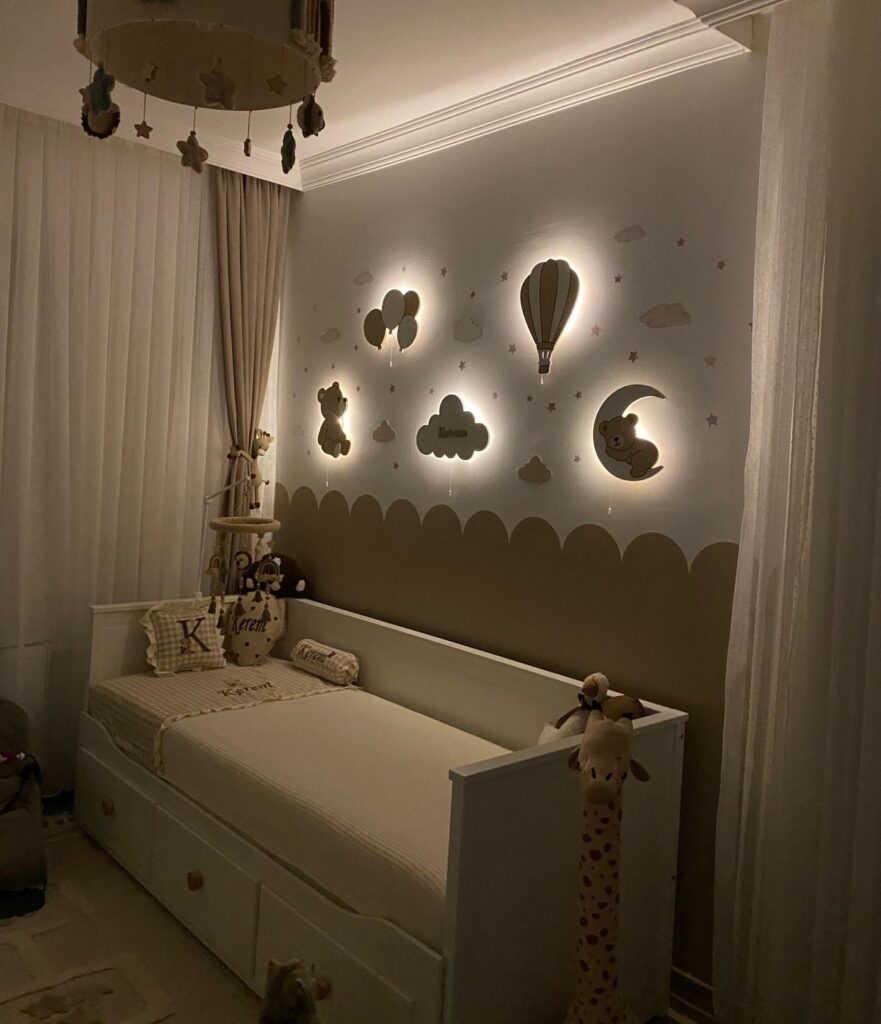
A good nursery night light shouldn’t become useless after a few months.
Many modern designs transition beautifully from the newborn stage into the toddler years.
A gentle bedside light that helps during nighttime feeds may later become a comforting sleep companion for your child as they develop more independence.
Choosing products with adjustable brightness, rechargeable batteries, or removable portable units often gives you much better long-term value than buying something designed only for infancy.
7. Look for Simple Controls
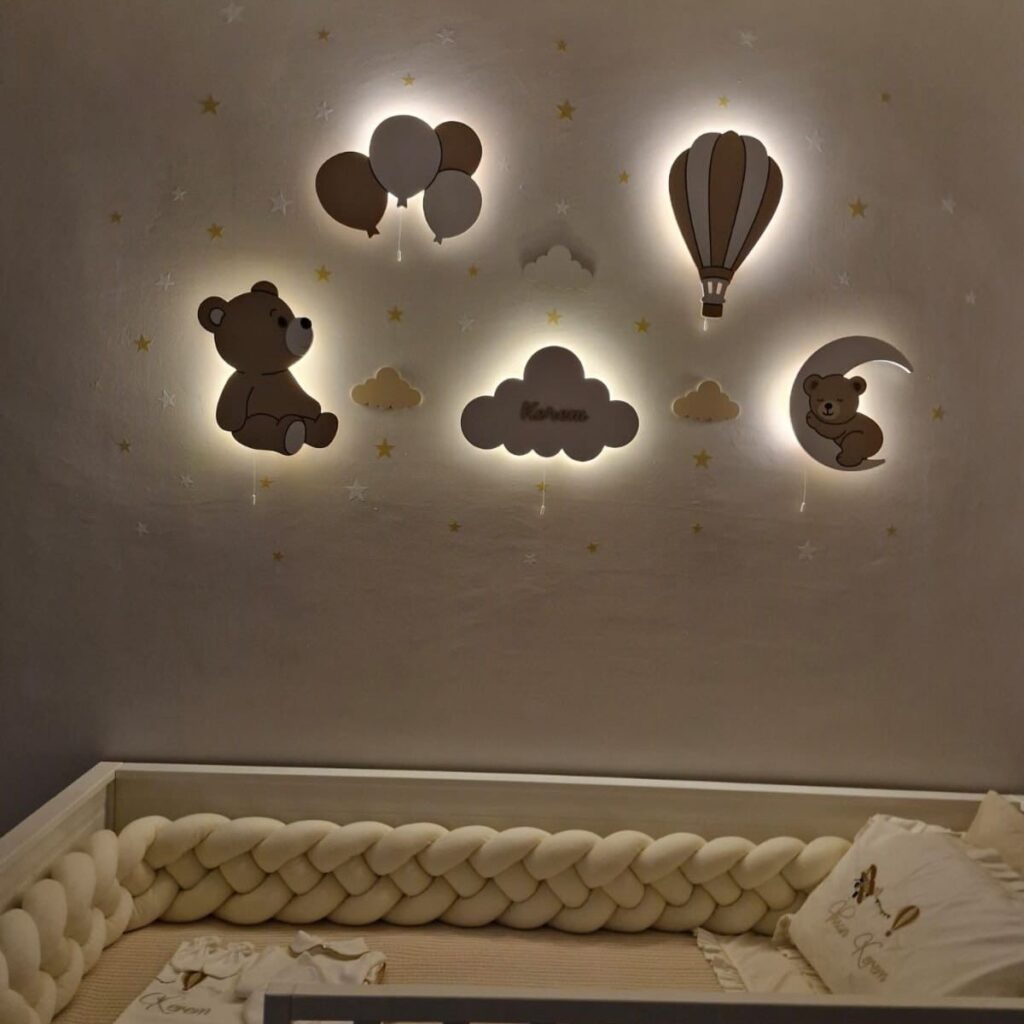
The middle of the night isn’t the best time to struggle with complicated buttons.
Choose a night light that’s easy to operate while you’re tired and possibly holding your baby.
Large buttons, touch controls, or simple dimmers are usually much more practical than products requiring several different settings before producing the light you need.
If grandparents or babysitters will also help care for your baby, straightforward controls make the light easier for everyone to use.
8. Smart Features Can Make Nighttime Easier
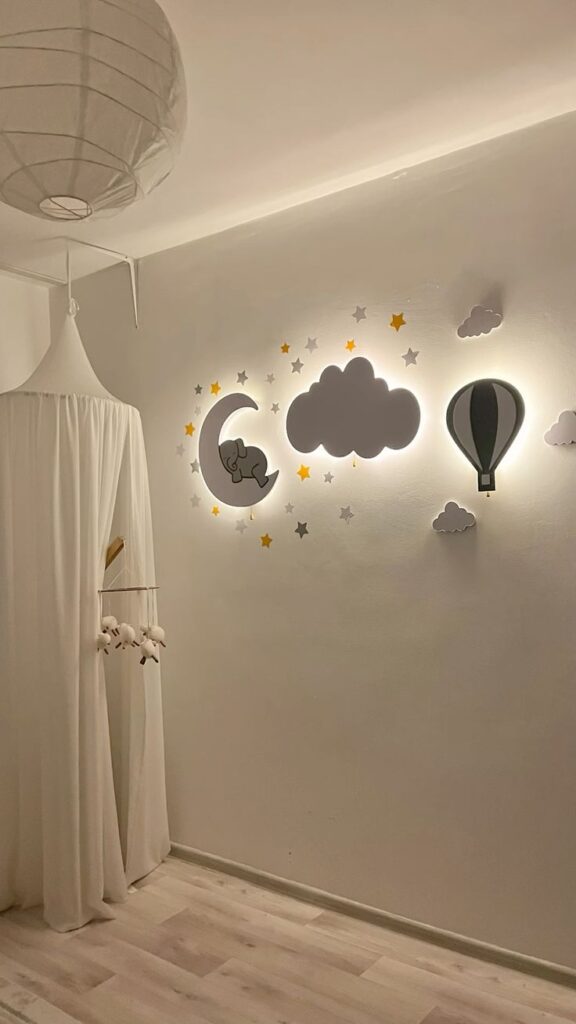
Many nursery night lights now include smart technology.
Some models allow you to adjust brightness through a mobile app, schedule automatic dimming, or control the light using voice assistants.
Others combine gentle lighting with white noise, lullabies, or sleep timers.
While these features aren’t essential, they can simplify nighttime routines for parents who appreciate extra convenience.
The key is choosing features you’ll actually use instead of paying for functions that remain untouched.
For example, a timer can automatically dim the light after your baby falls asleep, so you don’t have to remember to switch it off yourself.
Adjustable brightness settings are equally helpful because they allow you to customize the light for different activities, such as feeding, diaper changes, or quietly checking on your baby without disturbing their sleep.
Some smart night lights can also remember your preferred brightness level, so each time you turn them on, they automatically return to the same setting.
This small feature can save time during those sleepy middle-of-the-night wake-ups when you want as little disruption as possible.
If you’re considering a smart model, make sure it’s easy to operate.
Complicated apps or confusing controls can become frustrating when you’re caring for a newborn at 3 a.m.
A simple, reliable night light with a few well-designed smart features is often far more useful than one packed with options you’ll rarely use.
9. Consider Battery Life
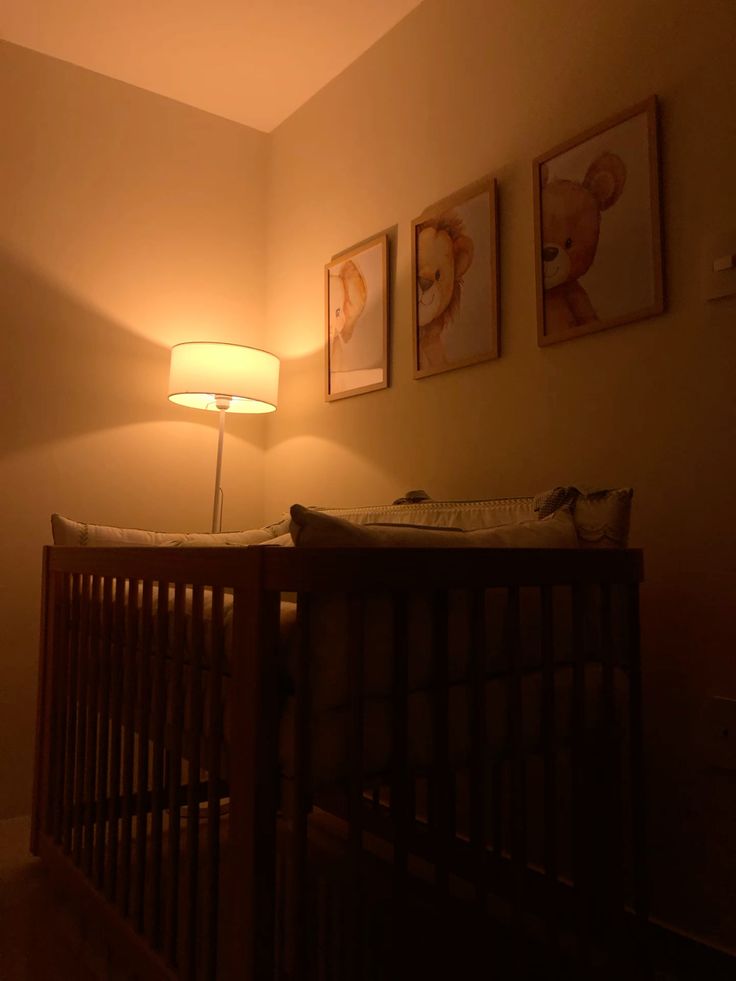
Battery performance matters more than many parents expect.
If your chosen night light is rechargeable, check how long it stays illuminated between charges.
Some portable lights last only a few hours, while others continue working throughout several nights before needing to be plugged in again.
Longer battery life becomes especially valuable during travel, power outages, or nights when you move frequently between different rooms caring for your baby.
10. Match the Night Light to Your Nursery Design
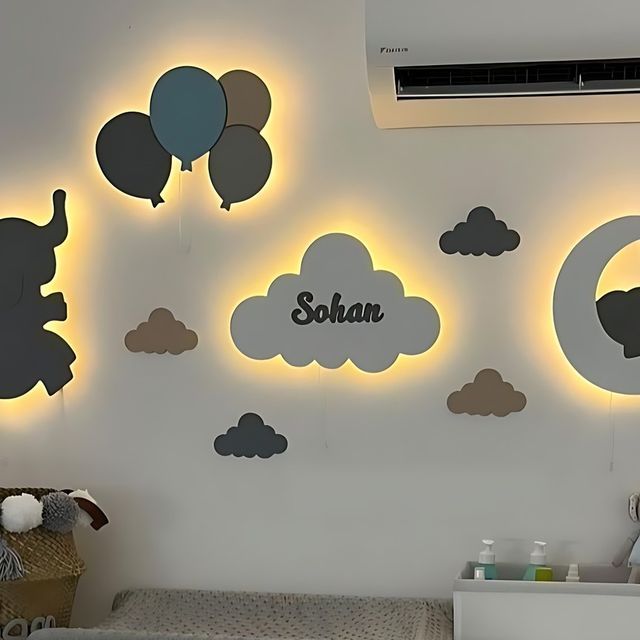
Function comes first, but appearance still matters.
A thoughtfully chosen night light can complement your nursery without becoming the center of attention.
Soft neutral finishes, natural wood details, or simple modern designs usually blend well with most decorating styles.
If you’re creating a nursery in a compact home, coordinating your lighting with nursery nook ideas for apartment living can help the entire space feel more cohesive without overcrowding the room.
11. Avoid Lights That Are Too Stimulating
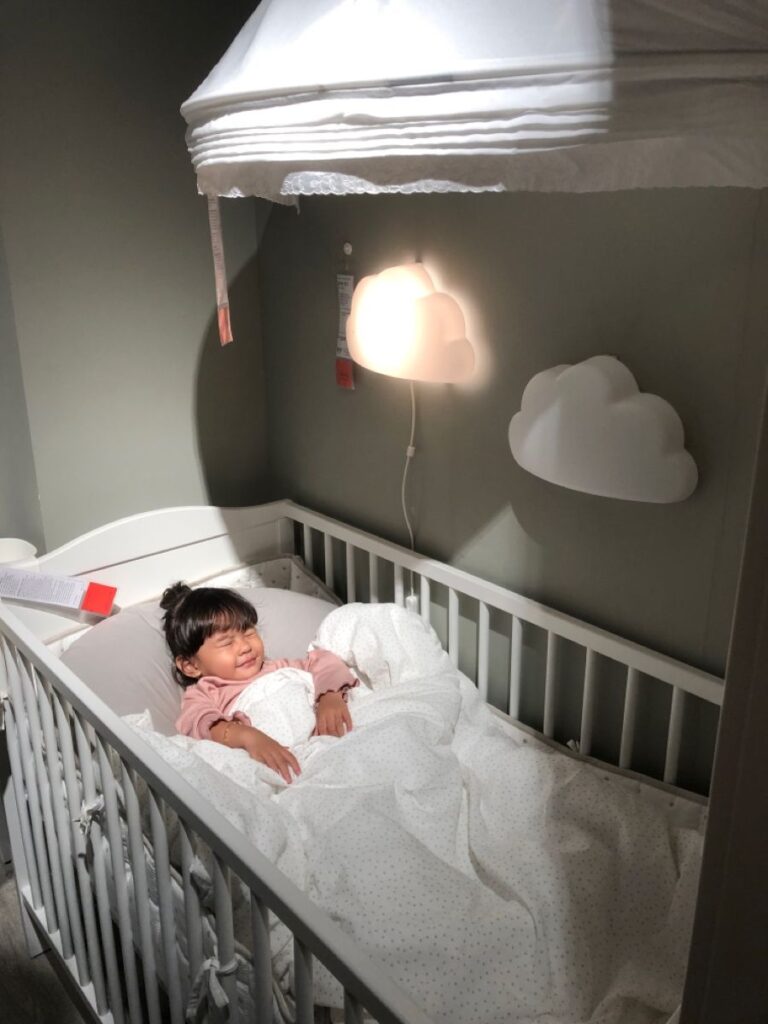
Some children’s night lights project moving stars, changing colors, or animated characters across the ceiling.
Although these features may seem entertaining, they aren’t always the best choice for bedtime, particularly during infancy.
Constant movement and bright colors can keep some babies alert instead of encouraging relaxation.
A simple, steady glow usually supports sleep much better than lights designed primarily for play.
12. Think About Nighttime Feeding Comfort

Night feeds become much more manageable when your lighting supports the routine.
Your night light should provide enough illumination to prepare bottles, check diaper fasteners, or adjust feeding positions without forcing your eyes to adapt from complete darkness to bright light.
Positioning your feeding chair near a gentle light source creates a comfortable space that you’ll likely use several times every night during the newborn stage.
A small side table beside the chair can make the area even more functional.
Keeping essentials like burp cloths, water, nursing supplies, a phone charger, or extra bibs within easy reach.
This means you won’t have to leave your baby or switch on brighter lights while searching for something you need.
A calm, well-lit feeding corner helps nighttime routines feel less stressful and allows both you and your baby to settle back to sleep more easily.
If you’re breastfeeding, soft lighting can also make long feeding sessions feel more relaxing without straining your eyes.
Parents who bottle-feed benefit in the same way, as gentle lighting provides enough visibility to safely prepare and check bottles while maintaining a peaceful atmosphere throughout the nursery.
Many parents also keep best first books for babies nearby, allowing quiet reading to become part of the bedtime routine as their child grows older.
13. Choose a Night Light That Supports Healthy Sleep Habits
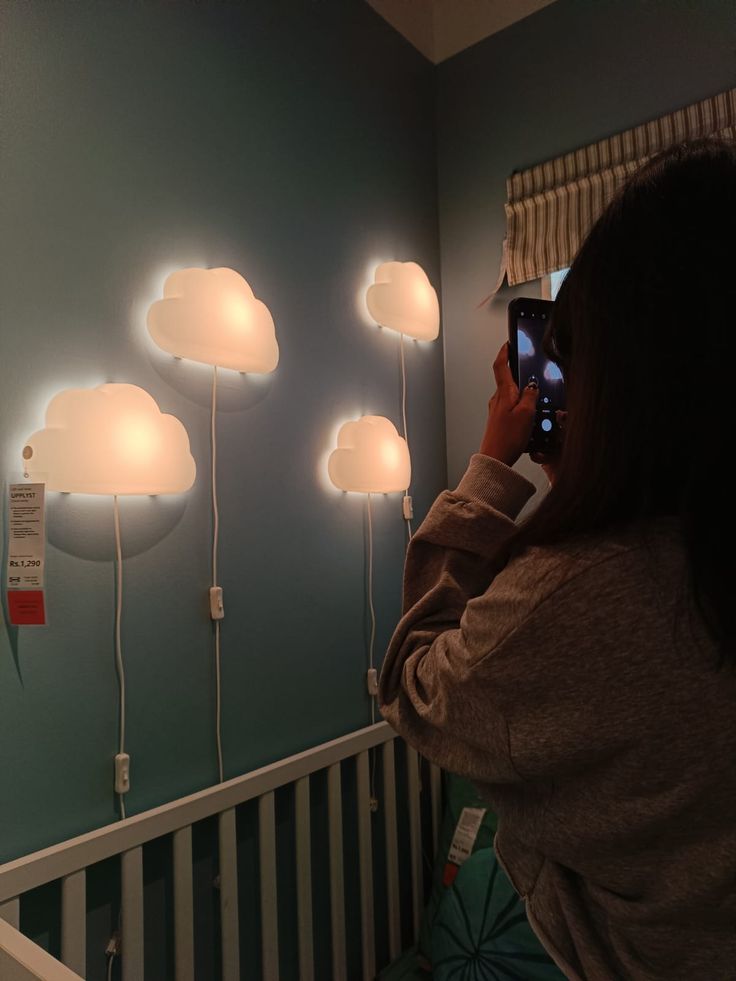
A nursery night light should encourage sleep, not interrupt it.
Keeping the room dim during nighttime care helps your baby’s internal body clock gradually learn the difference between daytime activity and nighttime rest.
Bright lights can signal that it’s time to wake up, making it more difficult for everyone to settle back to sleep after a feed or diaper change.
Try to keep nighttime interactions calm and quiet. Soft lighting, gentle voices, and minimal stimulation work together to create a consistent bedtime environment that supports better sleep over time.
If you’re setting up your baby’s room from scratch, combining a quality night light with clever nursery storage solutions for tiny spaces helps keep nighttime essentials close at hand, reducing the need to search around the room while your baby is awake.
14. Read Reviews From Parents With Similar Needs

Product descriptions often highlight every feature, but real-life experience tells a more complete story.
Before making your final decision, spend a little time reading reviews from parents who have used the night light during the newborn stage.
Look for comments about brightness, battery life, durability, ease of charging, and how simple the controls are during late-night feeds.
Pay close attention to repeated complaints.
If several parents mention that the light is brighter than expected, difficult to charge, or stops working after a short period, it’s worth considering another option.
Reviews can also reveal small details that manufacturers don’t always mention, such as how long the rechargeable battery actually lasts or if the light remembers your preferred brightness setting after being switched off.
15. Choose Quality Over Extra Features
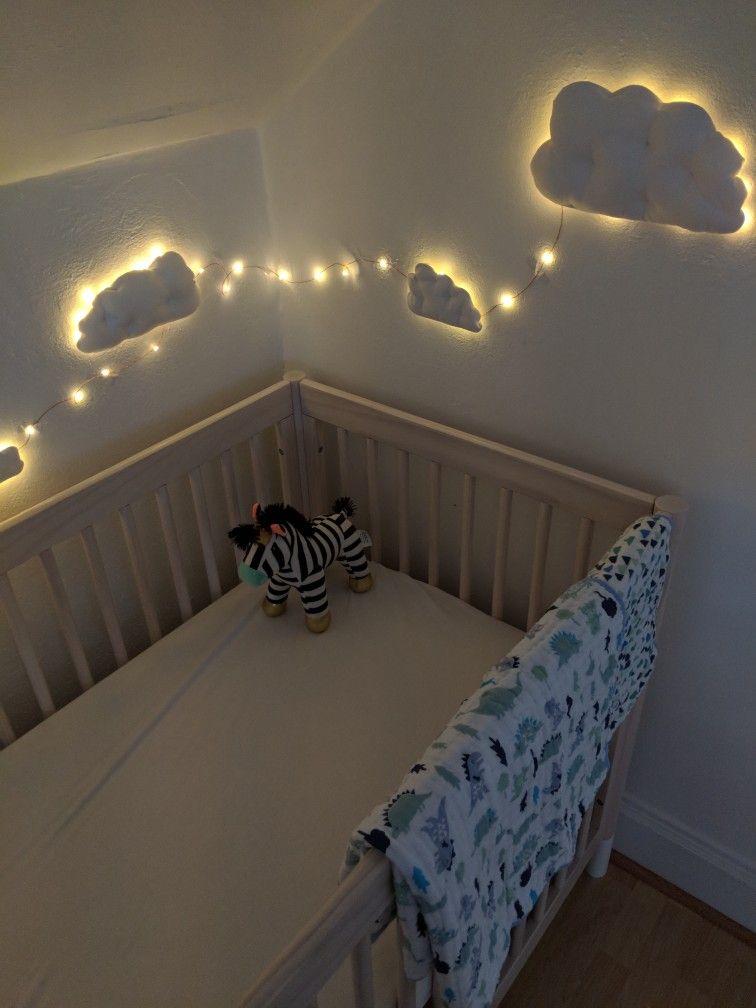
It can be tempting to buy the night light with the longest list of features.
Some models include clocks, music players, Bluetooth speakers, projectors, timers, color-changing lights, temperature displays, and dozens of lighting modes.
While these extras may sound impressive, they aren’t always necessary for everyday nursery use.
Instead, focus on the features you’ll rely on every single night:
- Comfortable, warm lighting
- Adjustable brightness
- Easy-to-use controls
- Safe construction
- Reliable battery life or power source
- Durability that lasts beyond infancy
A simple night light that performs these essentials well will often serve your family better than a complicated model packed with features you rarely use.
Parents furnishing a nursery on a budget often discover that combining practical purchases with budget nursery ideas that look expensive creates a beautiful space without spending unnecessarily on products that add little value.
Common Mistakes to Avoid When Buying a Nursery Night Light
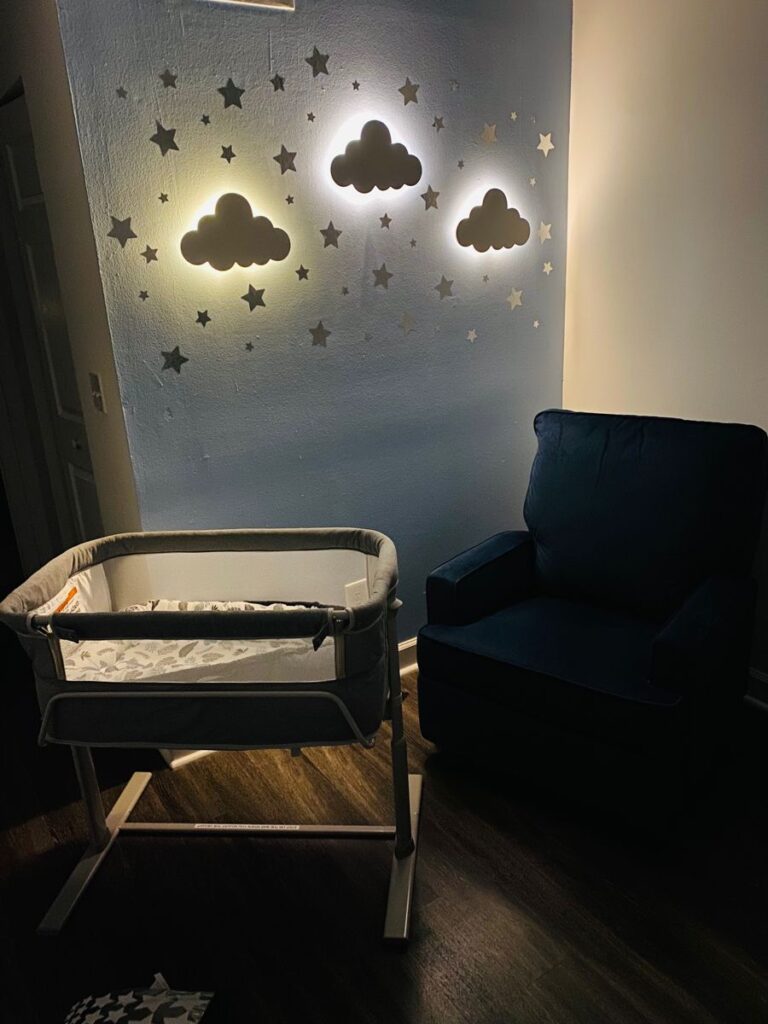
Choosing the wrong night light doesn’t usually create major problems, but it can make nighttime routines less comfortable than they need to be.
Some of the most common mistakes include:
- Buying a light that’s far too bright for nighttime use.
- Positioning the light where it shines directly into the baby’s eyes.
- Choosing style over safety.
- Ignoring battery life on rechargeable models.
- Purchasing complicated smart lights that are difficult to operate while tired.
- Forgetting to think about how the light will be used as your baby grows.
Avoiding these simple mistakes helps you choose a product that remains useful for years instead of only a few months.
A Small Light That Makes a Big Difference
A nursery night light may seem like a minor purchase, but you’ll probably use it thousands of times during your baby’s first few years.
From midnight diaper changes and early morning feeds to bedtime stories and quiet comfort during sleepless nights, it quickly becomes one of the hardest-working items in the nursery.
The best night light isn’t necessarily the most expensive or the one with the longest feature list.
It’s the one that fits naturally into your family’s routine, provides gentle illumination when you need it, and creates a peaceful environment where your baby can rest comfortably.
As your child grows, your lighting needs will naturally change.
A light that once guided late-night feedings may later become a reassuring bedtime companion for a toddler learning to sleep independently.
Choosing a versatile, well-designed product now means you’ll continue benefiting from it long after the newborn stage has passed.
If you’re still putting together your baby’s room, it also helps to explore nursery organization ideas that keep baby essentials within reach, making nighttime routines smoother while keeping the nursery calm and clutter-free.
Also Read
You may also enjoy these helpful nursery guides as you continue preparing for your baby’s arrival:
- How Many Newborn Clothes Do You Really Need?
- Bassinet vs Crib: Which Should You Choose?
- 21 Best Nursery Furniture Layout Ideas for Small Rooms
- Baby Wrap vs Structured Carrier: Pros and Cons for New Parents
- Infant Car Seat vs Convertible Car Seat: Which Should You Choose?
- Screen Time Guidelines for Babies





4 Comments