

How to Create a Birth Plan That Actually Works
Disclosure: Some of the links in this post are affiliate links. This means if you click on the link and purchase an item, I will receive an affiliate commission at no extra cost to you.
As your due date draws nearer, your thoughts naturally begin to focus on the day you’ll finally meet your baby.
One day you’re enjoying baby kicks and counting down the weeks, and the next you’re wondering what labor will be like, when you should leave for the hospital, who should be with you during delivery, and what happens if your birth doesn’t go exactly as you imagined.
These questions are part of pregnancy for many expectant parents, especially if this is your first baby. While no one can predict how labor will unfold, preparing ahead of time can help you feel more confident when the day arrives.
One of the best ways to prepare is by creating a birth plan. A birth plan gives you the chance to think through your preferences before labor begins.
It helps you discuss important decisions with your healthcare provider, share your wishes with your support person, and communicate your priorities to the medical team caring for you.
Rather than trying to control every moment, it creates a clear guide that everyone can refer to throughout your labor and delivery.
As you begin putting your birth plan together, you’ll probably realize there are other parts of your preparation that deserve attention too.
You may need to start packing your hospital bag before labor begins, decide who’ll drive you to the hospital, or think about the first few days after bringing your baby home.
The good news is that creating a birth plan doesn’t have to be complicated. A simple, well-organized plan is often more helpful than several pages of detailed instructions.
This guide will show you what to include, common mistakes to avoid, and practical tips for creating a birth plan that works for you, your healthcare provider, and your growing family.
What Is a Birth Plan?

A birth plan is a written summary of your preferences for labor, delivery, and the first hours after your baby is born.
It gives your healthcare team a quick overview of what matters most to you so they can support your wishes whenever it’s safe and medically appropriate.
Instead of making important decisions while you’re experiencing contractions, you have time to think about them beforehand. This allows you to ask questions, understand your options, and make informed choices with your doctor or midwife.
A birth plan can include your preferences for pain management, the atmosphere you’d like during labor, who you want in the delivery room, your preferred birth positions, and the type of care you’d like after your baby arrives.
It’s important to remember that a birth plan isn’t a contract. Labor can change quickly, and your medical team may recommend a different approach if it’s the safest option for you or your baby.
Having a flexible plan allows everyone to work together while keeping your health and your baby’s well-being as the top priority.
Creating your birth plan also gives you another reason to choose the right OB-GYN or midwife early in your pregnancy.
Having a healthcare provider who listens, answers your questions, and respects your preferences makes the planning process much easier.
Why Creating a Birth Plan Is Worth It

Some parents decide not to write a birth plan because they’ve heard that labor rarely goes exactly as expected. While it’s true that birth can be unpredictable, having a plan is still worthwhile.
The purpose isn’t to guarantee a particular experience, it’s to help you prepare, communicate clearly, and feel more confident before labor begins.
One of the biggest benefits is that it encourages you to learn about childbirth before your due date.
As you think through different parts of labor and delivery, you’ll naturally come up with questions to discuss during your prenatal appointments.
Those conversations help you understand your options and make decisions based on reliable medical advice instead of last-minute searches or stories from other people.
A birth plan also helps your support person understand your wishes. During labor, there may be moments when you’re concentrating on breathing through contractions or simply resting between them.
If your partner, family member, or doula already knows what’s important to you, they’ll be in a better position to offer support and communicate with your healthcare team if needed.
Preparing your birth plan often encourages you to organize other important tasks before your baby arrives.
For example, many parents begin planning their maternity leave around the same time so they can focus on recovery and caring for their newborn without unnecessary stress.
It’s also common to start building a realistic baby budget, giving you a clearer picture of the expenses you’ll face during the first few months after birth.
Another advantage is peace of mind. Knowing you’ve taken time to think through your preferences can reduce anxiety as your due date approaches.
You may not have control over every part of labor, but you’ll know you’ve prepared for the decisions that matter most to you.
What to Include in Your Birth Plan

Every birth plan is unique because every pregnancy is different. Your preferences may not look exactly like someone else’s, and that’s completely okay.
Focus on the decisions that matter most to you and keep your plan easy for your healthcare team to read.
Your Personal Information
Start with the basic details at the top of your document. Include your full name, estimated due date, the name of your doctor or midwife, the hospital or birthing center where you plan to deliver, and the name of your support person.
You can also include an emergency contact and any important medical information your healthcare team should know.
Keeping these details together makes your birth plan easy to identify if copies are shared among different members of the maternity team.
Your Labor Preferences

Think about the environment that will help you stay as comfortable and relaxed as possible during labor.
Some parents prefer a quiet room with minimal interruptions, while others like soft music playing in the background. You may want the lights dimmed, or you may not have any preference at all.
Movement is another important consideration. Walking, changing positions, sitting on a birthing ball, or standing during labor can help many women stay comfortable.
If you’d like the freedom to move around whenever it’s medically safe, include that in your birth plan and discuss it with your healthcare provider beforehand.
Pain Relief Preferences

Pain management is one of the most personal parts of any birth plan.
Some parents hope to have an unmedicated birth, while others already know they’d like medication to help manage labor pain. Many prefer to keep an open mind and decide as labor progresses.
Before making your decision, it can be helpful to learn about the differences between a natural birth and an epidural.
Understanding how each option works, along with the benefits and possible limitations, allows you to make a choice that matches your comfort level and medical needs.
You can also include non-medication comfort measures you’d like to try first, such as breathing exercises, massage, warm showers, hydrotherapy, or changing positions throughout labor.
Remember that your birth plan reflects your preferences, not fixed rules.
If your needs change during labor, it’s perfectly okay to make a different decision.
Delivery Preferences

Your birth plan should also include any preferences you have for the delivery itself.
While it’s impossible to predict exactly how your baby will be born, thinking about these decisions ahead of time can help you feel more prepared.
For example, you can state who you’d like to have in the delivery room. Some parents prefer only their partner to be present, while others feel more comfortable with a family member, close friend, or doula offering support.
If there are people you don’t want in the room, it’s perfectly acceptable to include that as well. You may also want to mention your preferred birthing positions.
Depending on your hospital’s policies and your medical condition, you may be able to deliver while lying on your side, squatting, kneeling, or using another position that feels more comfortable than lying flat on your back.
If you’d like to see your baby being born with the help of a mirror or reach down to touch your baby’s head during delivery, those requests can also be included.
Although they may seem like small details, they can make the experience feel more personal and memorable.
Your healthcare team will always keep your safety and your baby’s well-being at the center of every decision. If circumstances change during labor, they may recommend a different approach.
Staying flexible allows everyone to respond to those changes while still respecting your preferences whenever possible.
Your Preferences After Birth

Your birth plan shouldn’t stop once your baby is delivered.
The first few hours after birth are filled with important moments, and including your wishes can help your healthcare team understand what matters most to you.
Many parents request immediate skin-to-skin contact because it helps regulate the baby’s temperature, supports early bonding, and can encourage breastfeeding.
If your baby is healthy and doesn’t need urgent medical care, you can include this in your birth plan.
You can also mention delayed cord clamping if that’s something you’ve discussed with your healthcare provider.
Some parents choose to begin breastfeeding within the first hour after birth, while others may
Common Birth Plan Mistakes to Avoid
Even a well-written birth plan can become less helpful if it includes too much information or isn’t discussed before labor begins.
Keeping your plan clear, realistic, and flexible makes it much easier for your healthcare team to understand and follow.
Making Your Birth Plan Too Detailed

After spending weeks reading pregnancy books, watching videos, and talking to other parents, it’s easy to feel like every detail should be included in your birth plan. In reality, the opposite is usually true.
Doctors and nurses care for many families every day. A short, well-organized birth plan is much easier to read than several pages filled with lengthy explanations.
Instead of writing paragraphs about every preference, focus on the decisions that matter most to you.
If there are topics you still have questions about, discuss them during your prenatal appointments instead of trying to answer everything in your birth plan.
Treating It Like a Fixed Set of Instructions

Your birth plan should guide your care, not limit it. Labor doesn’t always follow the same path.
Your baby’s position may change, contractions may progress differently than expected, or your healthcare team may recommend additional monitoring or another medical intervention to keep both of you safe.
Being open to adjustments doesn’t mean you’ve failed or that your original plan wasn’t worthwhile. It simply means you’re responding to the situation with the guidance of the professionals caring for you.
Many parents look back on their birth experience and realize that staying flexible helped them feel less disappointed when unexpected changes became necessary.
Waiting Until Labor to Share Your Birth Plan

One of the easiest mistakes to avoid is keeping your birth plan to yourself until the day you arrive at the hospital.
Instead, bring a copy to one of your final prenatal appointments and review it with your doctor or midwife.
This gives you time to ask questions, make changes, and understand how your preferences fit with the hospital’s usual procedures.
It’s also a good idea to print several copies before your due date. Keep one with your pregnancy records, place another inside your hospital bag, and save a digital copy on your phone so it’s easy to access if needed.
Forgetting to Prepare for Life After Delivery

Giving birth is a major milestone, but it’s only the beginning of your journey as a parent. While you’re getting ready for labor, spend some time thinking about what happens after you return home.
Many parents find it helpful to prepare a comfortable recovery space, stock up on household essentials, and organize the newborn essentials you’ll need before bringing your baby home.
If you’re planning to breastfeed, reading a breastfeeding guide for first-time moms before delivery can also help you feel more confident during those first few days with your baby.
Preparing ahead allows you to spend less time worrying about errands and more time getting to know your newborn.
A Simple Birth Plan Example
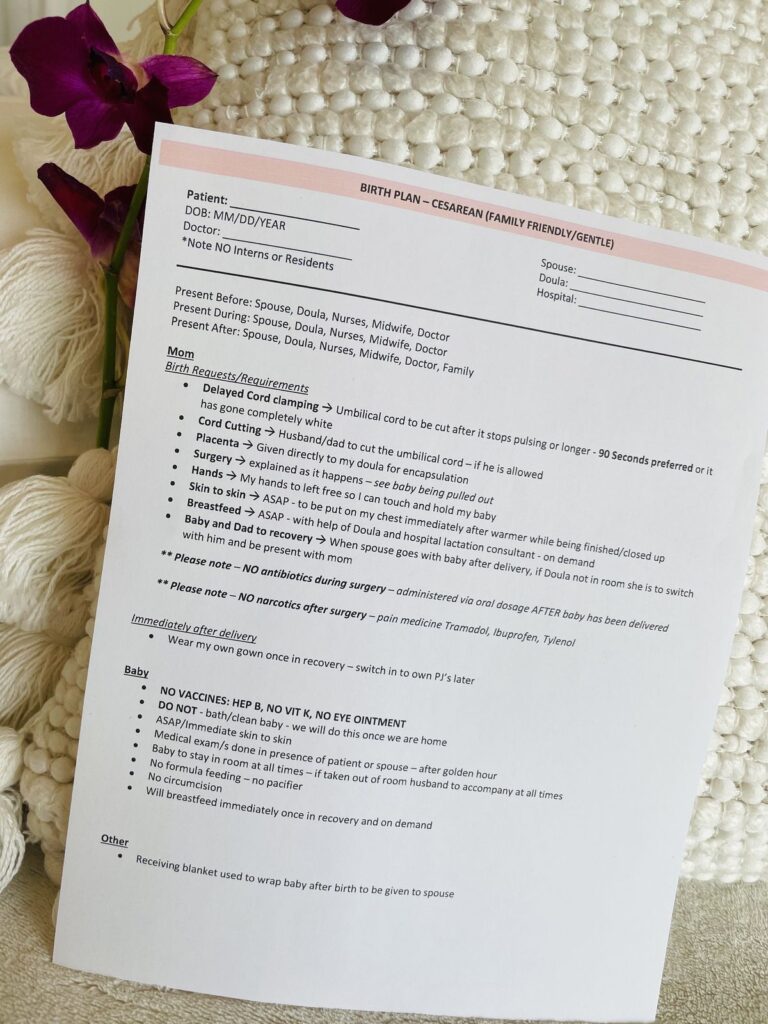
If you’re unsure how to organize your birth plan, starting with a simple template can make the process much easier. You can always adjust it later after discussing your preferences with your healthcare provider.
Personal Information
- Name:
- Estimated due date:
- Doctor or Midwife:
- Hospital or Birthing Center:
- Support Person:
- Emergency Contact:
During Labor
- I’d like to move around whenever it’s medically safe.
- I’d prefer a calm and quiet environment.
- I’d like my support person to remain with me throughout labor.
- I’d like to begin with natural comfort measures before requesting pain medication.
During Delivery
- Please explain procedures before they’re performed whenever possible.
- I’d like delayed cord clamping if it’s safe.
- I’d like immediate skin-to-skin contact after birth.
- I’d like my support person to stay with me if a cesarean birth becomes necessary.
After Birth
- I’d like to begin breastfeeding as soon as possible.
- I’d prefer routine newborn procedures after we’ve had time to bond, if medically appropriate.
- Please keep my support person informed if my baby requires additional care.
This example is meant to inspire your own plan, not replace it.
Every pregnancy is different, so your birth plan should reflect your personal preferences, your medical history, and the advice you’ve received from your healthcare provider.
Questions to Ask Before Finalizing Your Birth Plan

Before you print your birth plan and place it with your pregnancy records, take a little time to review it with your healthcare provider.
A short conversation now can prevent misunderstandings later and help you feel more confident about the decisions you’ve made.
Don’t be afraid to ask questions. Your doctor or midwife wants you to understand your options and feel comfortable with your plan.
Here are a few helpful questions you can discuss:
- Does this hospital support the preferences I’ve included?
- Are there any requests that may not be possible?
- What usually happens if labor takes longer than expected?
- Under what circumstances might my birth plan need to change?
- Can I update my birth plan if I change my mind before my due date?
- How many copies should I bring with me?
These conversations often help parents make small adjustments that improve their birth plan without changing their overall goals.
They also give you a clearer picture of what to expect on the day you deliver.
Around this stage of pregnancy, many parents also begin learning about the signs labor is starting.
Knowing the difference between early labor, active labor, and false labor can make it easier to decide when it’s time to contact your healthcare provider or head to the hospital.
Preparing for the Big Day

Creating a birth plan is an important milestone, but it’s only one part of preparing to welcome your baby.
As your due date gets closer, take some time to go over the practical details that will make the first few days easier.
Double-check that you’ve finished packing your hospital bag before labor begins, review your route to the hospital, and make sure your baby’s car seat has been installed correctly.
If you’re still deciding where your newborn will sleep, this is also a good time to compare a bassinet and a crib so you can choose the option that works best for your home and your family’s needs.
Financial preparation is equally important.
Welcoming a new baby comes with ongoing expenses, so having a baby emergency fund before birth can give you extra peace of mind if unexpected costs come up during delivery or the first few months of parenthood.
Your home doesn’t need to be perfect before your baby arrives, but having the basics in place can make a big difference.
Preparing a safe sleeping area, organizing baby supplies, and making everyday essentials easy to reach allows you to spend more time recovering and bonding with your newborn instead of rushing to complete unfinished tasks.
A Birth Plan Is About Preparation, Not Perfection

No two birth stories are exactly alike. Some labors move quickly, while others take more time.
Some parents follow every part of their birth plan, while others need to make unexpected decisions along the way. None of these experiences are a measure of success or failure.
The purpose of a birth plan isn’t to predict every moment of labor. It’s to help you think ahead, communicate clearly, and make informed decisions with the people caring for you.
Once you’ve finished your birth plan, print a few copies and keep one with your pregnancy documents, one inside your hospital bag, and another saved on your phone.
Review it with your support person so they understand your preferences before labor begins.
Most importantly, remember that your birth plan should support you, not add pressure.
Staying informed, asking questions, and keeping an open mind will help you approach your baby’s birth with confidence, no matter how your journey unfolds.
Soon enough, all of the planning, appointments, and preparation will lead to one unforgettable moment, meeting your baby for the very first time.
Here are a few more articles you may find interesting
31 DIY Nursery Decor Projects Anyone Can Make
45 Budget-Friendly Baby Shower Ideas 40 Baby Welcome Home Celebration Ideas
Baby Shower Planning Checklist From Start to Finish







One Comment