

11 Montessori Activities for 3-Month-Old Babies
Disclosure: Some of the links in this post are affiliate links. This means if you click on the link and purchase an item, I will receive an affiliate commission at no extra cost to you.
Three months can be an exciting point in your baby’s development. Your little one may be staying awake for longer periods, smiling more often, making new sounds, and becoming increasingly interested in what happens around them.
You may also notice that your baby is beginning to move with greater purpose. Their arms and legs may be more active, and they may spend more time looking at objects, following movement, or trying to reach towards something interesting.
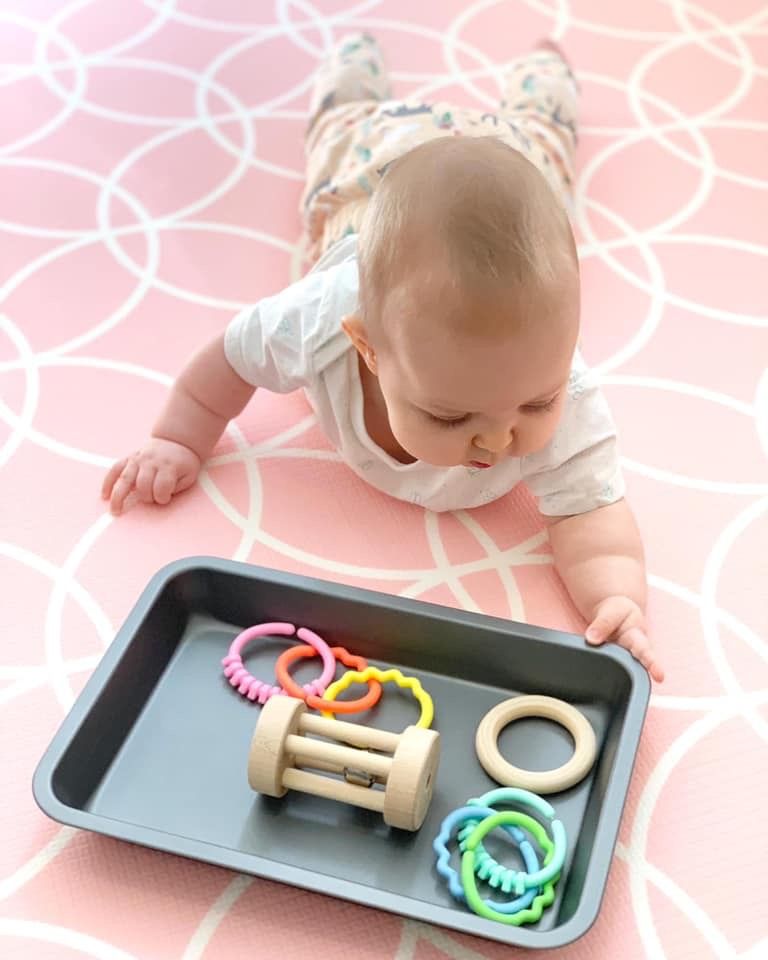
These changes create more opportunities for play. Montessori activities at this age do not need to involve complicated learning materials.
A three-month-old baby is still very young, so the best experiences are usually simple, calm, and focused on observation and movement.
The Montessori approach places importance on allowing children to explore their environment at their own pace.
For a three-month-old, that can mean giving them a safe space to move freely, offering one interesting object at a time, and allowing them to concentrate without unnecessary distractions.
Your baby may spend only a few minutes looking at a mobile or reaching for a toy. That is perfectly reasonable at this stage.
The purpose is not to make your baby complete an activity. Instead, these experiences give them opportunities to practise emerging skills while enjoying time with you.
The activities below can easily fit into ordinary routines and can become simple developmental experiences for babies in their first year as your child’s abilities continue to change.
Montessori Activities That Suit a Three-Month-Old Baby
At three months, babies are becoming more alert and responsive, but they still need plenty of sleep, feeding, cuddling, and quiet time.
Montessori-inspired activities should complement those needs rather than create a demanding schedule.
A prepared environment can be as simple as a clean floor mat, a few carefully selected materials, and enough space for your baby to move comfortably.
Your baby does not need dozens of toys. Too many objects can make it difficult for a young baby to concentrate.
Offering one object at a time can give your child an opportunity to study its shape, movement, sound, or texture.
Safety should always come first. Keep small objects, loose materials, cords, and anything that could become a choking or suffocation hazard away from your baby.
It is also useful to watch your baby’s signals. When your baby looks away, becomes fussy, or appears tired, it may be time to stop. When they are calm and alert, they may be ready to explore.
These activities can also build naturally on gentle experiences that support babies during the earliest months without expecting them to perform a particular skill.
1. Watch a Simple Montessori Mobile
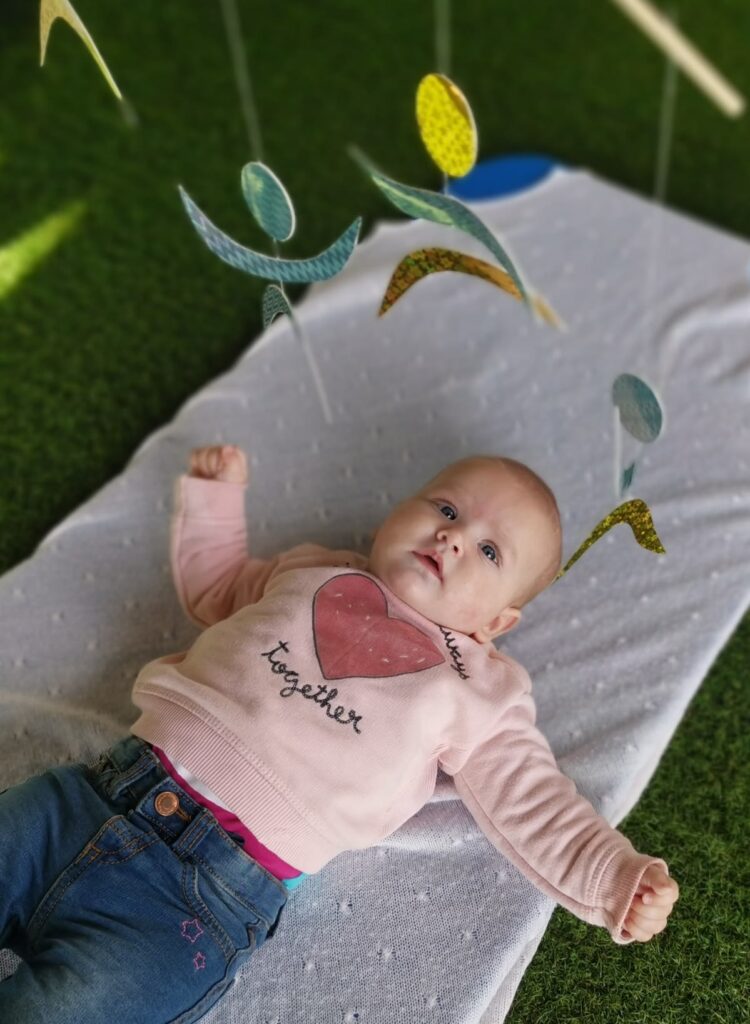
A simple visual mobile can give your three-month-old something interesting to observe while lying safely on their back.
Choose a mobile with clear shapes and gentle movement. Position it securely and follow the manufacturer’s safety instructions regarding distance and placement.
Allow your baby to watch without constantly moving the mobile yourself.
They may follow the shapes with their eyes, move their arms, or simply stare quietly. These small responses can make the activity enjoyable.
Keep the surrounding area free from other distractions so your baby can focus on one visual experience.
A mobile should always be securely positioned out of your baby’s reach. It should never be treated as a toy that the baby can grab.
2. Encourage Reaching for a Toy
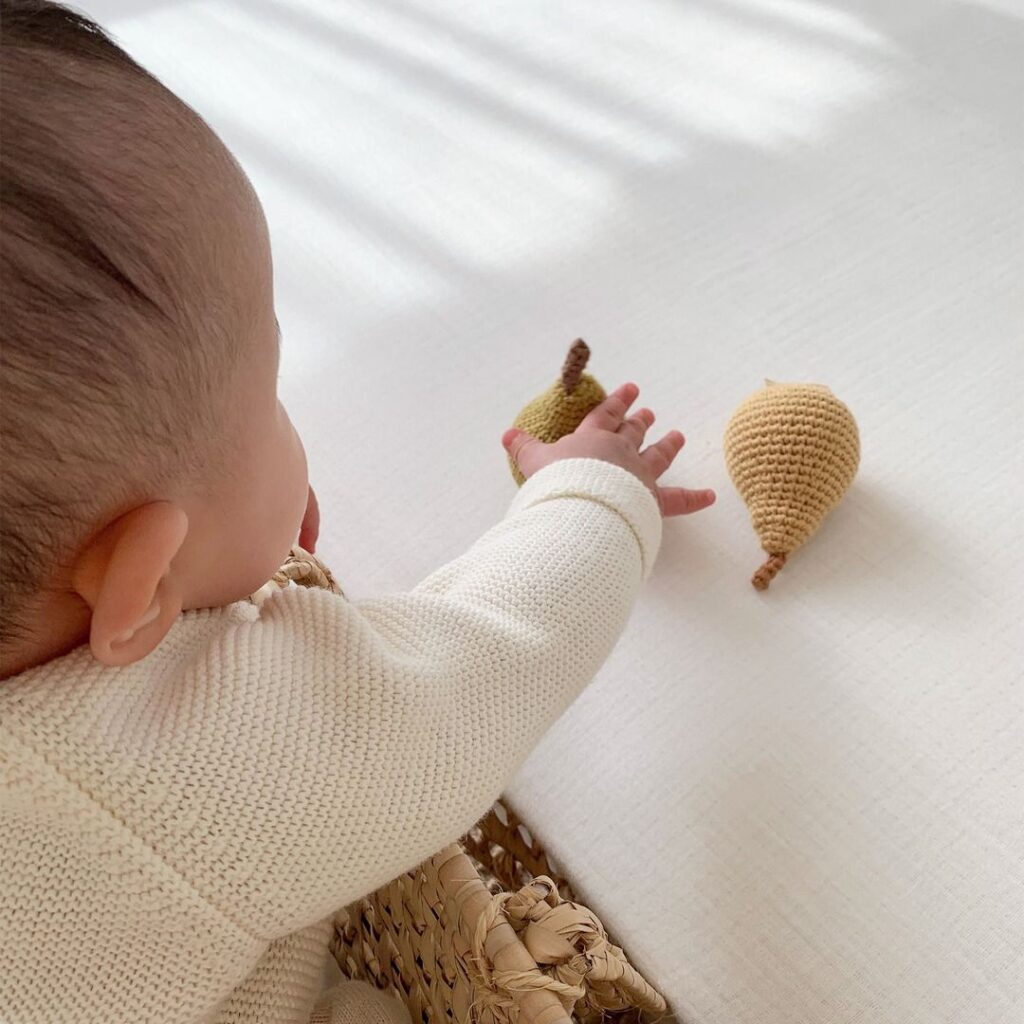
Place a lightweight, baby-safe toy where your baby can see it while lying comfortably on their back.
Give them time to notice the object before moving it closer.
Your baby may wave their arms, reach towards the toy, or simply watch it.
You can slowly move the object from one side to another to encourage visual tracking and reaching.
Avoid placing the toy so far away that your baby becomes frustrated.
This simple activity can introduce easy ways to encourage purposeful movement during baby play while giving your child freedom to respond naturally.
3. Practise Short Tummy Time Sessions
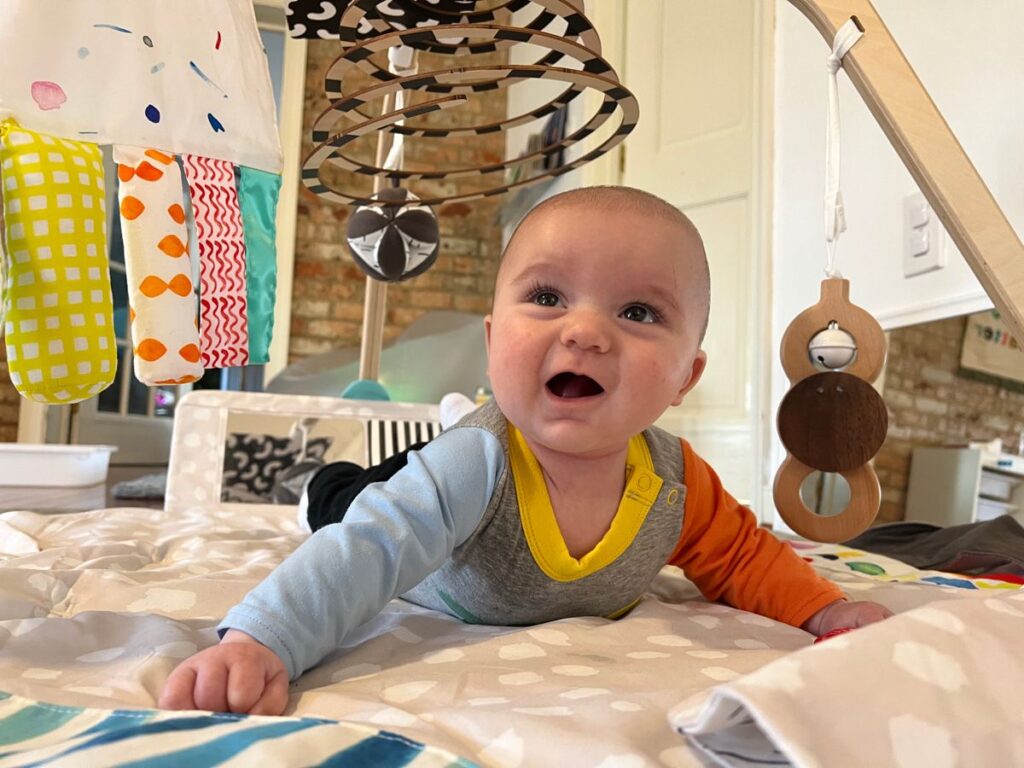
Tummy time can give your baby opportunities to practise lifting and turning their head while supervised.
Place your baby on a firm, clear surface while they are awake and alert. Get down at their level and talk to them.
Your face can provide enough motivation for your baby to lift their head and look towards you.
Some babies enjoy tummy time immediately, while others need shorter sessions and gradual practice.
Keep the experience positive and stop when your baby becomes tired or distressed.
You can gradually make tummy time more interesting by placing an appropriate toy nearby.
The goal is to provide opportunities for movement rather than force your baby to remain in one position.
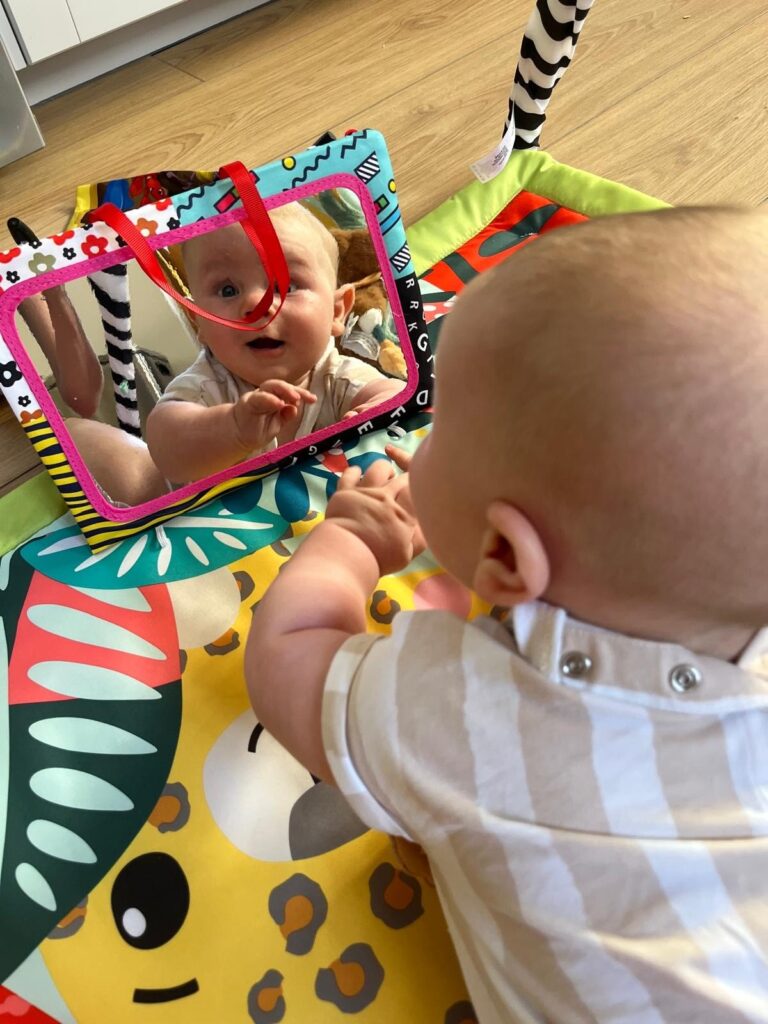
4. Use a Baby-Safe Mirror
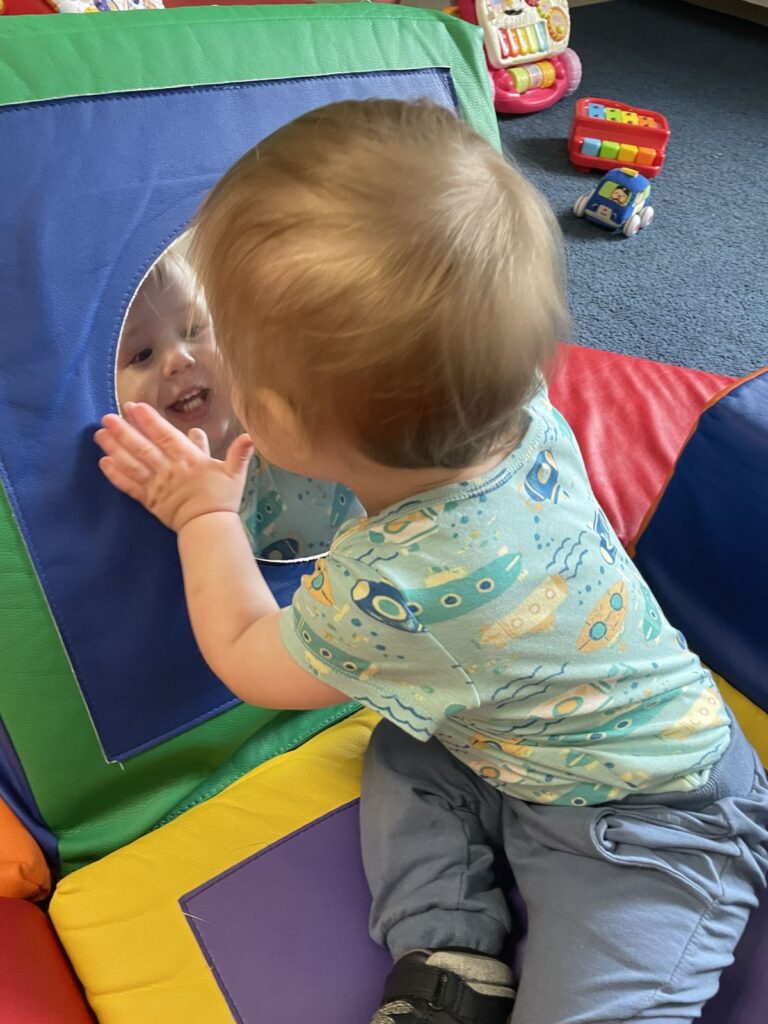
A securely positioned baby-safe mirror can give your three-month-old an interesting visual experience.
Place it where your baby can see it while lying safely on their back or during supervised tummy time.
Your baby may stare at the reflection, move their arms, or become interested in your face beside the mirror.
At this age, they will not understand the reflection in the way an older child does. They are simply observing something visually interesting.
You can smile and make gentle expressions while your baby watches.
This can turn quiet face-to-face moments with your baby into a simple Montessori-inspired activity that requires very little preparation.
5. Offer a Soft Texture to Explore
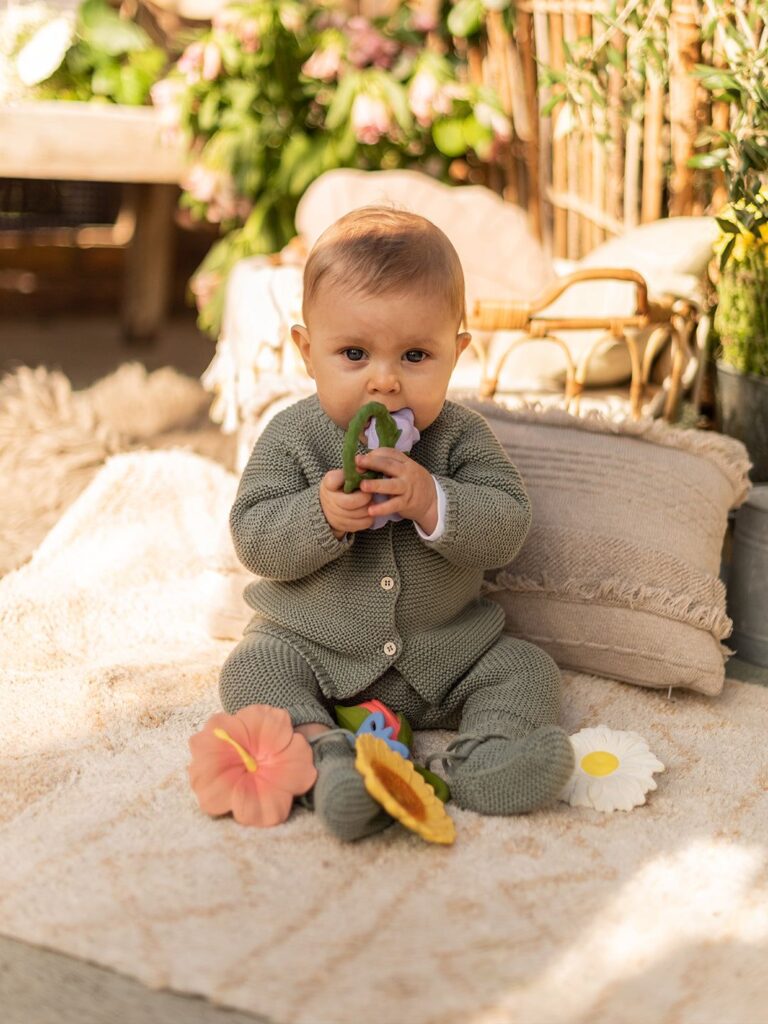
Choose one clean, baby-safe fabric with an interesting texture.
During a supervised awake period, allow your baby to touch it with their hands or feet.
You can gently move the fabric within their view and give them time to observe it.
Avoid presenting several textures at once.
One material can be enough for a young baby who is still learning how different sensations feel.
This type of activity can become part of age-appropriate sensory exploration for growing babies as your child’s ability to interact with materials develops.
Never leave fabric or other loose materials with your baby unattended.
6. Talk During Everyday Routines
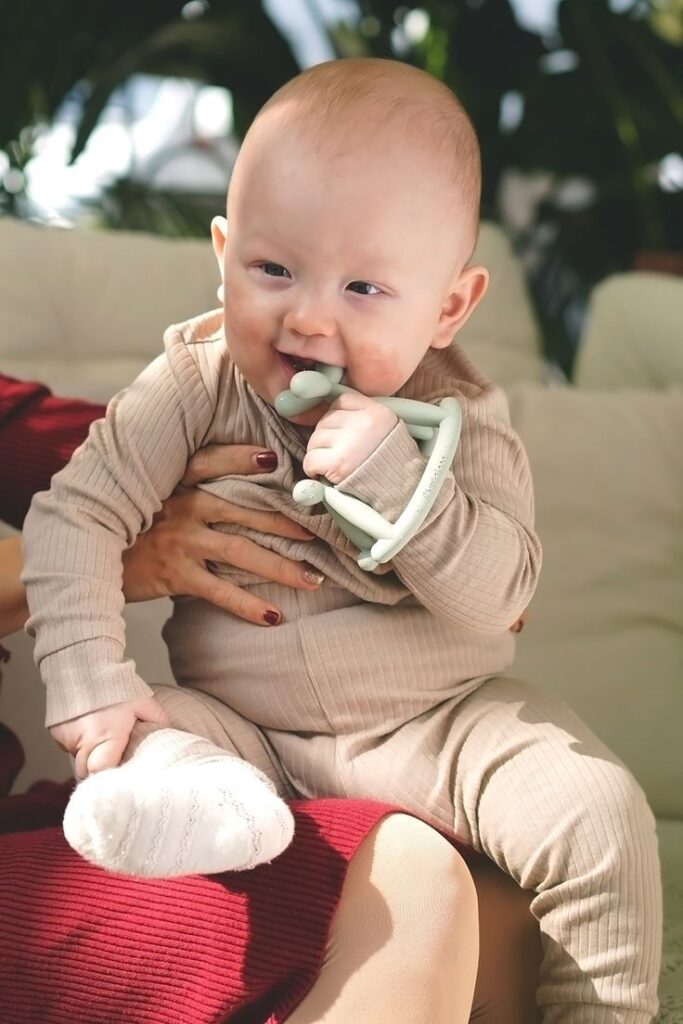
Montessori-inspired learning does not have to happen during a designated play session.
Talk to your baby while changing their clothes, preparing a bath, or getting ready for feeding.
Tell them what you are doing in a calm voice.
Your baby may respond by looking towards you, smiling, moving their arms, or making sounds.
You can pause and give them time to respond instead of talking continuously.
These exchanges can support early communication through everyday interactions while also helping your baby become familiar with your voice and the rhythm of language.
There is no need for complicated vocabulary or scripted activities. Your normal voice is enough.
7. Explore a Simple Grasping Toy
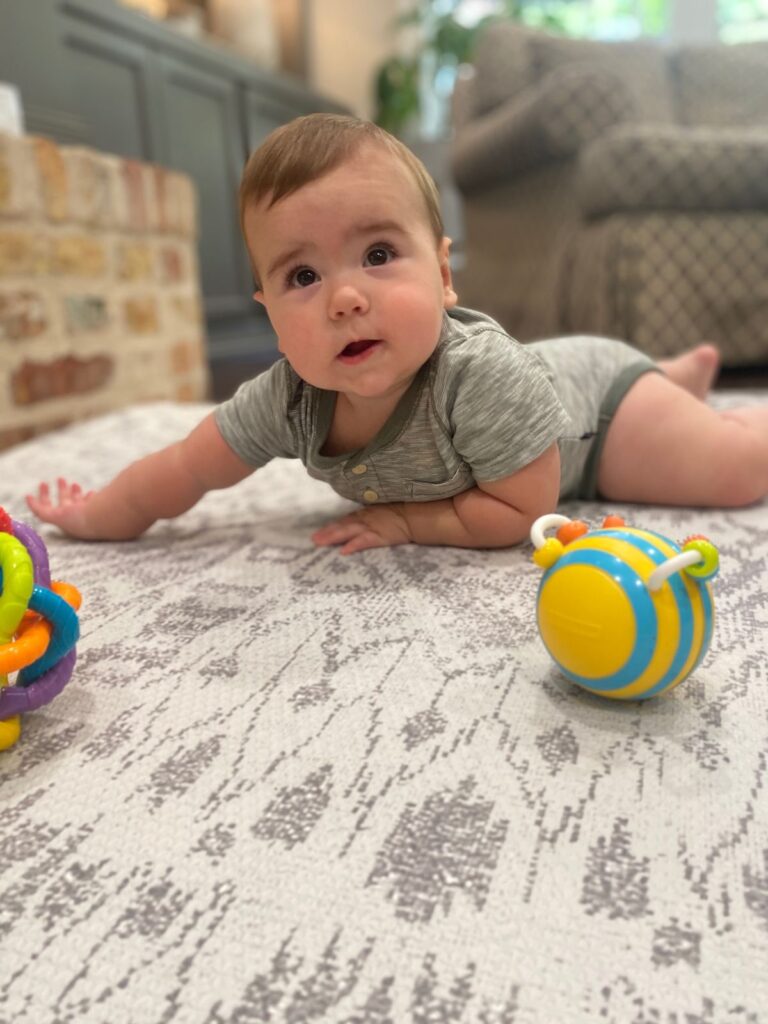
Offer a lightweight toy that is designed for young babies and easy to hold.
Place it within comfortable reach and allow your baby to explore it.
They may touch it accidentally at first before gradually beginning to grasp it more intentionally.
Your baby may also bring the object towards their mouth, so make sure it is specifically designed for this stage and contains no small detachable pieces.
You can place the toy in different positions during separate play sessions.
This gives your baby opportunities to practise reaching and handling objects without making the experience feel like a lesson.
8. Read a Short Board Book
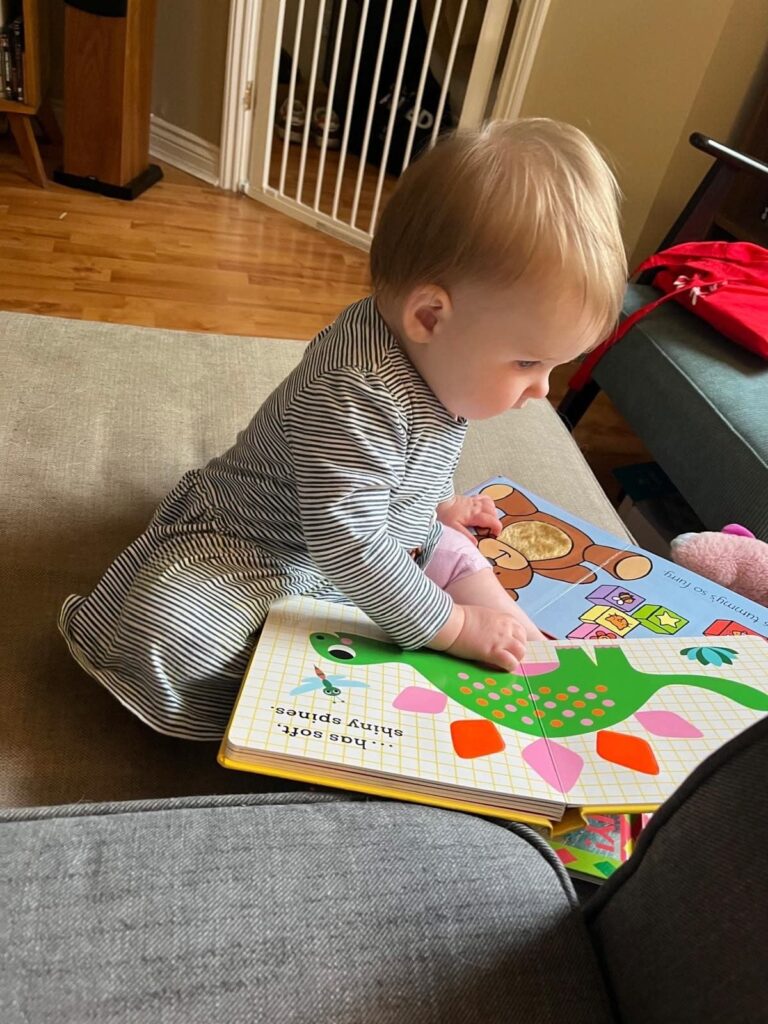
Choose a sturdy baby book with simple pictures and clear pages. Hold your baby comfortably and show them one page at a time.
You can point to a picture and name what you see.
Your baby may look at the page, glance at your face, or lose interest after a short time. That is completely fine.
Reading at this age is primarily about shared attention, hearing language, and enjoying closeness.
Choosing simple picture books for an early reading routine can make these short sessions easier to repeat throughout the week. You do not need to finish the book.
9. Sing During Playtime
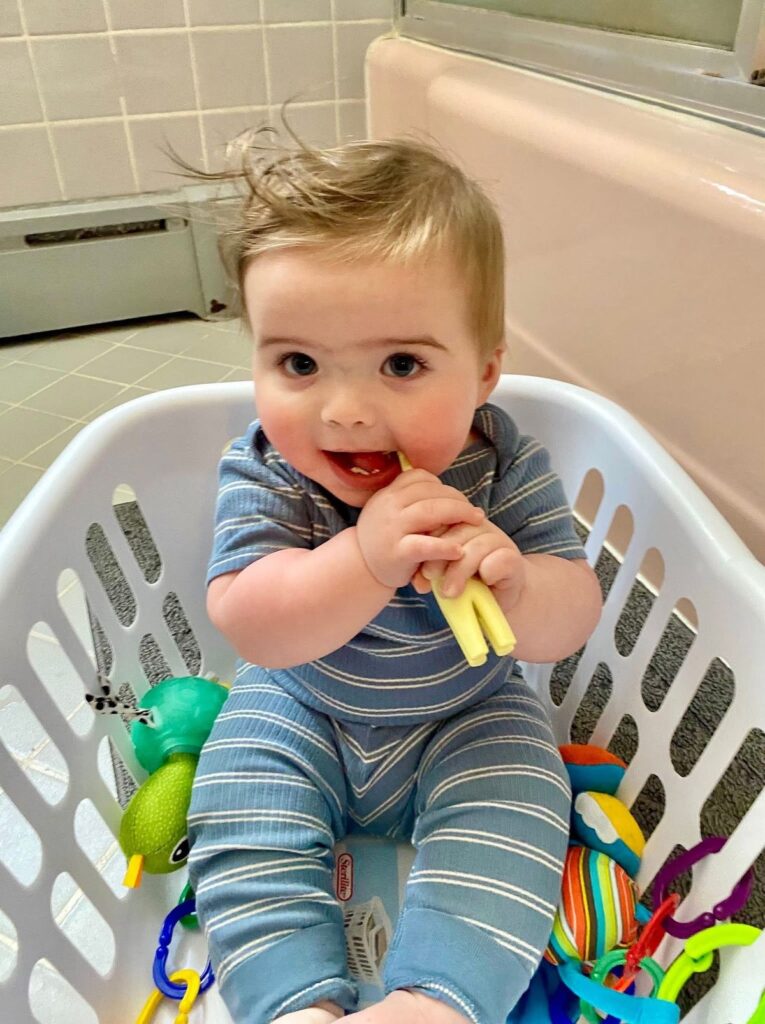
Choose a quiet song and sing to your baby while they are comfortably positioned.
Your baby may watch your face, move their arms, smile, or make sounds in response. You can add simple hand movements to make the interaction more engaging.
Avoid making the activity too loud or energetic. A calm singing session can provide an opportunity for your baby to hear changes in rhythm and tone while enjoying your presence.
These moments can later become part of musical play that encourages babies to listen and respond as your child grows.
Your voice is all the equipment you need. You can sing a familiar lullaby, make up a simple song about what you are doing, or repeat the same short tune several times.
Your baby does not need complicated songs or musical instruments at this age. The sound of your voice, combined with your facial expressions and gentle movements, gives them something interesting to watch and listen to.
Try pausing briefly between lines and giving your baby a chance to respond.
They may make a small sound, move their legs, wave their arms, or simply stare at your face. These responses are part of the interaction, even when your baby cannot yet sing along.
You can also change your tone slightly while keeping the overall activity calm. Sing one part softly, make another part slightly higher, or slow down the final words.
These small variations can make the song more interesting without overstimulating your baby.
10. Give Your Baby Time to Observe
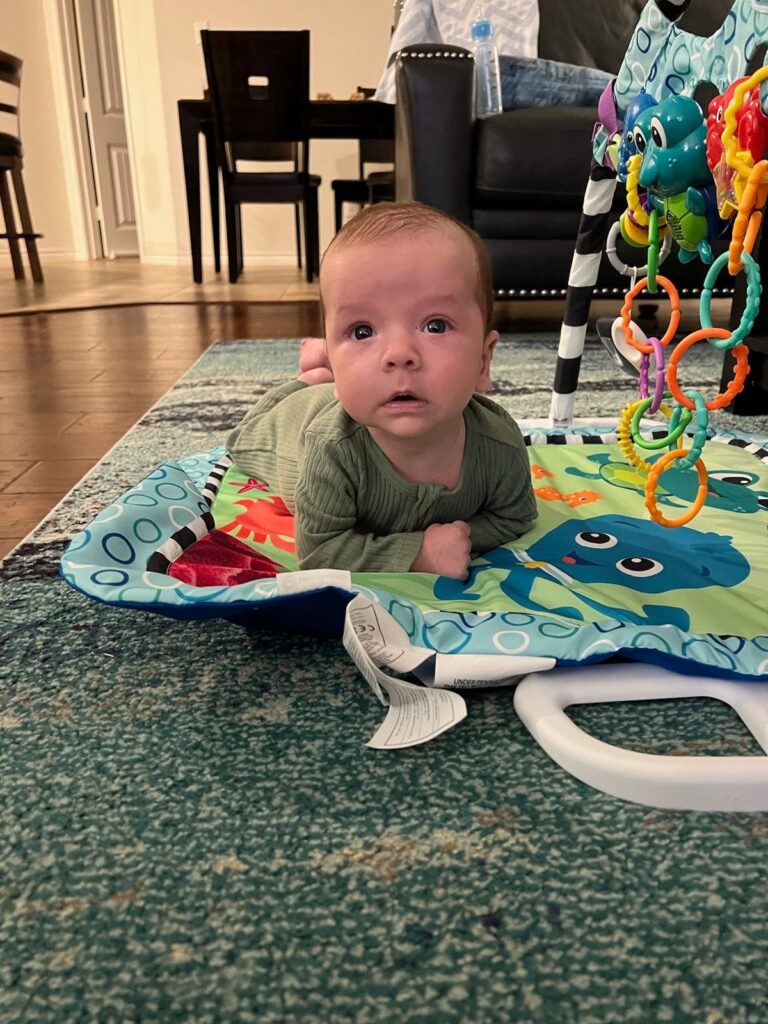
Place your baby safely on a firm surface and simply remain nearby. Instead of immediately offering a toy, allow your baby to look around.
They may watch a curtain moving, study the light in the room, look at their hands, or focus on your face. Resist the temptation to fill every quiet moment.
A three-month-old baby is still learning how to concentrate, and periods of calm observation can give them opportunities to process what they see.
This approach supports following your baby’s curiosity during everyday play rather than directing every experience.
Stay close and respond when your baby seeks your attention. You can occasionally describe what your baby is looking at in a calm voice.
Give them enough time to shift their gaze and explore without rushing to introduce something new.
These simple moments can make everyday surroundings feel interesting while giving your baby space to notice things at their own pace.
11. Create a Simple Movement Space

Give your baby a safe, uncluttered area where they can move their arms and legs freely.
Place them comfortably on their back and allow them to kick, stretch, wave their arms, and turn their head.
You can sit nearby and talk occasionally, but allow periods where your baby simply moves and observes.
This can provide a foundation for free movement during early baby development without requiring special equipment.
Keep the surface firm and clear of loose objects.
Your baby may not appear to be doing much at first, but those small movements give them opportunities to become increasingly aware of their body.
Choosing the Right Montessori Materials for a 3-Month-Old
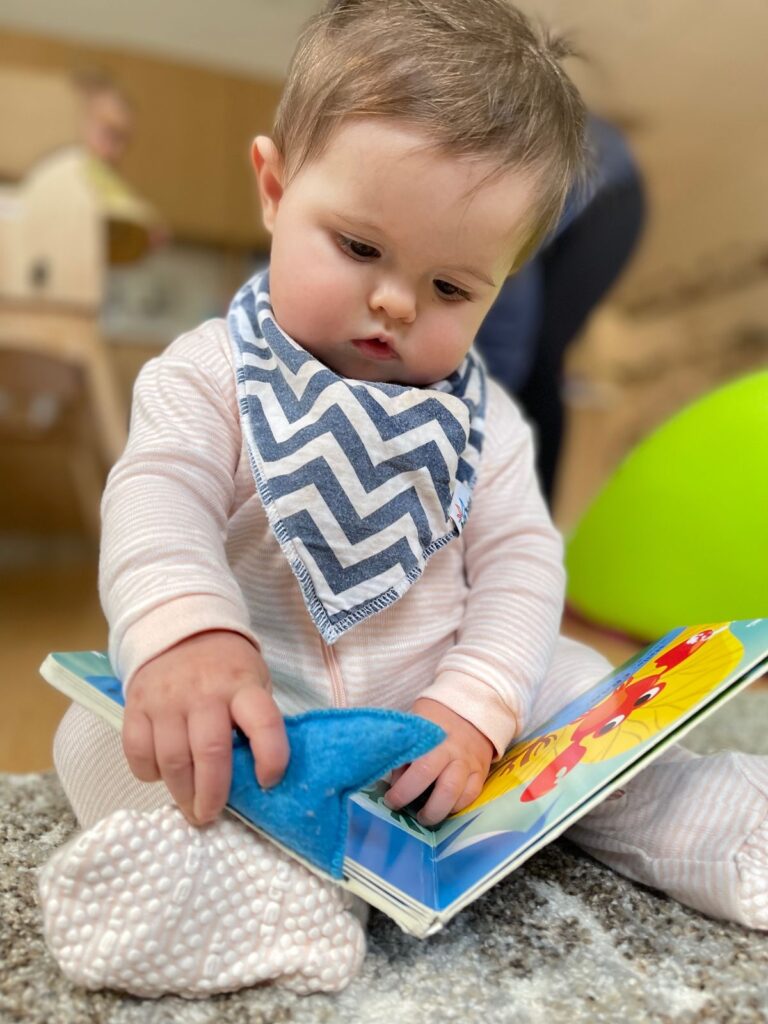
At three months, babies do not need many toys to learn through play. A few carefully chosen materials can provide plenty of opportunities for looking, reaching, grasping, listening, and moving.
Simple objects with clear shapes, gentle sounds, different textures, and contrasting colours can capture your baby’s attention without overwhelming them.
Choose materials that are made specifically for infants and are easy to clean. Soft rattles, baby-safe mirrors, textured cloths, and simple mobiles can work well when they are age-appropriate and securely positioned.
Natural materials can also be appealing, but safety matters more than the material itself.
Your baby’s abilities will change quickly during this stage. A toy that attracts their attention today may become something they can reach for or hold a few weeks later.
Keep observing how your baby interacts with each material and adjust the activity as their skills develop.
Following Your Baby’s Individual Pace
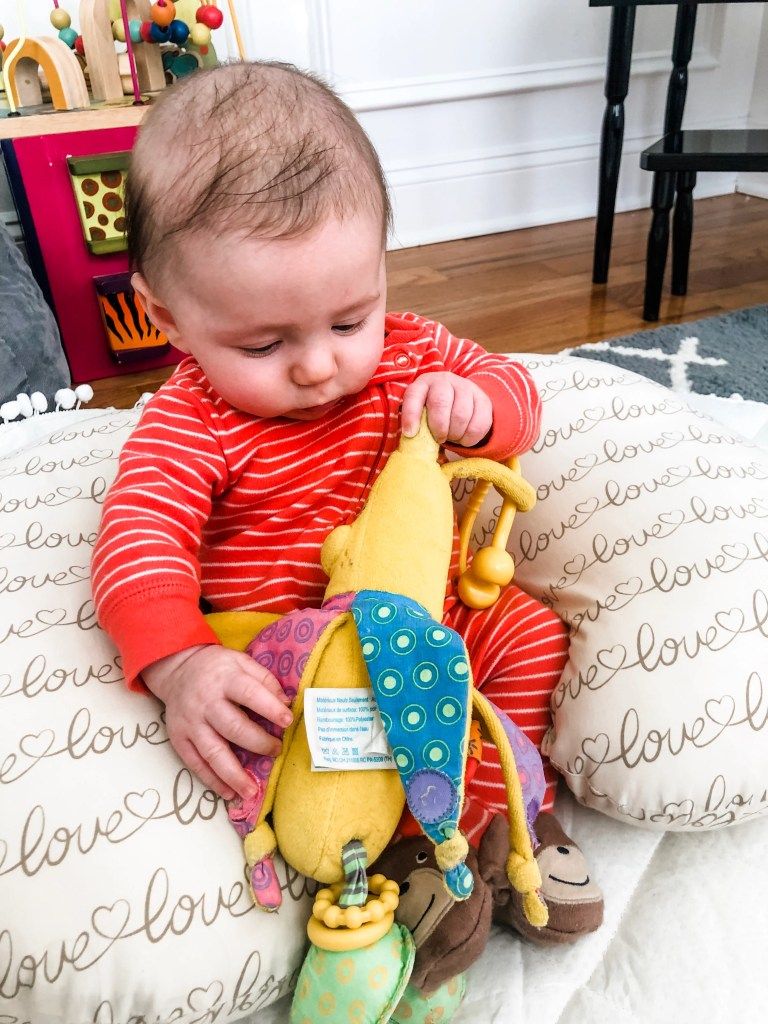
Every three-month-old develops at their own pace, so Montessori activities should remain flexible.
One baby may spend several minutes studying a mobile, while another may be more interested in reaching for a nearby object or listening to your voice.
You do not need to encourage your baby to perform an activity in a particular way. Instead, give them time to observe and respond naturally.
If your baby reaches towards an object, allow them to explore it safely. If they lose interest, move on to something else or give them a break.
Pay attention to your baby’s energy and mood when choosing an activity.
Calm periods after a nap may be suitable for visual exploration, while floor play can give an alert baby an opportunity to practise movement.
Keeping activities responsive makes Montessori-inspired play enjoyable rather than demanding.
How to Make Montessori Activities Part of Your Baby’s Daily Routine
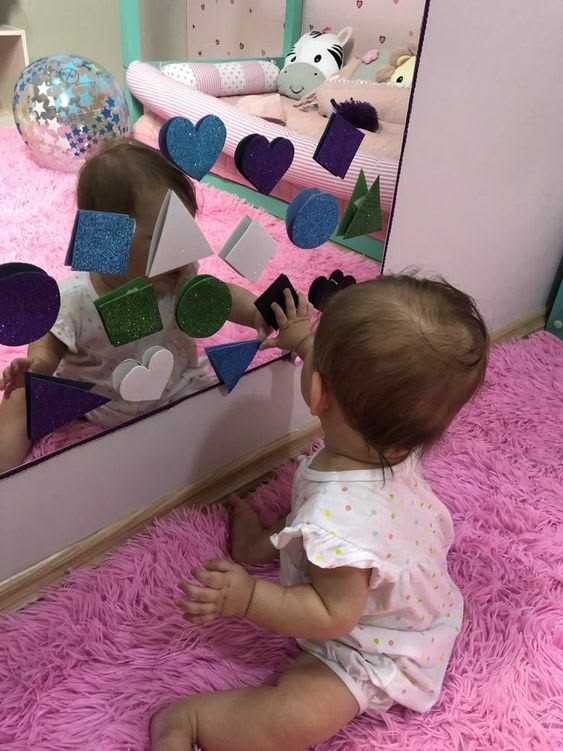
Montessori activities do not need to feel like formal lessons.
At three months, your baby learns through ordinary experiences, movement, sounds, sights, and interactions with you.
You can introduce these activities during calm periods when your baby is awake, alert, and interested in engaging with the environment.
Choose one or two activities at a time rather than trying to complete the entire list in one day.
Keep the environment calm and give your baby enough time to observe, reach, kick, grasp, or respond.
Some days, your baby may stay interested for several minutes. On other days, a few moments may be enough.
The goal is to provide simple opportunities for exploration while following your baby’s individual pace.
You can also repeat familiar activities because repetition helps babies become more comfortable with what they see and experience.
Keeping Montessori Play Safe for a 3-Month-Old
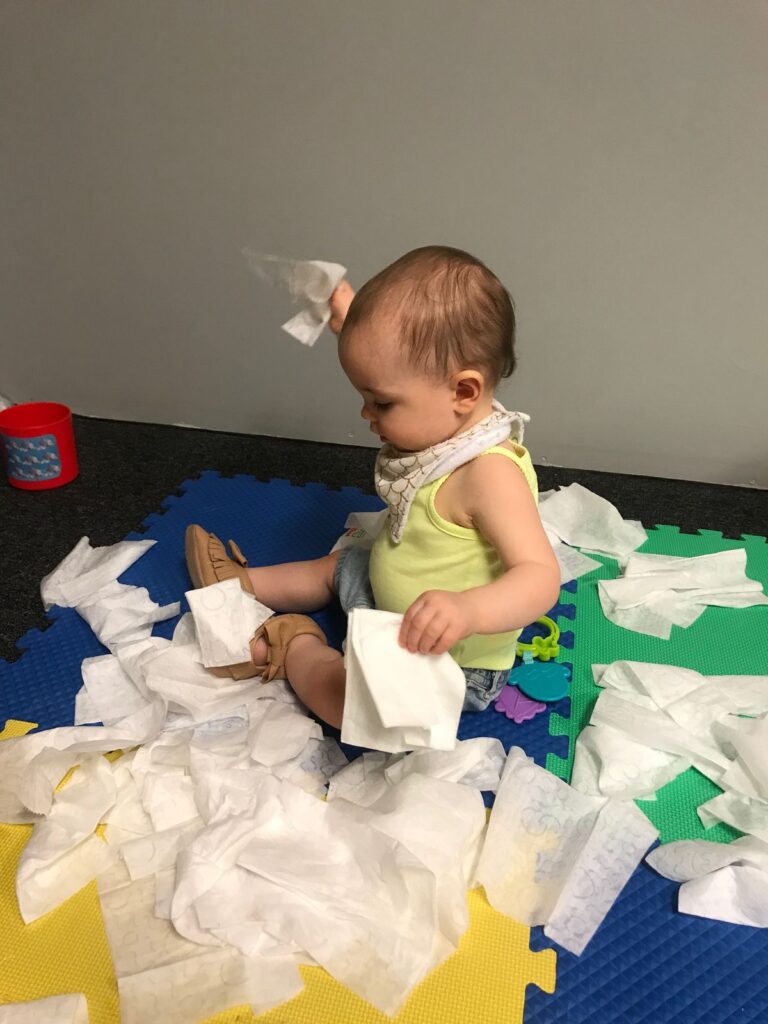
Safety should always come before the activity itself. Stay close to your baby during play and make sure every material is large enough that it cannot become a choking hazard.
Avoid small objects, loose parts, long strings, sharp edges, and anything that can easily break apart.
Place floor-based activities on a firm, safe surface and keep your baby away from stairs, cords, unstable furniture, and other household hazards.
If you use a mirror, mobile, toy, or other object above your baby, make sure it is securely positioned and cannot fall into the baby’s reach.
Follow your baby’s cues throughout each activity. If your baby turns away, becomes fussy, looks tired, or loses interest, pause the activity and allow them to rest.
Montessori play at this age is about giving babies safe opportunities to explore, not expecting them to complete a task.
Keep Montessori Play Simple and Responsive
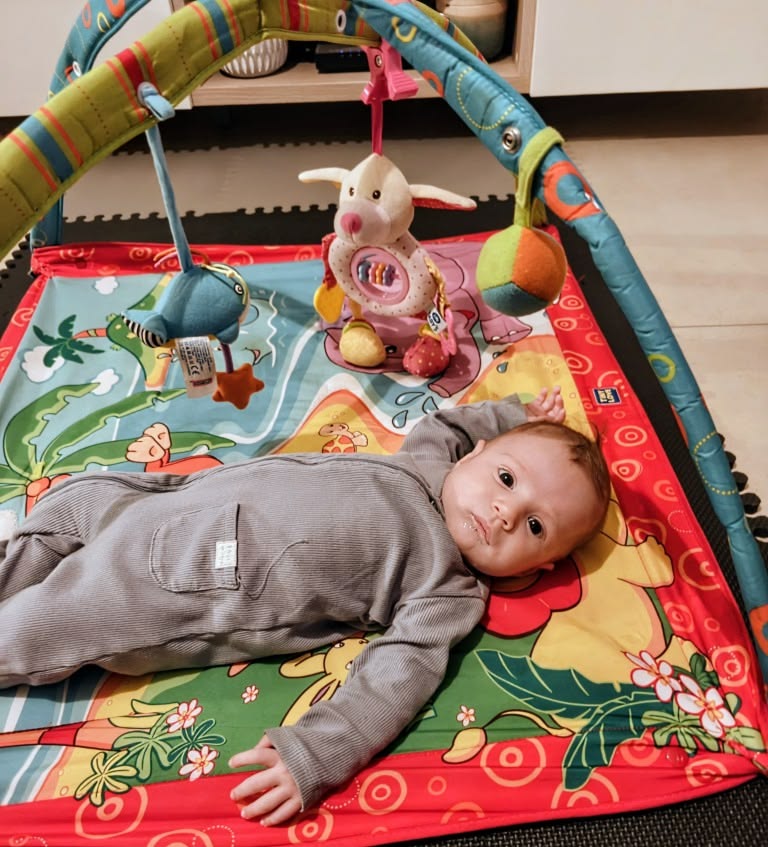
Montessori activities for a three-month-old do not need to involve expensive materials or a carefully structured daily timetable. At this age, your baby’s own body, surroundings, and relationship with you provide many opportunities for learning.
The most useful approach is to observe your baby and offer simple experiences when they are alert and comfortable.
A mobile can encourage visual attention. A safe toy can invite reaching. A book can introduce language, while your voice can provide reassurance and connection.
You can also allow your baby to have quiet periods without feeling that you need to entertain them constantly.
As your child grows, their abilities will change quickly. Reaching will become more deliberate, movements will become stronger, and your baby will gradually become more interested in interacting with objects around them.
For now, keep activities short, safe, and enjoyable. Give your baby time to observe, respond, and explore at their own pace.
The goal is not early achievement. It is creating a calm environment where your baby can experience the world one small discovery at a time.
Here are a few more related articles you may find helpful
Best Play Activities for Newborn Babies
19 Taste-Safe Sensory Play for Babies
21 indoor cake smash setup ideas




One Comment