
13 Montessori Activities for 6-Month-Old Babies
Disclosure: Some of the links in this post are affiliate links. This means if you click on the link and purchase an item, I will receive an affiliate commission at no extra cost to you.
Six months is an exciting stage because your baby may start becoming much more active and curious about the world around them.
They may reach for objects, roll from one side to another, sit with support, grab their feet, make more sounds, and become increasingly interested in everything within sight. These changes create plenty of opportunities for simple Montessori-inspired activities at home.
Montessori activities for 6-month-old babies are not about teaching academic skills or expecting your baby to complete a task independently.
At this age, learning happens through movement, repetition, observation, sensory experiences, and interaction with familiar people and objects.
Your role is to create a safe environment where your baby can explore at a pace that matches their abilities.
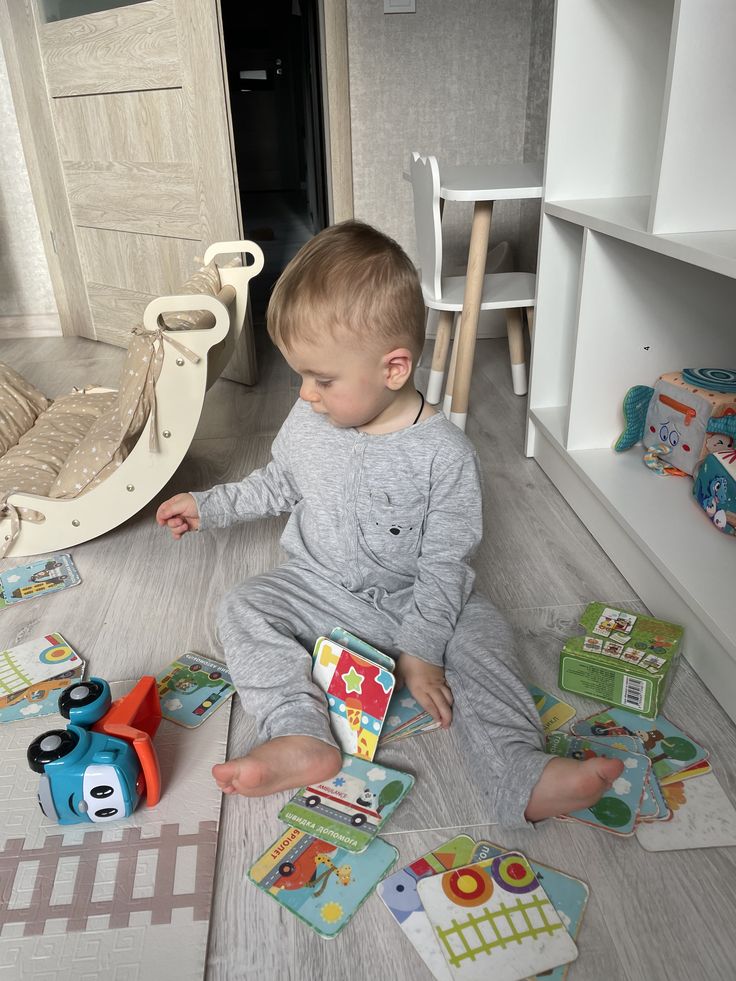
You do not need an expensive collection of Montessori toys to create meaningful experiences. Everyday objects can sometimes provide interesting opportunities for your baby to look, touch, grasp, listen, and move.
A safe mirror, soft cloth, wooden rattle, textured ball, basket, or picture book can become part of a simple activity when introduced appropriately.
It is also important to remember that babies develop at different rates. One six-month-old may sit steadily while another may still need support.
Some babies may be eager to reach for everything around them, while others may spend more time watching before attempting to move. Montessori-inspired play works best when you observe your baby and adjust the activity to their current abilities.
The activities below focus on simple experiences that encourage exploration without overwhelming your baby. They can be included in your normal routine and repeated as often as your baby enjoys them.
Montessori Activities That Encourage Exploration at Six Months
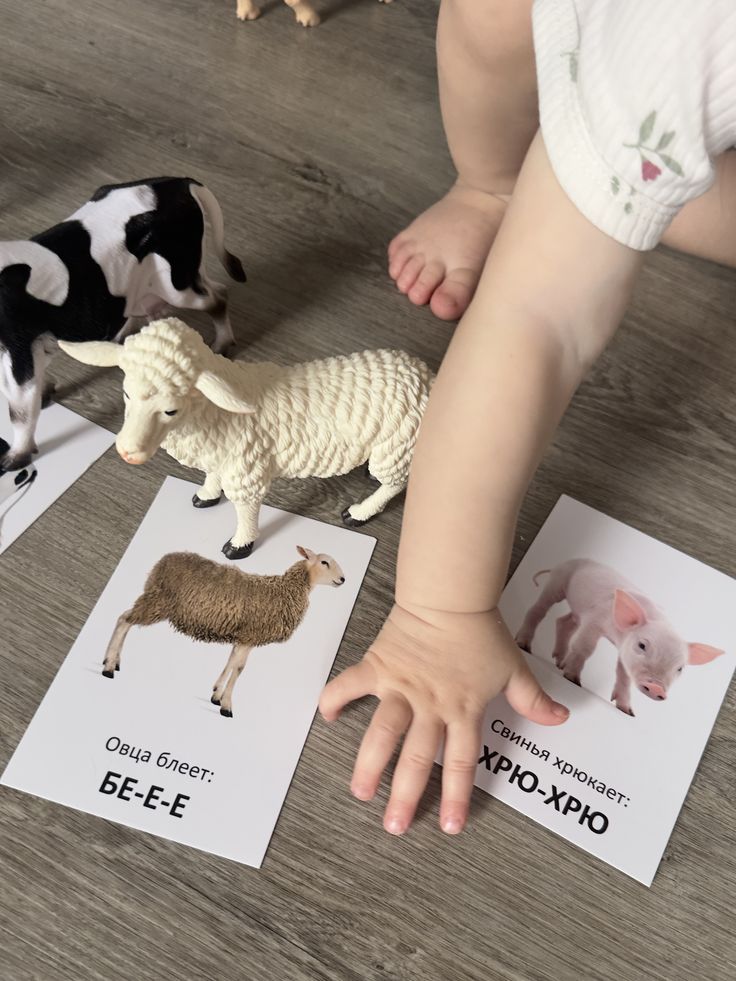
At six months, your baby is becoming more aware of cause and effect. They may deliberately grab an object, shake it, drop it, or move it from one hand to another to see what happens.
These repeated actions are meaningful learning experiences.Montessori-inspired activities can give your baby opportunities to practise these emerging skills in a safe and calm environment.
You can place one activity within your baby’s reach and allow them to explore it rather than constantly showing them what to do.
Your baby may not interact with an activity in the way you expect. That is perfectly fine. The purpose is to provide an interesting environment and allow your baby to discover how things work through their own movements.
The following ideas can also complement developmental play that supports babies as they become more active, especially as your baby begins moving, reaching, sitting, and exploring more independently.
1. Explore a Baby-Safe Mirror
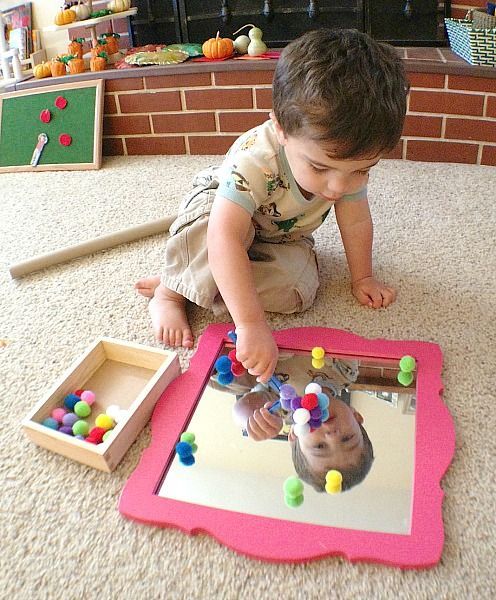
Place a baby-safe, shatterproof mirror securely near your baby during supervised floor play.
Allow your baby to look at their reflection without trying to direct their attention constantly.
They may stare at the face in the mirror, smile, make sounds, touch the surface, or move their arms and legs while watching the reflection.
You can sit beside your baby and occasionally smile or make gentle facial expressions. Your baby may look between your face and the reflection as they begin noticing similarities and differences.
Keep the mirror at a safe distance and use one designed specifically for babies. Avoid ordinary glass mirrors that could break or have sharp edges.
This simple activity gives your baby an interesting visual experience while encouraging them to observe movement and faces.
It can also become one of the easy activities you can enjoy with your baby at home without needing a complicated setup.
Keep sessions short if your baby loses interest. You can bring the mirror out again another day and allow your baby to explore it at their own pace.
2. Create a Reach-and-Grasp Basket
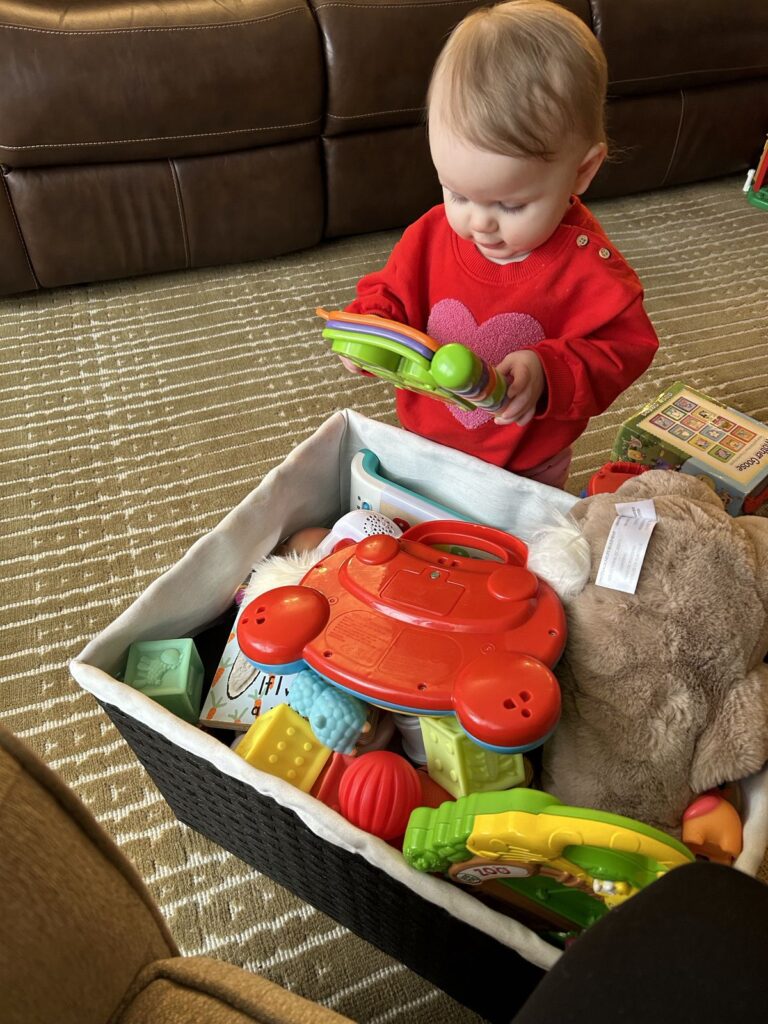
Choose a small basket and place a few large, baby-safe objects inside it.
You could include a soft fabric ball, a large wooden ring designed for babies, a textured cloth, or another age-appropriate object that your baby can safely grasp.
Place the basket near your baby and allow them to decide which object interests them. Your baby may reach towards one item, pull it out, hold it, shake it, or simply stare at it.
Avoid filling the basket with too many objects. A small selection gives your baby enough choice without creating unnecessary visual clutter.
Stay close throughout the activity and check each item regularly for loose pieces, damage, or anything that could become a choking hazard.
As your baby’s hand control improves, they may become more deliberate when reaching and grabbing.
Giving them opportunities to practise these movements can support simple learning experiences throughout your baby’s first year while keeping the activity relaxed and age-appropriate.
3. Offer Different Textures to Touch
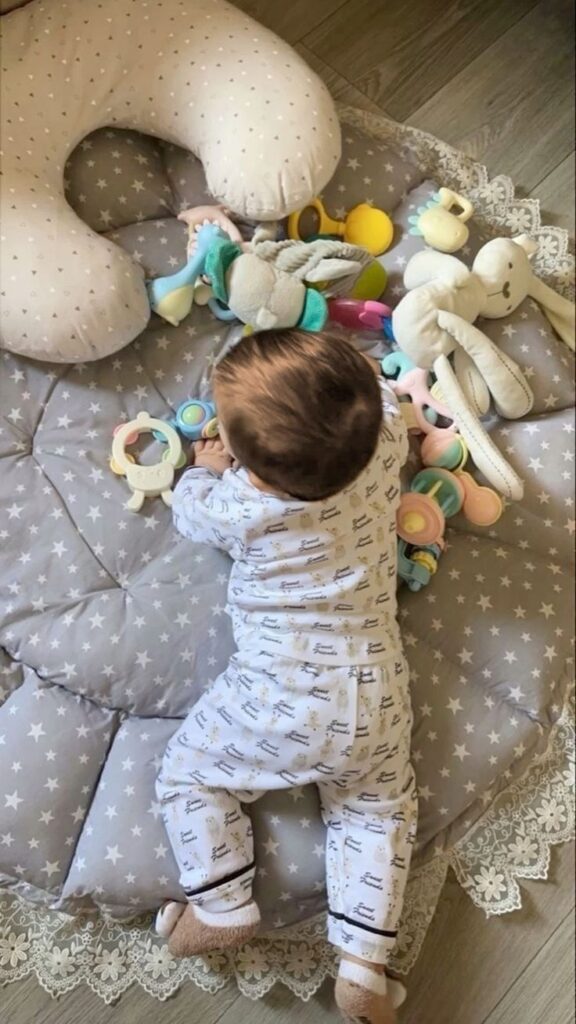
Gather a few large pieces of baby-safe fabric with noticeably different textures.
A smooth cotton cloth, soft towel, knitted fabric, or another clean material can provide different sensations for your baby’s hands and fingers.
Place one piece within easy reach and let your baby touch, grab, squeeze, or rub it. You can introduce another texture after your baby has had enough time to explore the first one.
There is no need to rush through several materials in one session. Your baby may spend more time exploring one texture than another.
Watch closely during the activity and avoid materials that shed fibres, contain loose threads, or could wrap around your baby’s fingers or body.
You can also gently describe the textures as your baby explores them. Simple words such as “soft,” “smooth,” or “rough” give your baby opportunities to hear language while touching different materials.
These experiences can complement sensory activities that change with your baby’s developmental stage as their ability to explore objects becomes more purposeful.
4. Encourage Baby to Transfer Objects Between Hands
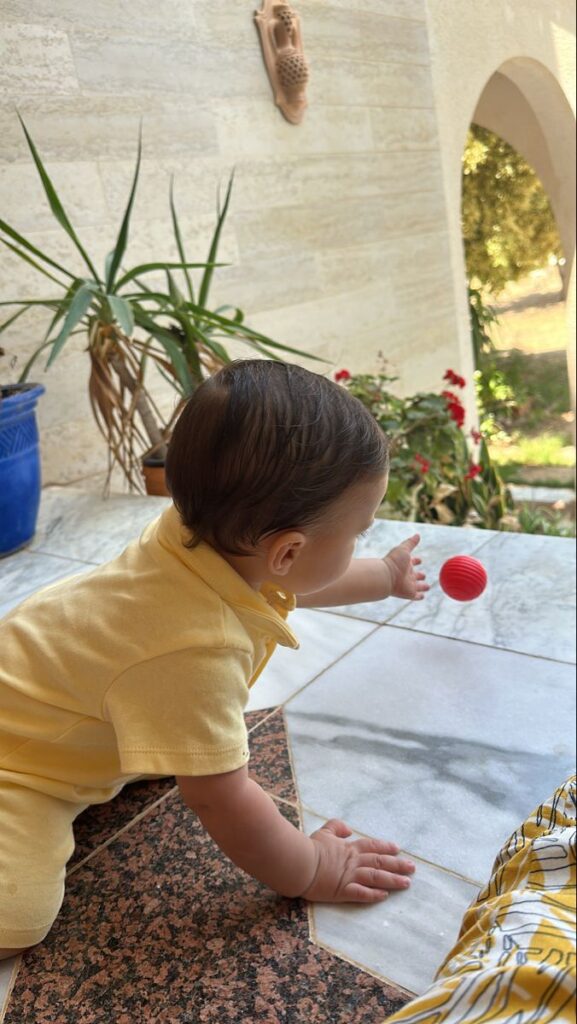
Give your baby a large, lightweight object that is easy for small hands to hold.
A baby-safe ring, soft ball, or lightweight rattle can work well. Place it within reach and allow your baby to grasp it with one hand.
Your baby may eventually move the object towards their other hand. They may drop it, pick it up again, or hold it with both hands.
Avoid repeatedly moving the object between your baby’s hands for them. Give your baby time to discover the movement independently.
If the object falls, you can return it to a safe position and allow your baby to try again. Repetition is part of the learning process at this age.
This activity can support hand coordination while also giving your baby an opportunity to discover how objects can be moved and held in different ways.
You can gradually introduce different safe objects with slightly different shapes and textures as your baby becomes more comfortable with grasping.
5. Make a Simple Object Permanence Game
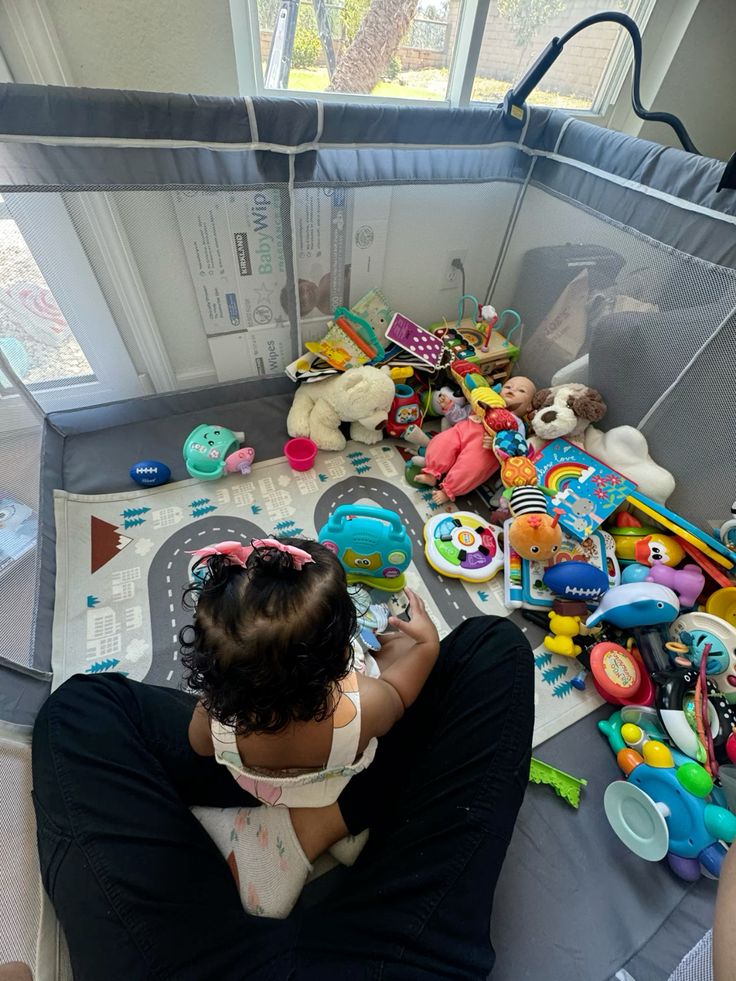
Choose a familiar baby-safe toy and place it in front of your baby.
Allow your baby to look at it for a moment before slowly covering part of it with a small cloth. Leave enough of the object visible for your baby to notice it.
Pause and watch their response.
Your baby may reach towards the covered object, pull the cloth, or simply stare at the spot where the toy disappeared. You can gently uncover it after giving them some time to respond.
Keep the activity simple rather than completely hiding the object for long periods. Your six-month-old is still developing their understanding of objects and their surroundings.
You can repeat the activity several times if your baby remains interested. Use the same toy initially so the experience feels familiar.
This type of play introduces your baby to the idea that an object can remain present even when part of it is hidden. It also encourages attention, observation, and purposeful reaching.
6. Let Your Baby Explore a Ball
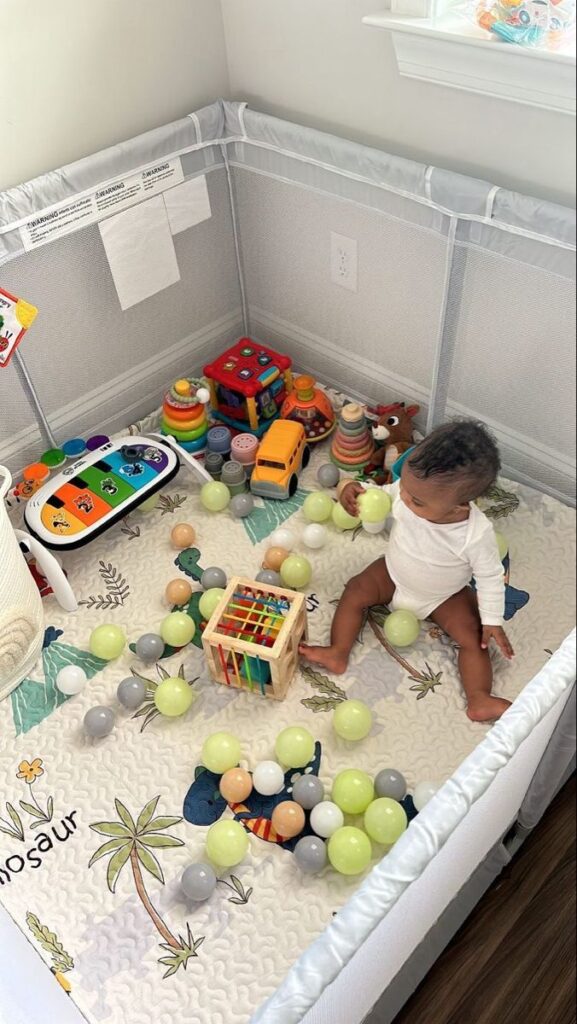
Choose a soft ball that is large enough to prevent choking and light enough for your baby to handle safely.
Place it within your baby’s reach during supervised floor play. Allow your baby to touch it, grab it, push it, or roll it.
If the ball moves away slightly, your baby may attempt to reach for it. This can create a natural reason to practise movement and coordination without turning the activity into a structured exercise.
You can gently roll the ball towards your baby and wait for their response. Give them enough time to look at it before introducing another movement.
A ball with a simple texture can also provide an interesting tactile experience when your baby squeezes or pats it.
Keep the area around your baby clear so they can move safely while exploring. This type of activity can work particularly well alongside safe ways to encourage crawling and active exploration as your baby’s mobility develops.
7. Read a Simple Picture Book Together
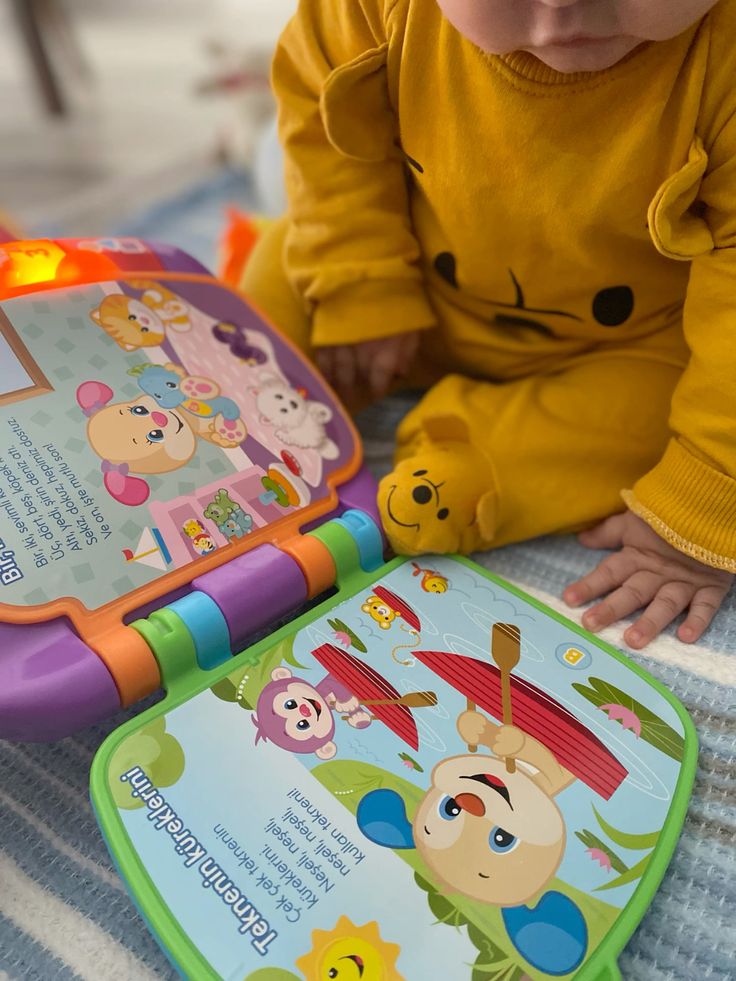
Choose a sturdy baby book with large, clear pictures and a small amount of text.
Sit with your baby and allow them to look at the pages while you read slowly. Your baby may reach towards the pictures, touch the pages, make sounds, or turn their head towards your voice.
You do not need to finish the entire book. At six months, a few pages can provide plenty of stimulation.
Pause occasionally and give your baby time to look at a picture before turning the page. You can name familiar objects, animals, colours, or people shown in the illustrations.
Allow your baby to touch the book if it is designed for their age and has safe, durable pages.
Board books and cloth books can be useful choices for babies who are still exploring objects with their hands and mouths.
Regular reading also builds on making daily reading a meaningful part of your baby’s routine, creating a familiar opportunity for language, attention, and connection.
8. Encourage Supported Sitting Exploration
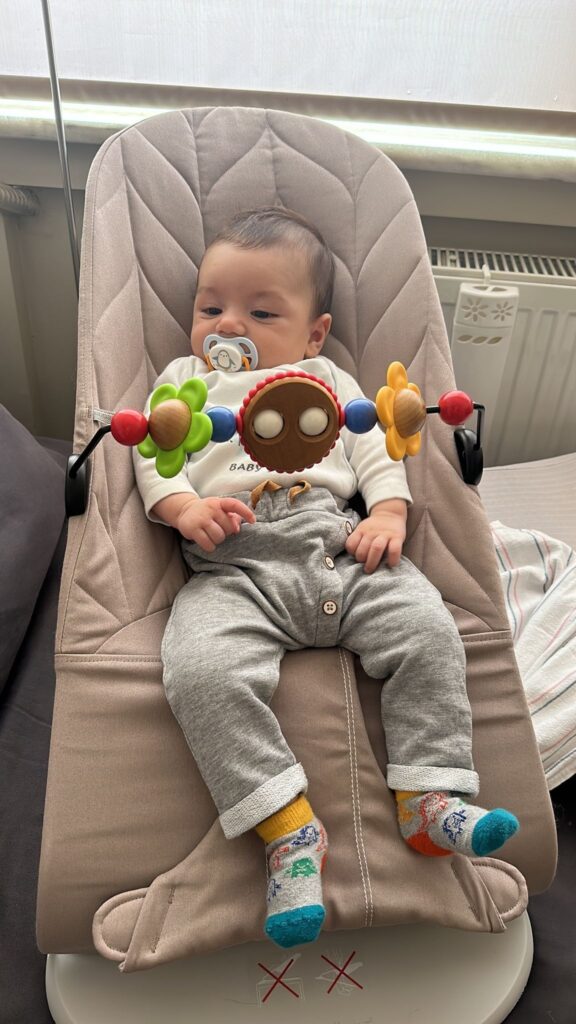
If your baby is developmentally ready to sit with support, place them in a safe position on the floor with appropriate supervision.
Put one or two interesting baby-safe objects within reach. Your baby can look at them, reach forward, hold them, or practise maintaining their balance while exploring.
Do not force your baby into a sitting position if they are not ready. Follow their natural development and use appropriate support when needed.
You can sit nearby rather than constantly holding the objects for your baby. This gives them an opportunity to decide where to look and what to reach for.
Keep the activity on a firm, safe surface and remove nearby objects that could cause injury.
As your baby’s balance improves, they may become more comfortable using their hands while sitting.
This can create opportunities for free movement during early baby development without turning floor play into a demanding exercise.
Always stay close because your baby may suddenly lose their balance and tip over.
9. Introduce a Simple Cause-and-Effect Toy
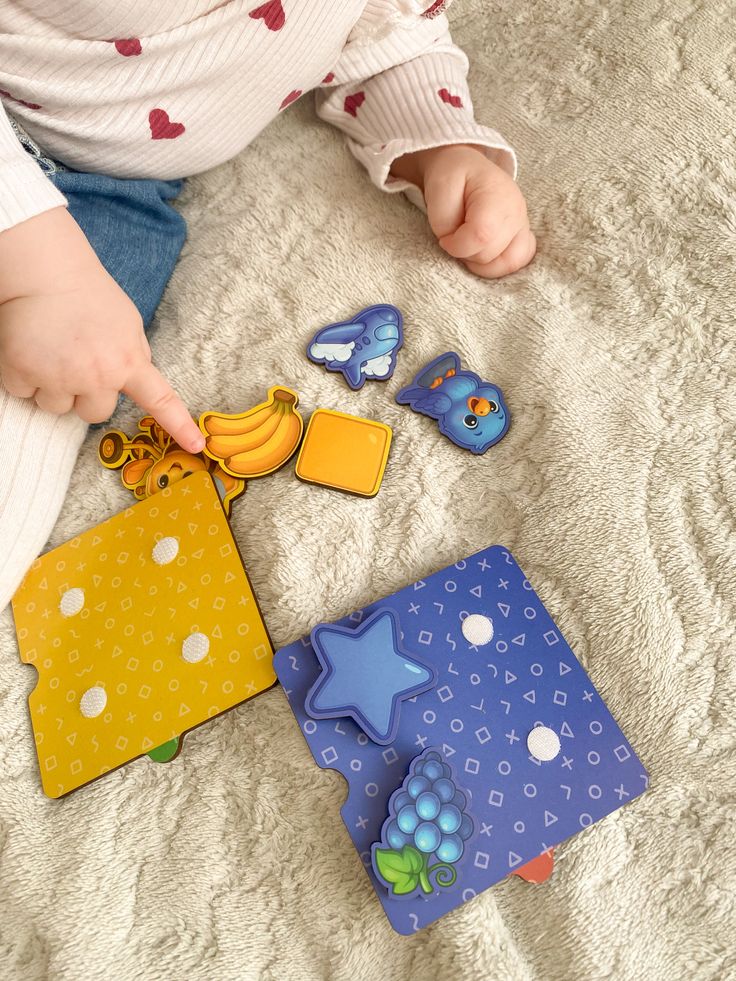
Give your baby a safe object that produces a gentle response when they move it.
A baby-safe rattle is a simple example. Your baby may shake it and notice the sound, then shake it again to produce the same result.
You can also use a soft crinkly baby toy designed for infants. Let your baby discover the connection between their movement and the sound rather than repeatedly making the sound for them.
Watch how your baby responds. They may become excited after hearing the sound, pause to listen, and then try moving the object again.
Keep the sounds gentle because loud or sudden noises can be unpleasant for babies.
This type of play encourages your baby to notice that their actions can produce changes in their surroundings.
It also gives them an opportunity to practise grasping, shaking, listening, and repeating an action.
You can build on this idea with playful experiences that introduce babies to rhythm and sound as your baby becomes increasingly interested in sounds.
10. Practise Reaching Across the Body
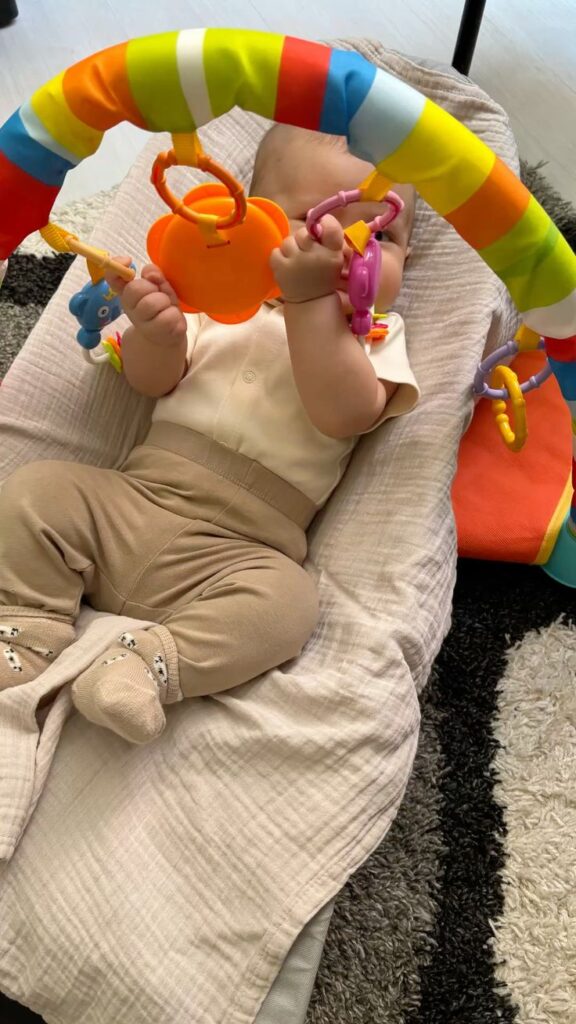
Place a favourite baby-safe toy slightly to one side of your baby’s body rather than directly in front of them.
Give your baby enough time to notice the object and decide how they want to reach for it.
They may stretch one arm towards the toy, move their body, roll slightly, or use both hands to reach it.
Do not pull the toy away once your baby begins reaching. The goal is to allow them to explore the movement and work out how to approach the object.
You can switch sides during another attempt so your baby has opportunities to reach in different directions.
Make sure the toy remains close enough that your baby does not become frustrated. You are providing a small challenge, not testing your baby’s abilities.
This activity can support coordination between your baby’s eyes and hands while encouraging purposeful movement.
It can also fit naturally into gentle activities that can grow alongside your baby’s changing abilities as your baby becomes more mobile.
11. Explore a Treasure Basket With Large Safe Objects
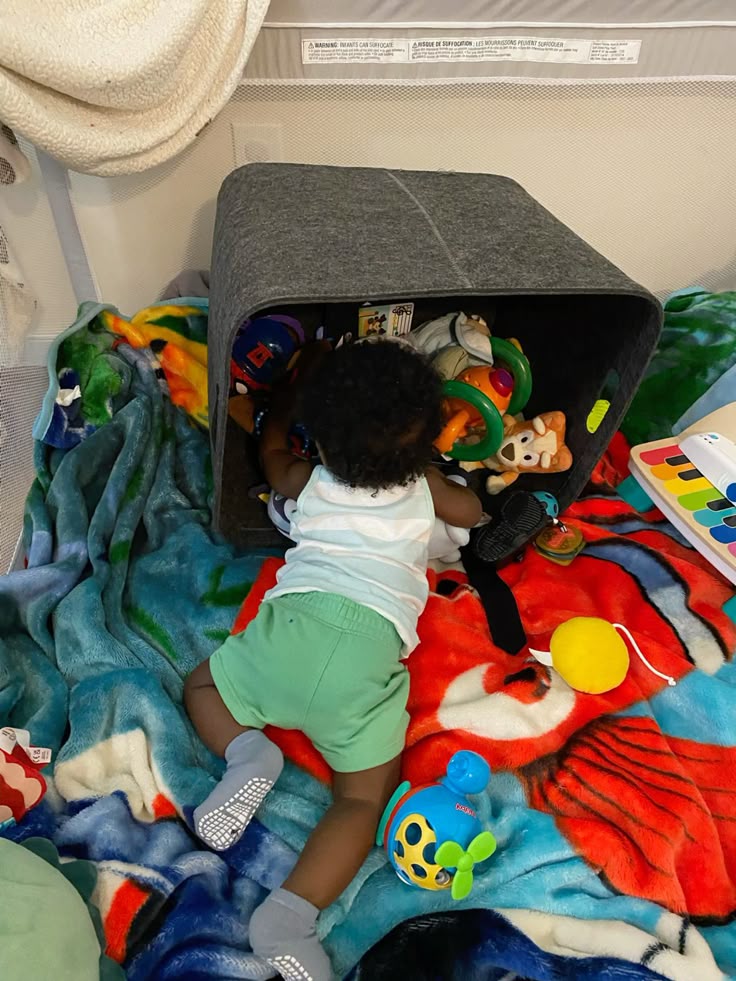
Prepare a small basket containing a few large objects that are safe for your baby to touch and hold.
You might include a soft fabric ball, a large silicone teether, a wooden baby-safe ring, or a clean textured cloth.
Place the basket nearby and allow your baby to explore one object at a time. They may choose an item by reaching for it or simply become interested in whichever object catches their attention.
Avoid small household items, objects with detachable pieces, sharp edges, or anything that could become a choking hazard.
The purpose is not to teach your baby the names of the objects or encourage them to use each one in a specific way. Give them time to investigate through touching, holding, shaking, and looking.
You can occasionally name the object your baby is holding. This adds a simple language element without taking away from the independent exploration.
A small selection of safe materials can create independent play experiences that give babies room to explore safely while you remain close and attentive.
12. Play With a Simple Baby-Safe Mobile
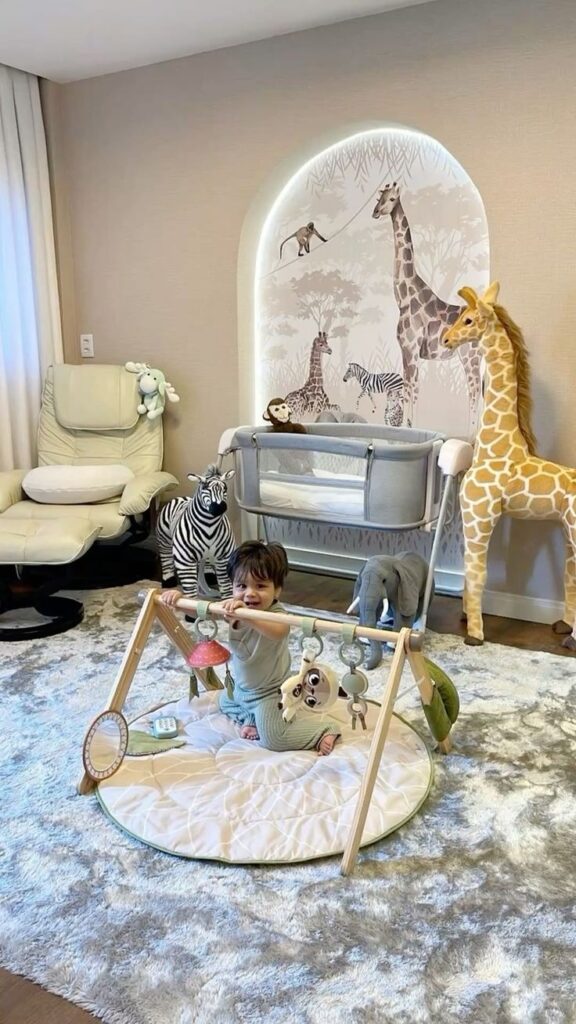
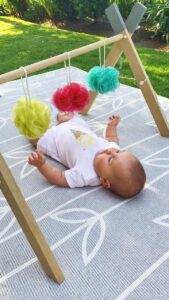
A simple mobile can give your baby an opportunity to observe movement and practise visual tracking.
Choose one designed for babies and position it securely according to the manufacturer’s instructions. Make sure it cannot fall into your baby’s reach.
Allow your baby to watch the objects move. They may follow them with their eyes, move their arms, smile, or make sounds.
You do not need to keep the mobile moving constantly. A slow, gentle movement can be enough to capture your baby’s attention.
Give your baby quiet time to observe instead of immediately introducing another toy. This allows them to focus on one visual experience without becoming overwhelmed by several objects at once.
Always remove or reposition the mobile according to the safety instructions once your baby becomes able to reach or pull themselves towards it.
The activity can be especially useful during short periods when your baby is calm and alert.
It encourages observation while giving you an opportunity to watch how your baby’s visual attention is developing.
13. Give Your Baby Time for Independent Floor Exploration
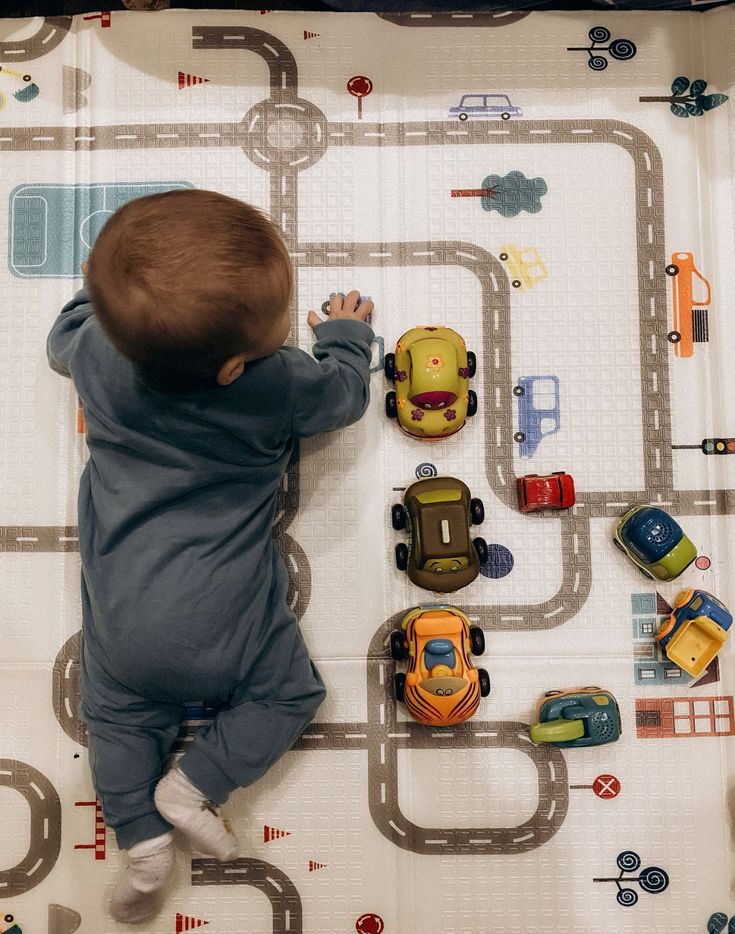
Create a safe floor area where your baby can move freely while you remain nearby.
Place only a few age-appropriate objects around them rather than surrounding them with toys. Your baby can decide what to look at, reach for, touch, or move towards.
They may spend several minutes examining their hands, rolling towards a toy, reaching for an object, or simply watching what is happening around them.
Try not to interrupt every quiet moment with a new activity. Sometimes the freedom to explore a safe environment provides enough stimulation.
You can respond when your baby looks towards you, makes a sound, or reaches for something. Your response lets them know that you are available without taking control of their exploration.
Keep the floor area free from cords, small objects, loose items, and other hazards. As your baby becomes more mobile, regularly reassess the space.
This approach encourages simple ways to build a close connection with your newborn while also giving your six-month-old room to practise emerging independence.
How to Choose Montessori Activities for Your Six-Month-Old
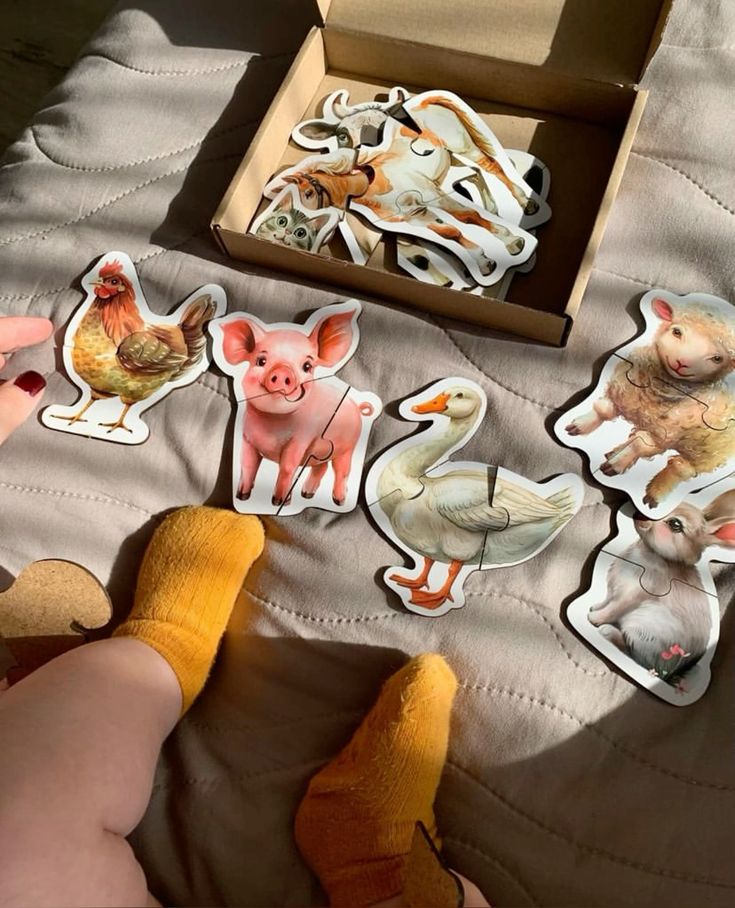
The best activity is not necessarily the most complicated one. At six months, your baby can learn a great deal from simple experiences that allow them to move, observe, touch, listen, and repeat actions.
Choose activities based on what your baby can comfortably do at the moment. If your baby enjoys reaching, offer objects that encourage grasping.
If they are becoming more mobile, provide a safe floor space where they can move towards interesting objects. If they enjoy sounds, introduce gentle rattles and other age-appropriate materials.
You can also rotate activities instead of offering everything at once. Keeping only a few options available can make it easier for your baby to focus.
Pay attention to your baby’s responses. Looking closely at an object, reaching towards it, smiling, making sounds, or repeating an action can all show interest.
Turning away, becoming fussy, or appearing tired can signal that it is time to stop.
The goal of Montessori-inspired play is not to keep your baby busy every minute. It is to create simple opportunities for discovery while respecting their individual pace.
Creating a Montessori-Inspired Space for a Six-Month-Old
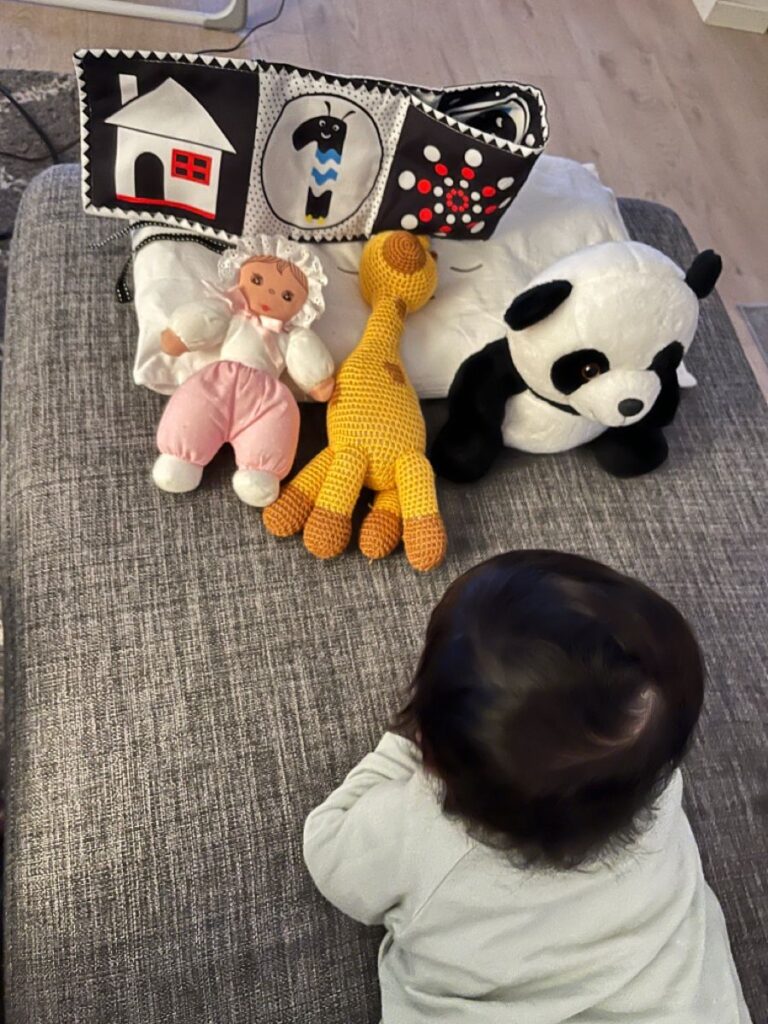
You do not need to completely redesign your home to create a Montessori-inspired environment. Start with one safe area where your baby can spend time exploring while you remain nearby.
Keep the space uncluttered and place a small number of suitable objects within your baby’s reach. Rotate them occasionally so familiar materials remain interesting without overwhelming your baby.
A firm play surface, a baby-safe mirror, a few age-appropriate toys, and some space for movement can provide plenty of opportunities for exploration.
As your baby becomes more mobile, reassess the environment regularly and remove anything that could become dangerous.
Montessori-inspired parenting is also about observing your baby rather than constantly directing them. Give them time to attempt movements, investigate objects, and repeat activities they enjoy.
At six months, your baby is becoming an increasingly active participant in their environment.
Simple, safe experiences can help them explore this new stage while giving you plenty of opportunities to watch, respond, and enjoy their growing abilities.
Here are a few more related articles you may find helpful
19 Taste-Safe Sensory Play for Babies
How to Play With Your Newborn Baby