

Best Baby Carriers for Newborns
Disclosure: Some of the links in this post are affiliate links. This means if you click on the link and purchase an item, I will receive an affiliate commission at no extra cost to you.
Holding your newborn close can make those early weeks feel a little easier. Your baby may settle when they hear your heartbeat, feel your warmth, or simply stay close to you while you move around the house.
A baby carrier can make that closeness more practical. Instead of holding your baby in your arms throughout the day, you can use a properly fitted carrier while taking a gentle walk, doing simple tasks, or spending time together at home.
The challenge is choosing the right carrier for a newborn.
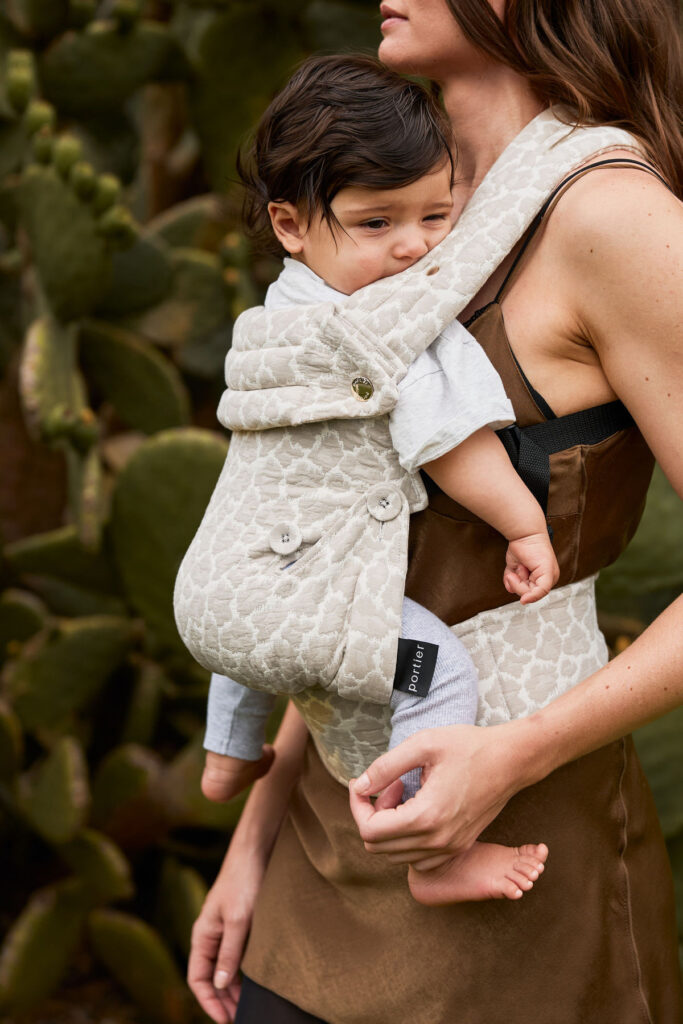
There are wraps, soft structured carriers, ring slings, and other babywearing options. Some are designed specifically for newborns, while others require an infant insert or have minimum weight requirements.
A carrier that feels comfortable for one parent may not work as well for another. Safety also matters more than appearance or convenience.
Your baby’s face needs to remain visible, their airway needs to stay clear, and their body needs adequate support. The carrier should also allow your baby’s hips and legs to remain in a healthy position.
Before buying one, look beyond colours, patterns, and brand names. Consider your baby’s age and size, how often you plan to babywear, who will use the carrier, and how easy it is to adjust.
Here is what you need to know before choosing a newborn carrier.
Why Do Parents Use Baby Carriers?
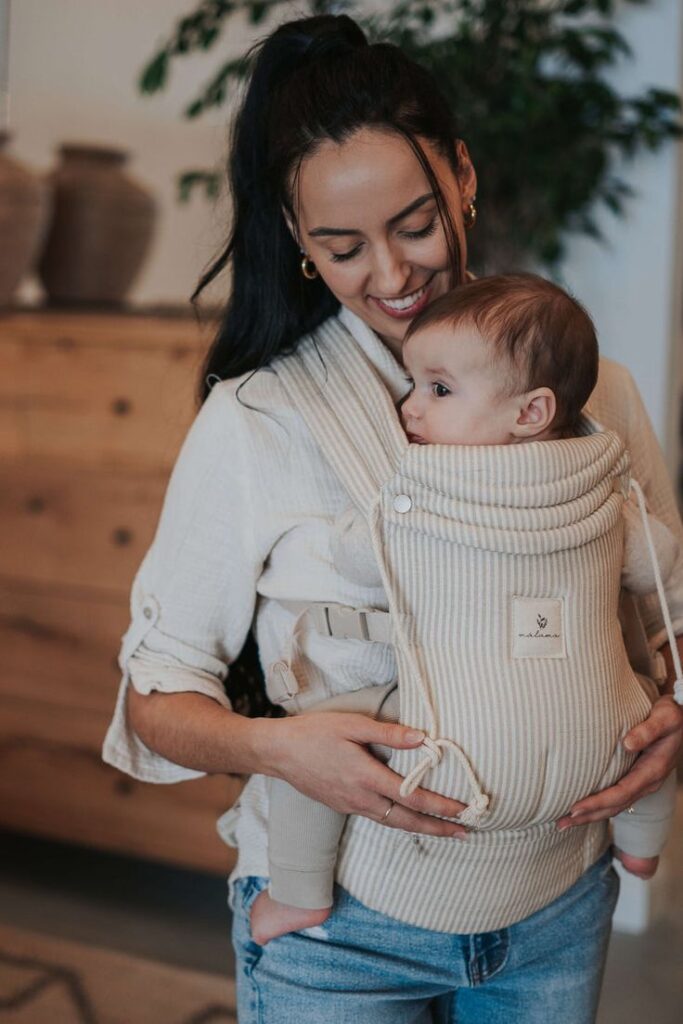
Baby carriers allow you to keep your baby close while leaving your hands available for simple activities.
Newborns often want frequent physical contact. Babywearing can make it easier to respond to that need without requiring you to sit down and hold your baby throughout the day.
Parents should still pay close attention to positioning and airway safety, particularly with young or medically fragile babies.
A carrier can also make certain everyday situations easier.
You might use one while taking a gentle walk, moving around the house, visiting a friend, or attending a place where using a stroller would be inconvenient.
Babywearing can also provide opportunities for interaction. Your newborn can hear your voice, look at your face, and experience the rhythm of your movement while remaining close to you.
It should not replace other forms of interaction, floor play, supervised tummy time, or rest. Think of it as another way to spend time together.
If you are looking for more ways to connect with your baby without relying on expensive equipment, simple bonding activities for newborns can give you additional ideas for the early months.
What Makes a Baby Carrier Suitable for a Newborn?
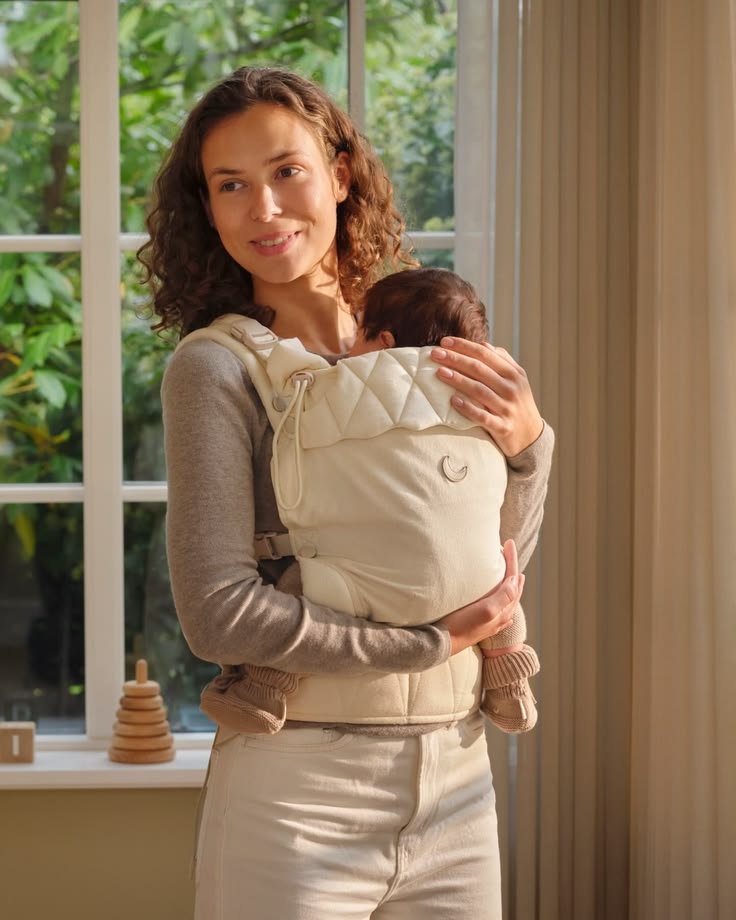
Not every baby carrier is appropriate from birth.
Newborns have limited head and neck control, so they need a carrier that provides adequate support for their size and developmental stage.
Start by checking the manufacturer’s minimum weight and age requirements.
If a carrier requires an infant insert, make sure the insert is specifically designed for that carrier and is used according to the manufacturer’s instructions.
A newborn carrier should also allow you to position your baby high enough on your chest that you can easily see their face.
Your baby should not be buried underneath fabric. Their chin should not be pressed against their chest, and their nose and mouth should remain unobstructed.
The carrier should provide support without forcing your baby’s body into an unsafe position.
If your baby was born prematurely or has breathing or muscle tone concerns, speak with your baby’s healthcare provider before using a carrier.
Types of Baby Carriers for Newborns
There is no single carrier style that works for every parent.
Different designs offer different levels of structure, adjustability, portability, and ease of use. Understanding the main types can help you narrow down your choices.
Baby Wraps

A baby wrap is a long piece of fabric that you tie around your body to create a supportive pouch for your baby.
Wraps are popular with parents who want a close, snug fit during the newborn stage. Because the fabric can be adjusted around your body, it can provide a customised fit when tied correctly.
The main challenge is learning how to wrap it properly.
A wrap may feel intimidating the first few times you use it. You need to understand how the fabric should be positioned and how tightly it should be secured.
Always follow the manufacturer’s instructions and practise before carrying your baby for the first time.
Soft Structured Carriers

Soft structured carriers use buckles, straps, and structured panels rather than requiring you to tie a long piece of fabric.
They are often easier for parents who want something that can be put on quickly.
Some soft structured carriers are specifically designed for newborns. Others have minimum weight requirements or require a newborn insert.
Check the specifications carefully instead of assuming that a carrier labelled “baby” is suitable for a newborn.
A good structured carrier should provide secure support while allowing you to maintain a comfortable position.
Ring Slings

A ring sling uses a long piece of fabric threaded through rings to create a pouch.
It can be convenient because it is relatively quick to put on and adjust once you learn how to use it.
However, positioning matters greatly.
Some sling positions can cause a baby’s body to curl into a C shape, which may interfere with breathing.
Your baby’s face should remain visible, their neck should not be forced forward, and their chin should not rest against their chest.
Mei Tai and Similar Carriers
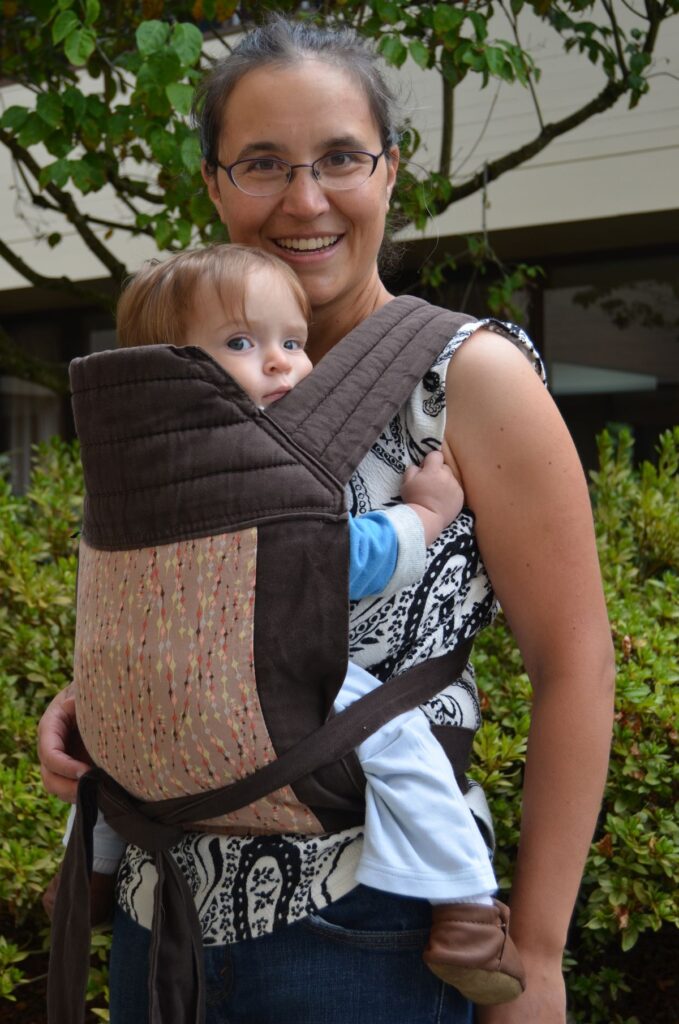
Some carriers use a combination of fabric panels and adjustable straps or ties.
These designs can offer a balance between wraps and structured carriers. They may provide a close fit while giving parents more structure than a traditional wrap.
The important thing is not the name of the carrier. What matters is whether the particular model is suitable for your baby’s size and whether you can use it correctly.
Best Baby Carrier Features to Look For
Once you understand the different styles, focus on the features that matter for newborn use.
Newborn Compatibility
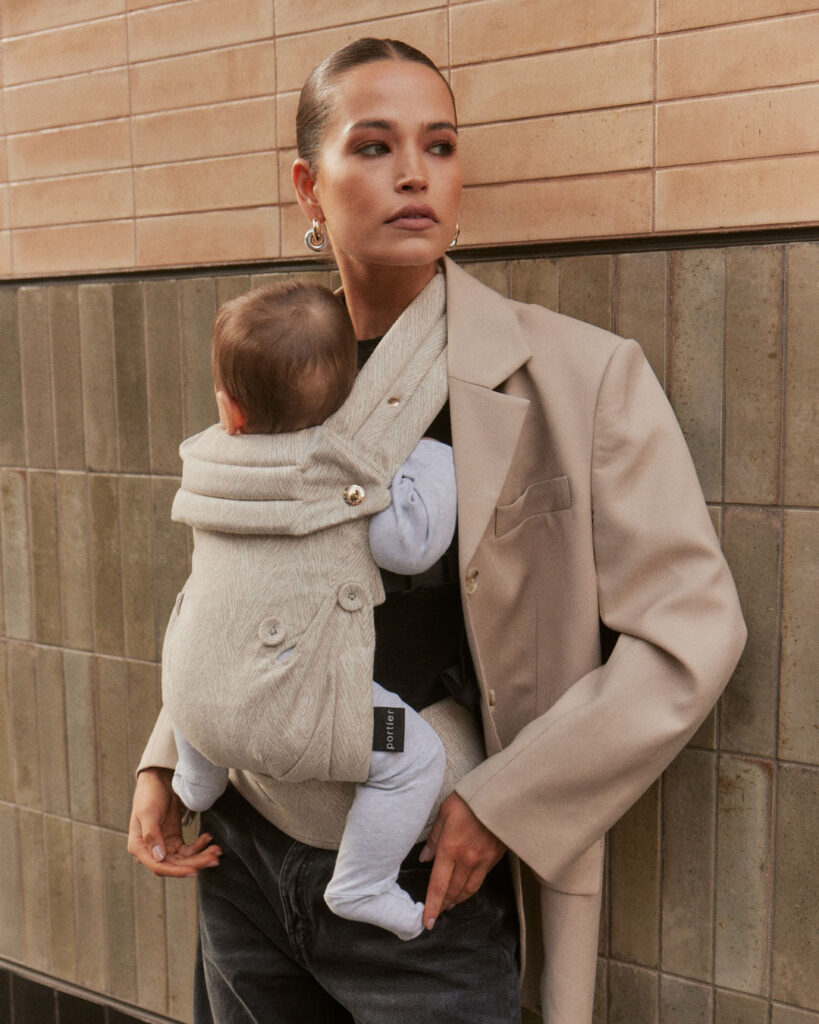
The first thing to check is whether the carrier is actually approved for newborns.
Look at the manufacturer’s minimum weight and age requirements.
Do not assume that a carrier is suitable from birth simply because it looks small enough.
If the manufacturer requires a newborn insert, use the correct insert and follow the instructions for positioning your baby.
Head and Neck Support
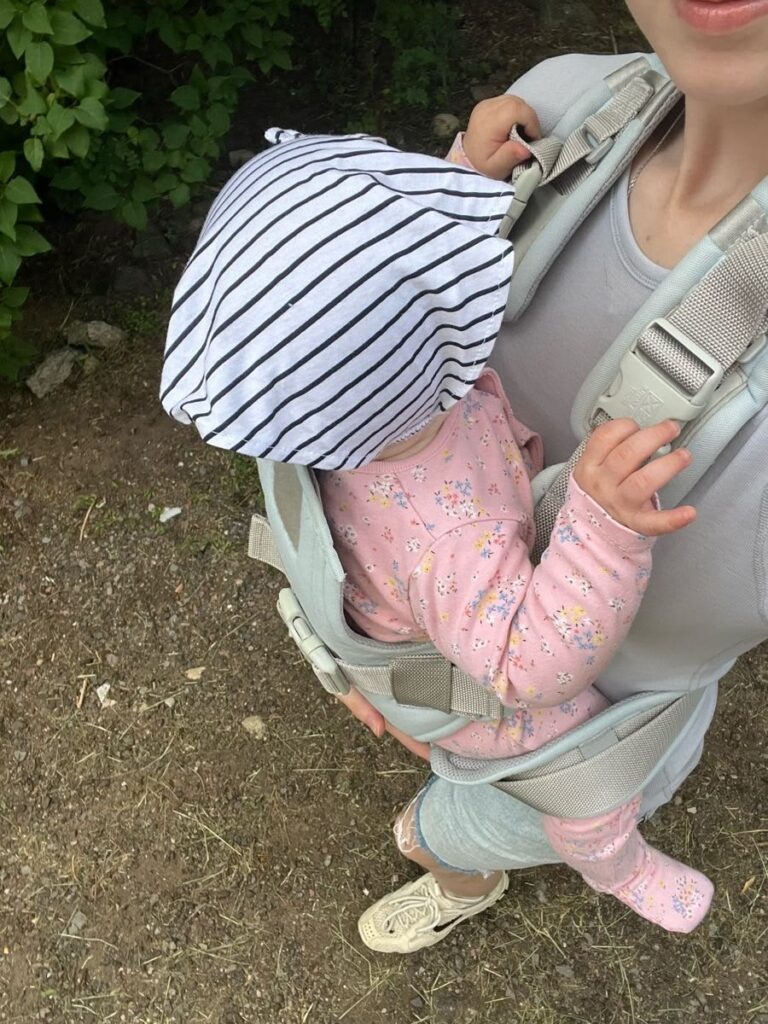
A newborn cannot reliably hold their head upright.
The carrier should therefore provide appropriate support while still allowing you to keep your baby’s face visible.
Avoid positions where your baby’s head falls forward and their chin presses against their chest.
Check your baby frequently, especially when you are still learning how the carrier works.
Healthy Hip Positioning
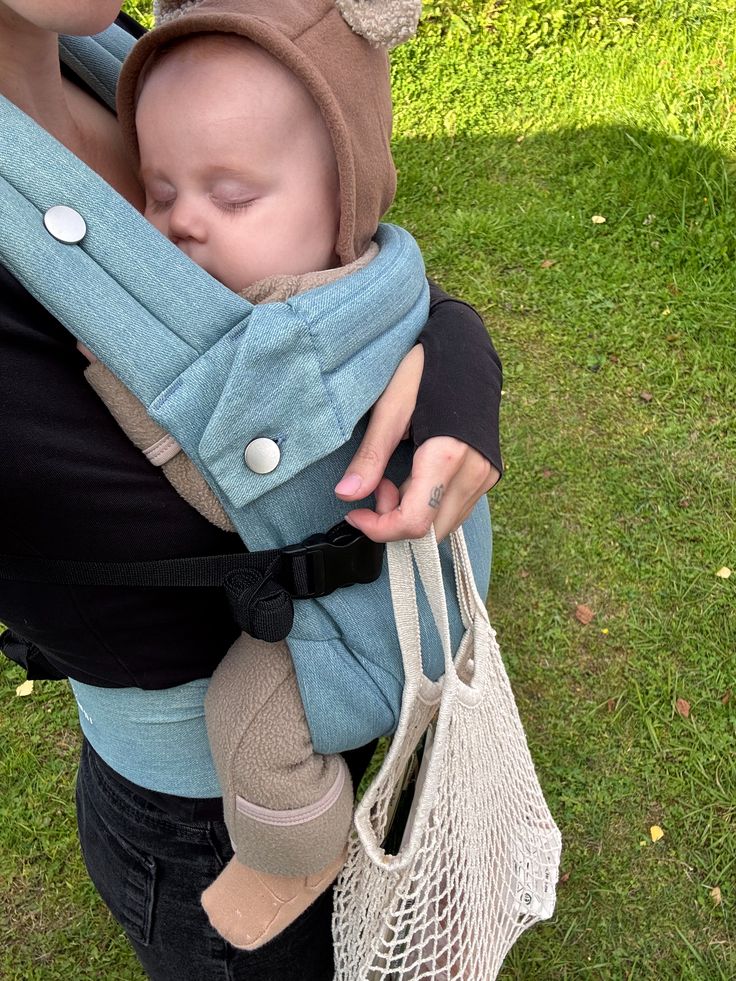
Look for a carrier that supports your baby’s thighs while allowing their hips and knees to remain bent and comfortably spread.
The International Hip Dysplasia Institute recommends choosing carriers that allow healthy hip positioning, particularly during the early months when the hips are still developing.
The carrier should not force your baby’s legs straight down or press them tightly together.
A good fit should support the thighs while allowing the hips and legs to move naturally..
How to Choose the Right Carrier for Your Baby’s Size

Your baby’s size matters more than their age alone.
Two babies who are both two months old can have very different weights and body proportions.
Check the carrier’s stated weight range before purchasing it.
Also consider how much room your baby needs for proper positioning.
A carrier that is too large may not provide the support your newborn needs. A carrier that is too small may become uncomfortable or restrictive.
Your baby should sit securely without slipping down into the carrier.
If your baby is very small, do not try to make a carrier work by adding blankets, towels, or homemade padding unless the manufacturer specifically allows it.
Use only accessories designed and approved for that carrier.
How to Position a Newborn in a Baby Carrier
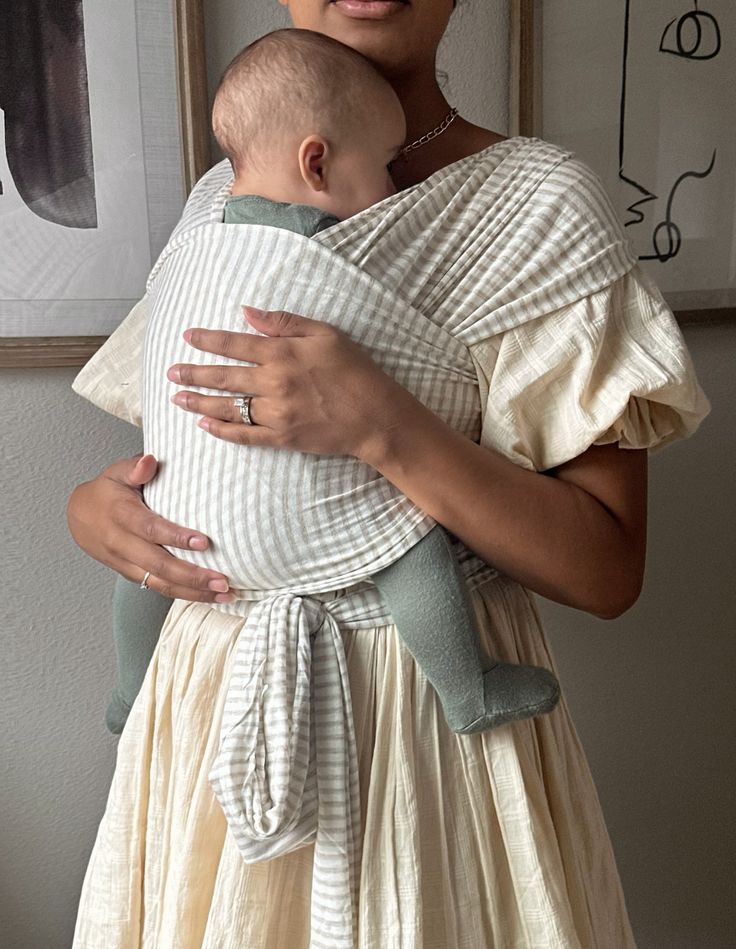
Correct positioning is more important than how stylish the carrier looks.
Your newborn should be positioned high enough on your chest that you can easily see their face.
Their head should be close enough for you to kiss without bending excessively. Their chin should remain away from their chest.
Their nose and mouth should be clear. Their back should be supported according to the carrier’s instructions.
Their legs should be supported in a position that allows the hips to remain bent and comfortably spread.
Check your baby regularly instead of assuming that the position has stayed the same throughout the day.
A young baby can shift position as you move, so a carrier that looked perfect when you first put it on may need adjustment later.
Can a Newborn Sleep in a Baby Carrier?
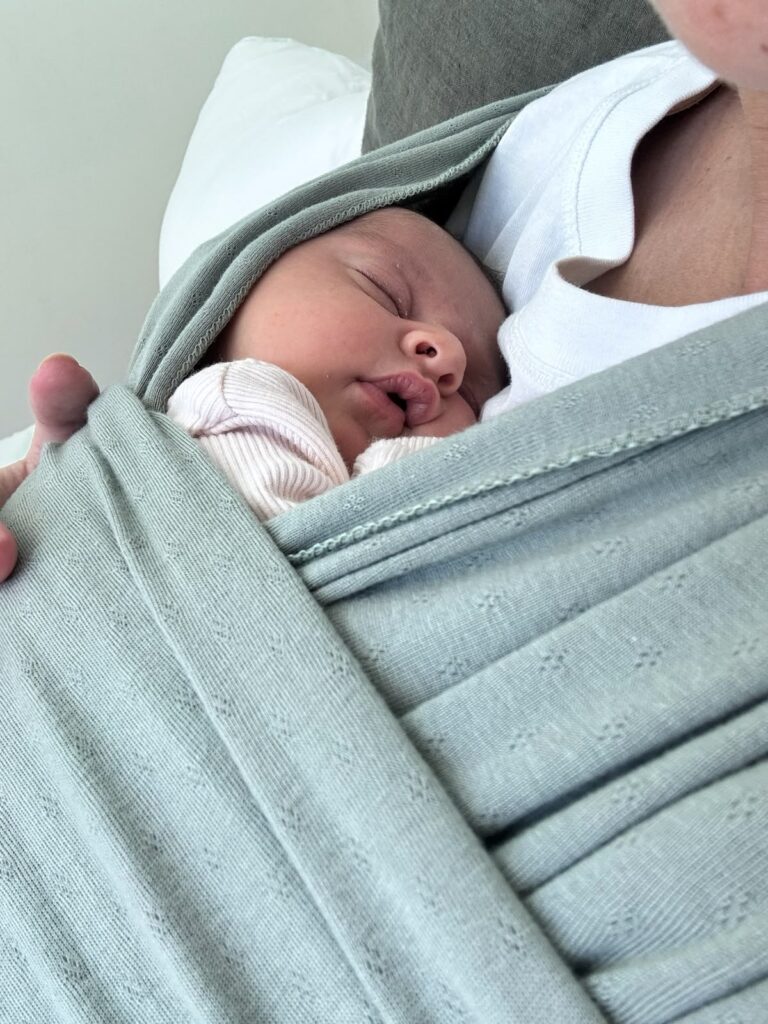
A baby may fall asleep while being carried.
That does not mean the carrier should become a regular sleep environment.
If your baby falls asleep while you are wearing them, pay particularly close attention to their airway and positioning.
Do not cover your baby’s face with a blanket because they have fallen asleep.
You should also avoid assuming that a carrier is safe for overnight sleep simply because your baby appears comfortable.
For regular sleep, follow established safe sleep guidance and use an appropriate crib, bassinet, or other approved sleep surface.
Parents preparing the baby’s sleeping space can also review safe co-sleeping guidelines for new parents to understand how recommendations for sleep differ from babywearing.
Babywearing and Breastfeeding
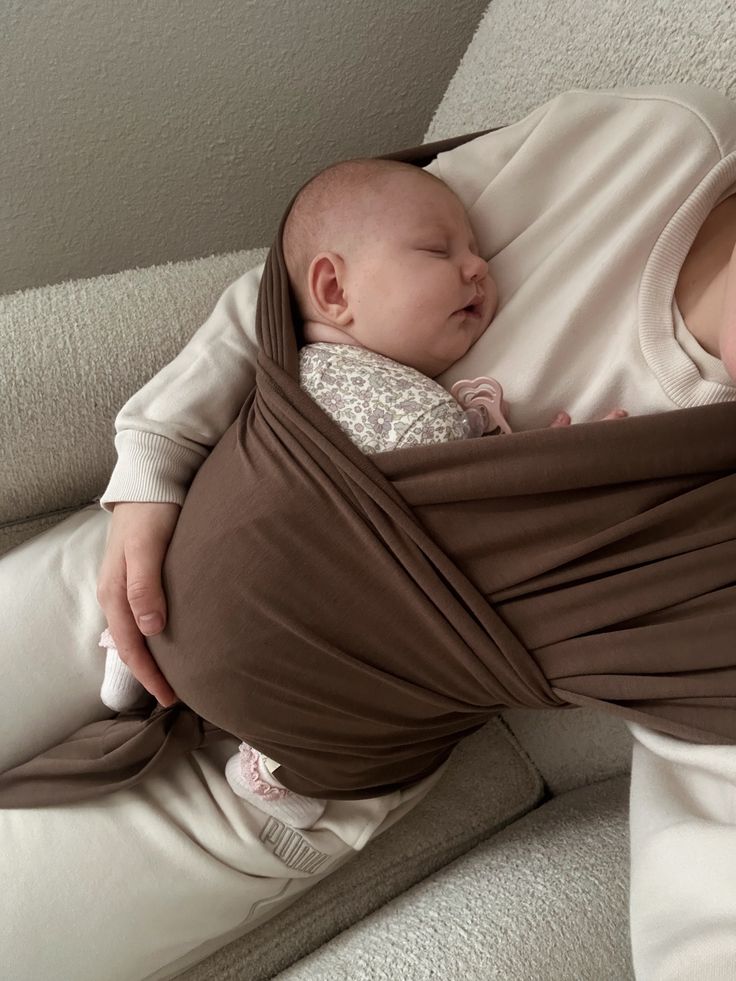
Some parents eventually find ways to breastfeed while using a carrier, but this requires particular caution.
Newborns should not be positioned in a carrier in a way that makes it difficult to monitor their airway.
A carrier should never be used as a substitute for proper feeding supervision.
If you plan to breastfeed frequently, it can help to become comfortable with basic feeding positions first. The ultimate breastfeeding guide for first-time moms can be a useful starting point as you learn what works for you and your baby.
When feeding, prioritise your baby’s airway and positioning rather than convenience.
Once feeding is finished, reposition your baby correctly in the carrier before continuing to move around.
What Should Your Baby Wear Under a Carrier?
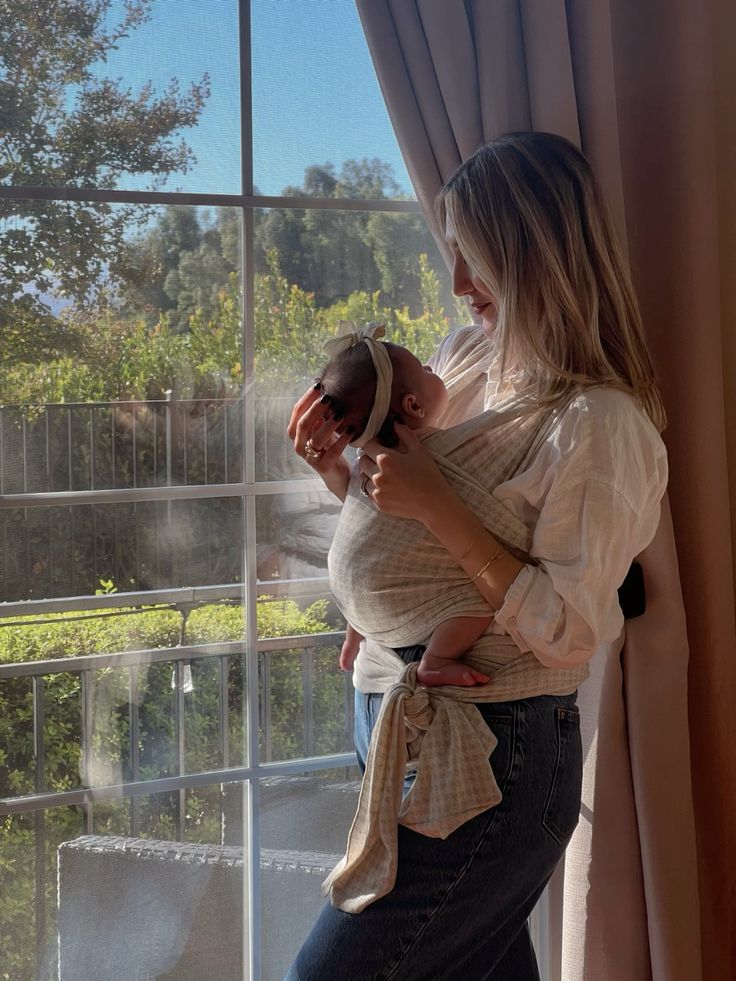
Your baby does not need bulky layers simply because they are inside a carrier.
Your body provides additional warmth, and the carrier itself can add another layer.
Choose comfortable clothing that allows your baby’s legs and hips to move freely.
Avoid thick clothing that makes it difficult to achieve a secure fit.
If you are unsure what to buy for the early weeks, essential newborn outfits every baby needs can help you create a practical clothing collection without buying more than your baby is likely to use.
Check your baby’s temperature regularly.
Signs such as sweating, flushed skin, or a very hot chest can indicate that your baby is too warm.
How Long Can a Newborn Stay in a Baby Carrier?

There is no single number of hours that applies to every baby and every carrier.
The important consideration is how your baby is positioned and how they are responding.
Newborns need opportunities to feed, sleep safely, move freely, and spend supervised time in different positions.
Babywearing should therefore be one part of your baby’s day rather than the only position they spend time in.
Take regular breaks.
Remove your baby from the carrier for feeding, nappy changes, floor play, supervised tummy time, and appropriate sleep.
You can also use the time outside the carrier for simple interaction. How to play with your newborn baby offers ideas for gentle activities that do not require complicated toys or equipment.
Babywearing and Tummy Time
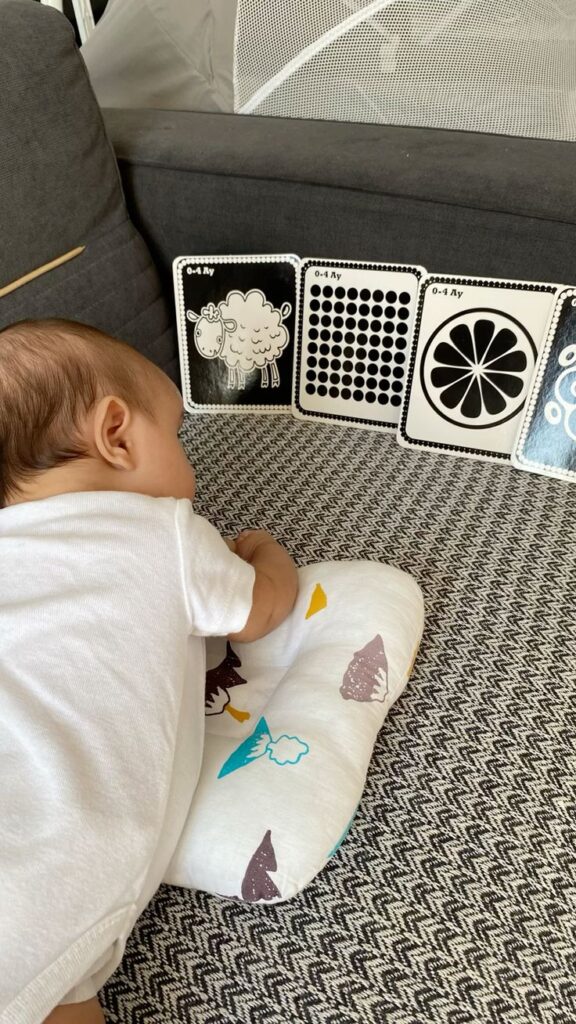
A carrier should not replace tummy time.
When your baby is awake and supervised, floor play gives them opportunities to move their head, arms, and body in different ways.
You can think of babywearing and floor play as complementary rather than competing activities.
Your baby can spend part of the day close to you and another part safely exploring movement on the floor.
If you are looking for more structured ideas, activities for 0 to 3 month-old babies that helps development can give you simple options for the earliest stage.
Baby Carriers and Baby Development
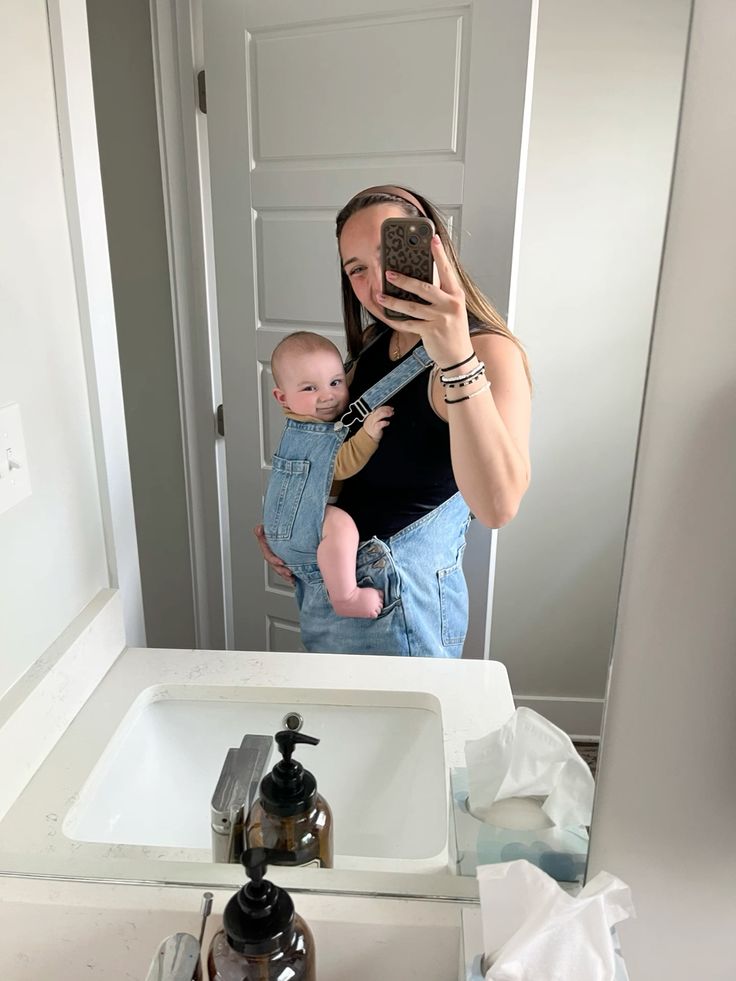
Babywearing creates opportunities for your baby to experience movement, voices, faces, sounds, and everyday surroundings while staying close to you.
A newborn may spend much of their time looking at your face or listening to your voice.
You can talk to your baby while wearing them, sing softly, describe what you are doing, or simply respond to their expressions.
These small interactions do not need to become formal lessons.
For additional ideas that support early learning, educational activities for babies from birth to one year can help you find age appropriate ways to play and interact as your baby grows.
How Babywearing Can Support Bonding
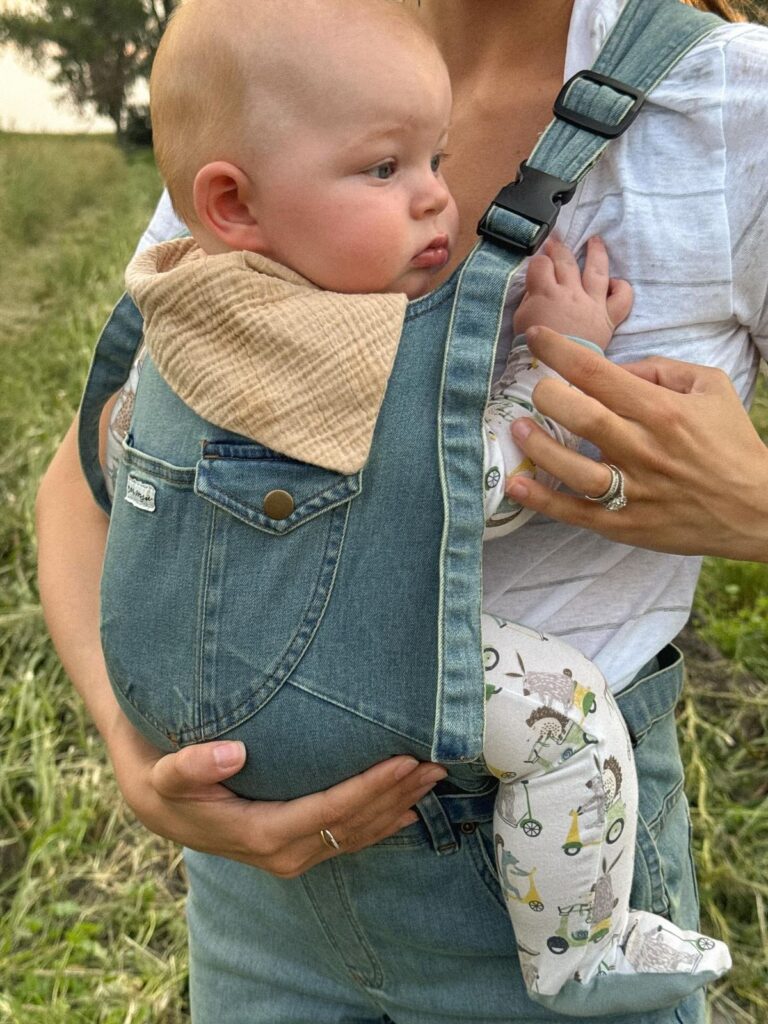
Babywearing can make physical closeness easier during busy parts of the day.
You might wear your baby while taking a slow walk around the house, sitting together while listening to music, or completing a simple task.
Your baby can hear your voice and experience your movement while you remain physically close.
That closeness can be particularly reassuring during the early weeks when your newborn is still adjusting to life outside the womb.
You can also combine babywearing with other gentle forms of interaction, such as singing, talking, looking at books, or making eye contact.
Babywearing and Sensory Experiences
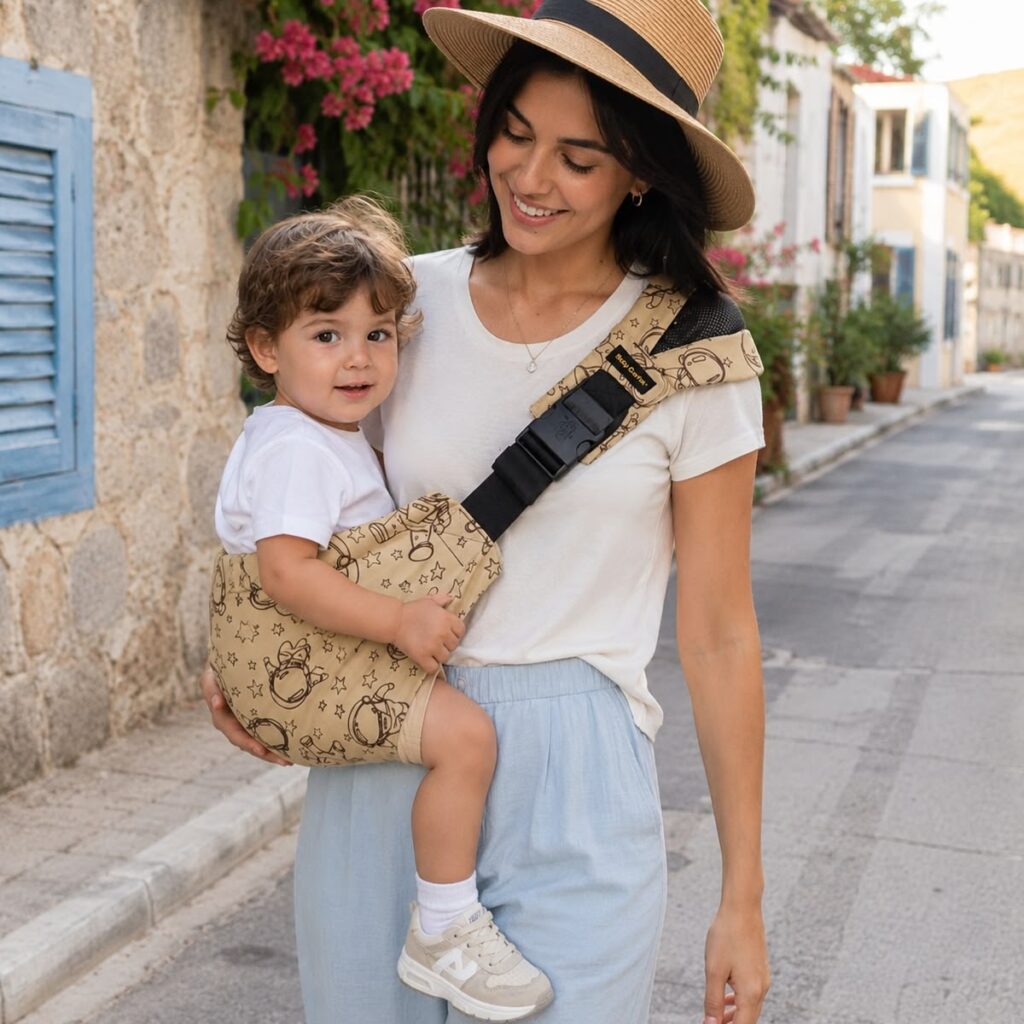
Your newborn is constantly taking in information about the world.
They hear your voice, feel movement, notice light and shapes, and experience different sounds around them.
Babywearing places your baby close enough to experience some of these things while remaining supported.
Keep the environment calm, especially during the early weeks.
You do not need to take your newborn into loud or crowded places simply to provide stimulation.
For ideas that can be adapted as your baby grows, sensory play ideas for babies by age can help you introduce simple experiences outside the carrier.
You can also explore easy sensory activities for babies at home when you want low cost ways to engage your baby without buying lots of equipment.
Babywearing on Walks and Outside the Home
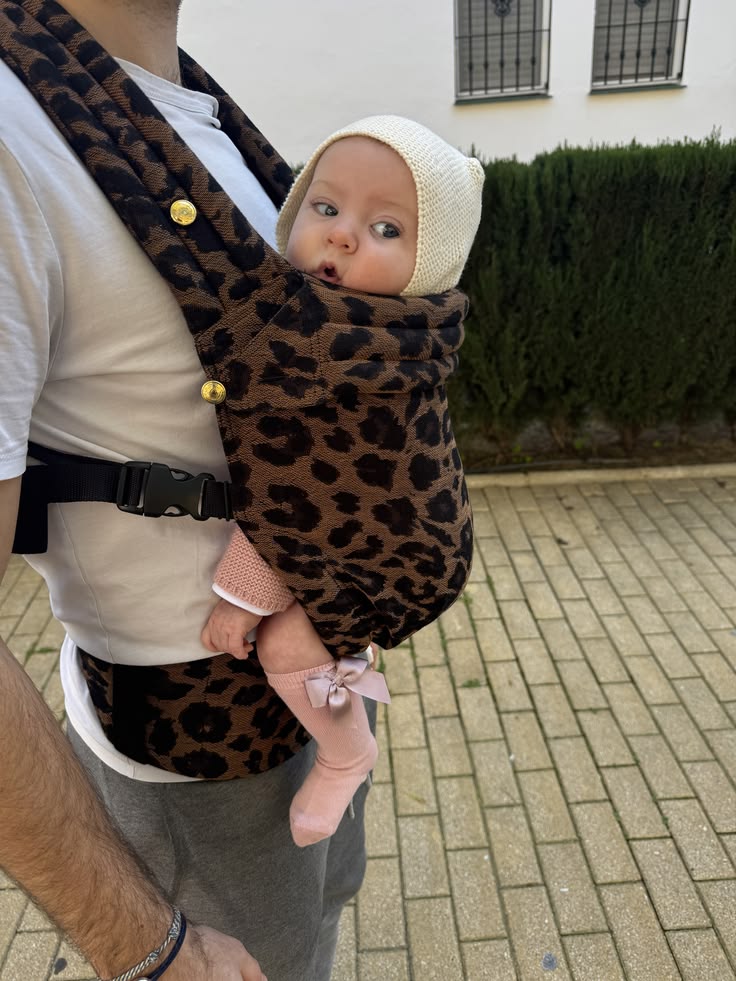
A baby carrier can be convenient when you want to take your newborn outside.
You may find it easier than using a stroller on narrow paths, crowded places, or short walks.
Before leaving home, check the carrier’s fit. Make sure your baby’s face is visible, their airway is clear, and the straps are secure.
Pay attention to the weather as well. Your baby may become warmer than you expect because they are close to your body and covered by the carrier.
Avoid covering your baby’s face with fabric to protect them from sunlight. Instead, use appropriate shade and clothing while maintaining clear visibility and airflow.
Take breaks when necessary and check your baby regularly.
How to Use a Baby Carrier Safely Around the House

Babywearing can make it easier to move around the house while holding your newborn, but it does not make every activity safe.
Avoid activities where your baby could be exposed to heat, sharp objects, chemicals, or sudden movements.
Cooking over an open stove while wearing your baby, for example, creates risks that have nothing to do with how well the carrier fits.
Be careful when bending down. Your carrier should make everyday life easier, not encourage you to take unnecessary risks.
How to Know if Your Baby Is Comfortable
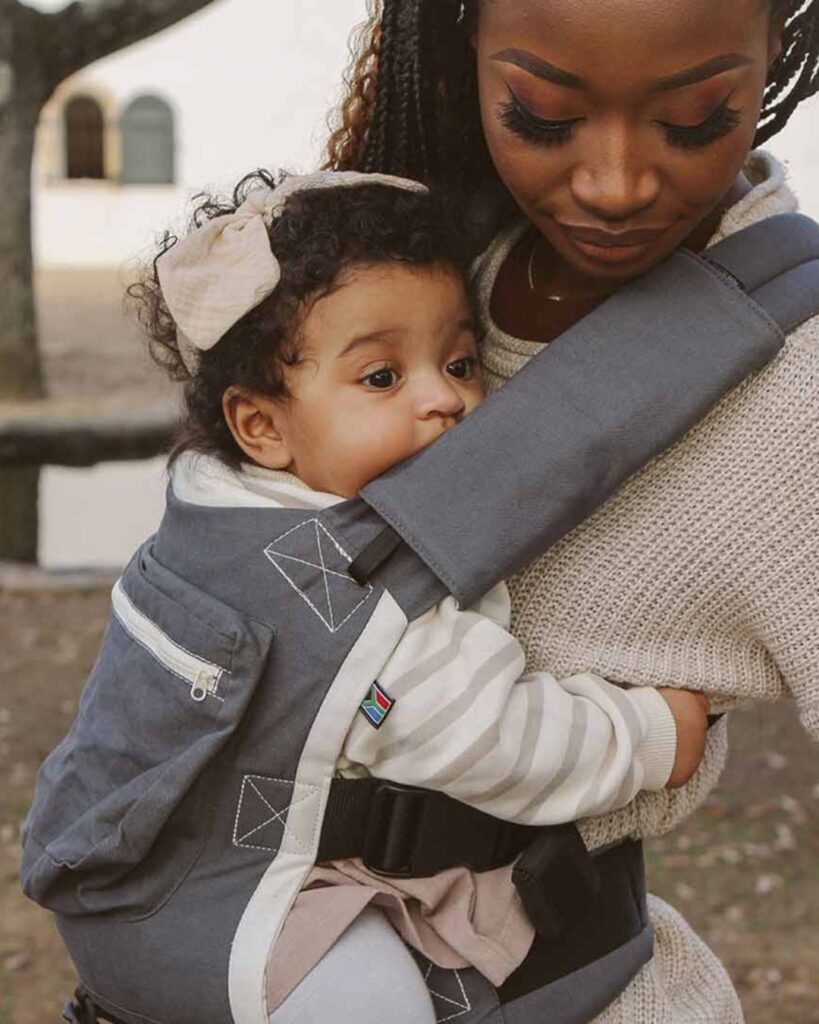
Your baby may give you clues about whether the carrier is working well for them.
They may settle into a calm state when they are comfortable and properly positioned.
Persistent crying does not necessarily mean your baby dislikes babywearing. They may be hungry, tired, too warm, uncomfortable, or simply need a different position.
Check the fit before assuming the carrier is the problem. Look at your baby’s head, neck, back, hips, and legs.
Also check your own comfort. If your shoulders, back, or waist hurt significantly, the carrier may need adjustment or may not be the right style for you.
What Should You Consider Before Buying a Baby Carrier?
Before spending money, ask yourself a few practical questions.
Will I use it mainly at home or outside?
A lightweight wrap may work well for home use, while a structured carrier may be more convenient for regular outings.
Will someone else use it?
If your partner or another caregiver will use it, choose something that can be adjusted easily.
Does it fit my newborn now?
Do not buy based only on future growth.
Can I see my baby’s face easily?
If the answer is no, reconsider the carrier or positioning.
Does it support healthy hip positioning?
Your baby’s thighs should be supported, with their hips and knees comfortably bent.
Is it easy to clean?
Newborn messes are part of everyday life.
Does it fit my budget?
You do not need to buy the most expensive carrier available.
Before buying several pieces of baby gear at once, reviewing the ultimate baby budget for first-time parents can help you decide where a baby carrier fits into your overall spending plan.
How to Learn to Use Your Newborn Carrier
Learning to use a carrier should happen before you are rushing out of the house with a crying baby.
Read the manufacturer’s instructions carefully.
Practise putting the carrier on and adjusting it while your baby is not inside.
Once you understand the basic steps, practise with your baby while another adult is nearby if possible.
Start for a short period. Check your baby’s position after putting them into the carrier. Look at their face, head, neck, back, hips, and legs.
If you are unsure about the positioning, ask a qualified healthcare professional or an experienced babywearing professional for help.
The goal is not to become perfect at babywearing immediately. The goal is to become confident enough to recognise a secure and comfortable position.
How to Choose the Best Baby Carrier for Your Family
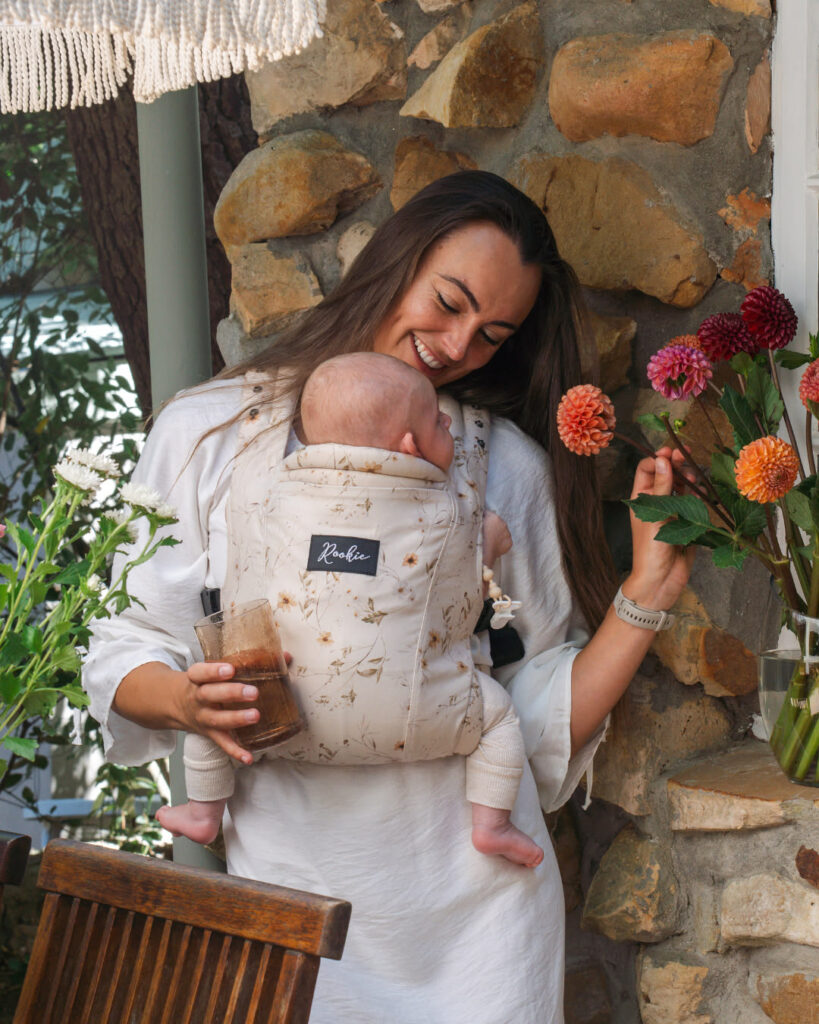
There is no universal winner when it comes to baby carriers.
A wrap may be ideal for one parent who enjoys a close, adjustable fit. Another parent may prefer a structured carrier because buckles are faster and easier to manage.
A ring sling may appeal to someone who wants a lightweight option for short outings.
Your baby’s size and developmental stage should guide the decision just as much as your personal preferences.
Prioritize newborn compatibility, airway visibility, head and neck support, healthy hip positioning, secure fasteners, and comfortable fit.
Then consider the practical details.
Think about how often you will use the carrier, who will wear it, where you will take your baby, how easy it is to clean, and how much you are comfortable spending.
You may also want to consider your baby’s developmental stage when choosing activities outside baby wearing.
Newborn milestones: what to expect in the first month can help you understand some of the changes you may notice during those first few weeks.
Keep exploring with these related articles
Baby Wrap vs Structured Carrier: Pros and Cons for New Parents
Complete Car Seat Guide for New Parents
25 Backyard Play Ideas for Babies






7 Comments