

Baby Wrap vs Structured Carrier: Pros and Cons for New Parents
Disclosure: Some of the links in this post are affiliate links. This means if you click on the link and purchase an item, I will receive an affiliate commission at no extra cost to you.
Babywearing can make the newborn stage easier in ways you may not expect. You can keep your baby close while moving around the house, taking a gentle walk, or simply having your hands free for a few minutes.
The challenge often begins when you start shopping for a carrier. A baby wrap and a structured carrier can both keep your newborn close, but they work very differently.
A wrap uses long fabric that you tie around your body, while a structured carrier uses a more defined panel with straps, buckles, and adjustable sections.

Neither option is automatically the right choice for every parent. A wrap may appeal to someone who wants a soft, close fit and does not mind learning how to tie it.
A structured carrier may be more attractive to a parent who wants something that feels straightforward and secure without learning several wrapping techniques.
Your baby’s age, size, head and neck control, your body shape, your daily routine, and how often you plan to babywear can all affect your decision.
Safety should also come before convenience. A newborn needs proper support, clear access to their airway, and a position that allows their hips and legs to remain appropriately supported.
Understanding the differences between these two carrier styles can help you choose one that fits both your baby and your lifestyle.
What Is a Baby Wrap?

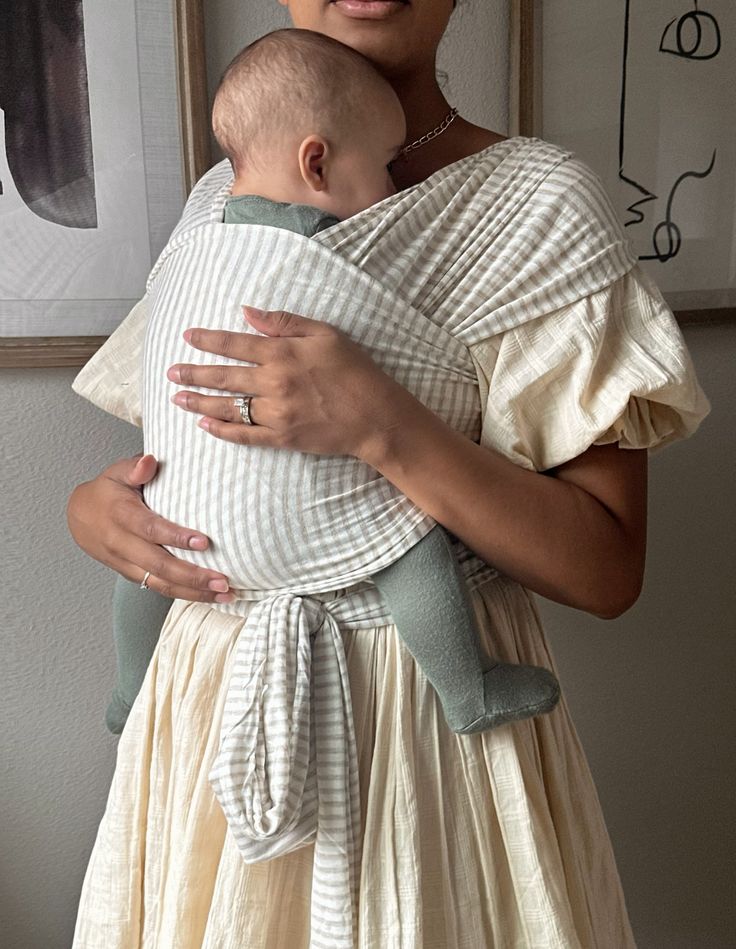
A baby wrap is a long piece of fabric that you wrap and tie around your body to create a supportive space for your baby.
Unlike a structured carrier, a wrap does not usually have buckles or a rigid panel that determines the shape of the carrier.
The fabric creates the support when it is wrapped correctly around your body and your baby.
This flexibility is one of the main reasons some parents enjoy wraps.
You can adjust the fabric around your body and your baby rather than relying on a fixed carrier shape.
A properly fitted wrap can create a close, snug feeling that many parents appreciate during the newborn stage.
The main challenge is learning how to use it. A wrap can look simple when someone else demonstrates it, but tying one confidently around a newborn may take practice.
You need to learn how the fabric should be positioned and how tight it should be before placing your baby inside.
The specific wrapping method also matters. Always follow the instructions provided by the manufacturer because different wraps can have different requirements.
What Is a Structured Baby Carrier?

A structured carrier has a defined body panel with straps, buckles, and other components that help hold your baby in position.
Instead of wrapping several metres of fabric around yourself, you usually secure the carrier using buckles and adjust the straps to fit you and your baby.
This can make structured carriers appealing to parents who want something that feels more straightforward.
Some structured carriers are designed for newborns, while others have minimum weight requirements or require a newborn insert.
That distinction is important.
A structured carrier should not be used with a newborn simply because the carrier looks small enough. Always check the manufacturer’s minimum weight, age, and positioning requirements.
A structured carrier may also continue to be useful as your baby grows, depending on the model’s limits and design.
Baby Wrap vs Structured Carrier: The Main Difference

The biggest difference is how the carrier creates support. A wrap uses fabric that you arrange and tighten around your body and baby.
A structured carrier uses a pre-shaped panel and adjustable straps to provide support. That difference affects almost everything else.
A wrap may offer more flexibility in how it fits around your body, but it requires more practice.
A structured carrier may be faster to put on once you understand the adjustments, but its shape and design may feel less flexible.
The choice can also depend on your daily routine. If you expect to spend a lot of time at home with your newborn and enjoy a close, adjustable fit, a wrap may appeal to you.
If you expect to make frequent trips and want something you can quickly buckle into place, a structured carrier may feel more practical.
Parents who are still preparing for the newborn stage may also find the ultimate baby budget for first-time parents useful when deciding how much to spend on babywearing equipment.
Baby Wraps: Pros

Baby wraps have several qualities that make them attractive to new parents.
Close and Snug Fit
A wrap can create a very close fit between you and your newborn.
The fabric can be adjusted around your body rather than relying on a fixed panel. This can make the carrier feel more personalised once you learn how to use it.
The close positioning can also make it easy for you to interact with your baby.
You can talk to them, look at their face, and respond to their movements while keeping them close to your body.
Flexible Fit for Different Body Types
Because you adjust the fabric yourself, a wrap can accommodate different body shapes and sizes.
This can be especially useful when more than one caregiver plans to wear the baby.
Instead of buying a different carrier for each person, the same wrap can often be adjusted to fit different bodies.
You still need to learn how to position and tighten it correctly for each wearer.
Lightweight and Easy to Store
Many wraps are relatively lightweight compared with some structured carriers.
When you are not using one, you can fold or roll it and place it in a nappy bag or drawer.
This can be useful if you already have limited storage space for baby equipment.
Can Be Useful During the Newborn Stage
Some parents like wraps because they can create a snug environment for small babies when used correctly.
A newborn’s size matters, though. The wrap must be appropriate for the baby’s weight and the particular wrapping method must provide adequate support.
The American Academy of Pediatrics recommends checking your baby frequently in any carrier and making sure their face remains visible and their mouth and nose are not blocked.
Baby Wraps: Cons

The same flexibility that makes a wrap appealing can also make it challenging.
There Is a Learning Curve
Learning to tie a wrap can take time.
You may need to practise several times before you feel comfortable putting your newborn into it.
The first few attempts can feel awkward, especially when you are still learning how to hold and position a very small baby.
It is worth practising before you need to use the wrap for an important outing.
It Can Take Longer to Put On
A structured carrier may require you to fasten a few buckles and adjust the straps.
A wrap may require several steps before your baby is securely positioned.
That difference may not matter when you are relaxing at home. It can feel more significant when your baby is crying and you are trying to leave the house quickly.
Fabric Can Feel Warm
A wrap can involve several layers of fabric around your body and your baby.
This can make both of you feel warm, particularly in hot weather.
Pay attention to your baby’s temperature and avoid covering their face with extra fabric.
Parents should be especially careful in warm environments because your body heat and the carrier can add warmth.
It Can Be Difficult to Know When the Fit Is Right
A wrap only works as intended when it is tied correctly.
If it is too loose, your baby may not receive adequate support. If it is positioned incorrectly, your baby’s head, neck, airway, or hips may not be in the right position.
Learning the correct technique is therefore part of using a wrap safely.
Structured Carriers: Pros

Structured carriers have become popular partly because they can be easier to use once properly adjusted.
Faster to Put On
Buckles and adjustable straps can make a structured carrier relatively straightforward to put on.
After adjusting it to fit you and your baby, you may be able to put it on without repeating a complete wrapping process.
This can be convenient when you are heading out with your newborn.
More Defined Support
The structured panel gives the carrier its shape.
For some parents, this makes it easier to understand where their baby should sit and where the straps should be positioned.
That does not remove the need to read the instructions.
A carrier can still be incorrectly adjusted, even when it has buckles and structured components.
Easier for Other Caregivers to Use
If several people will carry your baby, a structured carrier may feel easier to share.
The straps can be adjusted to suit each wearer.
Grandparents, partners, or other caregivers should still learn how the carrier works before placing the baby inside.
Anyone carrying your newborn should understand the basic checks for airway visibility and proper positioning.
Some Models Grow With Your Baby
Depending on the design, a structured carrier may remain useful beyond the newborn stage.
Some models have adjustable panels that can accommodate a growing baby.
Others may allow different carrying positions as the baby develops.
Always follow the manufacturer’s age, weight, and developmental requirements rather than assuming that every position is suitable at every stage.
Structured Carriers: Cons

Structured carriers have limitations too.
They Can Be Bulkier
A structured carrier usually takes up more space than a simple length of fabric.
The panel, buckles, padding, and straps can make it more noticeable when packed into a bag.
This may not matter if you keep the carrier at home or wear it most of the time.
They Can Be More Expensive
Structured carriers can cost more than some basic wraps.
The price varies widely between models, so cost alone does not tell you how suitable a carrier will be.
Before buying, consider the features you actually need.
If you are trying to reduce unnecessary baby spending, ways to save money on baby essentials can help you think about which purchases are worth prioritising.
The Fit May Feel Less Flexible
A structured carrier has a defined shape.
Some parents love that structure. Others may find that it does not fit their body as comfortably as a wrap.
Your torso length, shoulder width, and waist size can affect how comfortable a structured carrier feels.
Trying one on before buying can help if you have the opportunity.
Newborn Inserts May Be Required
Some structured carriers are not designed to hold very small babies without an insert.
An insert may change how the baby sits inside the carrier and can add another step to the setup.
Check whether the carrier is approved for newborn use without an insert or whether the manufacturer specifies a particular accessory.
Which Is Easier for Newborns?

Neither style is automatically easier for every newborn.
The important question is whether the particular carrier can provide appropriate support for your baby’s size and developmental stage.
Newborns have limited head and neck control, so their head needs to remain supported while their face stays visible.
A carrier should also allow appropriate hip positioning.
The International Hip Dysplasia Institute recommends carrying positions that allow the baby’s hips to remain bent and spread with the thighs supported.
If you are comparing newborn carriers, best baby carriers for newborns can help you understand the features to consider before choosing a specific style.
Which Is Easier to Learn?

This depends on what you find intuitive. Some parents learn wraps quickly after watching a demonstration and practising the technique.
Others prefer the straightforward feel of buckles and straps. A structured carrier may therefore have a shorter learning curve for some parents.
A wrap can become equally familiar with practice. Do not judge a carrier only by how easy it feels during your first attempt. Give yourself time to learn the correct technique.
Practising with another adult nearby can also make the process less stressful.
Which Is Better for Breastfeeding Parents?

Both carriers can work alongside breastfeeding, but a carrier should never make it difficult to monitor your baby’s airway.
Some parents eventually become comfortable feeding while babywearing, but newborns require particularly careful supervision.
You should be able to see and monitor your baby throughout the process. A carrier is not a replacement for holding your baby securely during feeding.
After feeding, make sure your baby is returned to an appropriate carrier position before continuing to move around.
Which Is Better for Hot Weather?

Neither style is automatically cooler in every situation.
The material, number of layers, carrier design, your clothing, and the temperature around you all matter.
Wraps can involve several layers of fabric, depending on the wrapping technique. Structured carriers may also have padded panels that retain heat.
For hot weather, look for breathable materials and avoid unnecessary layers. Keep checking your baby rather than relying only on your own temperature.
Your baby may feel warmer because they are pressed close to your body. Parents also need to avoid covering a baby’s face with fabric to provide shade.
Which Is Better for Long Periods of Babywearing?

Comfort becomes increasingly important when you plan to wear your baby for longer periods.
A carrier should distribute your baby’s weight in a way that feels manageable for you. Your baby’s position matters too.
The International Hip Dysplasia Institute recommends a position in which the thighs are supported and the hips and knees remain bent and spread.
You should also give your baby regular opportunities to move freely outside the carrier.
Babywearing should not replace floor play, supervised tummy time, feeding, or safe sleep.
For ideas you can use when your baby is out of the carrier, activities for 0 to 3 month-old babies that helps development offers age appropriate activities for the earliest stage.
How Should a Newborn Sit in a Carrier?

A newborn should sit high enough on your chest that you can easily see their face.
You should not need to move fabric out of the way to check their nose and mouth.
Their chin should not be pressed against their chest, back should receive appropriate support according to the carrier’s instructions. and hips should be positioned in a way that allows their legs to remain bent and supported.
The International Hip Dysplasia Institute describes the spread squat or M position as a healthy position for infant hip development, with the thighs supported and the hips and knees bent.
Check your baby regularly because their position can change as you move.
What Should a Baby Wear Under a Wrap or Carrier?

Your baby does not need thick layers simply because they are being carried.
The carrier and your body can add warmth. Choose comfortable clothing that allows your baby’s hips and legs to move freely.
Avoid clothing that makes it difficult to position your baby correctly.
You may want to keep your newborn’s wardrobe simple during the first few weeks. How many newborn clothes do you really need? can help you think about how many outfits are actually practical before buying too much.
When carrying your baby in warm conditions, check for signs that they are becoming too hot.
Can a Newborn Sleep in a Wrap or Structured Carrier?

A newborn may fall asleep while being carried. That does not mean the carrier should become their regular sleeping environment.
If your baby falls asleep, monitor their position closely and make sure their airway remains clear. For routine sleep, move your baby to an appropriate safe sleep surface.
Do not cover your baby’s face with a blanket or fabric because they have fallen asleep.
Babywearing and safe sleep are separate considerations. A carrier is designed for carrying, while a crib or bassinet provides the appropriate environment for routine sleep.
When preparing your baby’s sleep space, essential nursery furniture every parent needs can help you think through the basic items you actually need.
Wrap vs Structured Carrier for Bonding

Both carriers can support close contact between you and your baby.
The carrier itself does not create the bond. The time you spend responding to your baby, talking to them, looking at them, and caring for them creates those opportunities for connection.
A wrap may feel especially close because of the way the fabric surrounds your body.
A structured carrier can offer similar closeness when fitted properly.
You can also build connection outside babywearing through simple activities. Simple bonding activities for newborns can give you more ideas for spending relaxed time together.
Wrap vs Structured Carrier for Everyday Activities

Your daily routine can help determine which style makes more sense.
A wrap may work well if you spend a lot of time at home and want something soft and adjustable.
A structured carrier may be more convenient if you frequently leave the house and want something that can be secured quickly.
Think about the activities you actually do. If you walk frequently, visit shops, attend appointments, or use public transport, quick adjustments may matter more.
If you mainly want something for contact naps while moving around your home, the feel of the fabric may matter more.
Your carrier should support your routine rather than create extra work.
What About Tummy Time?
Babywearing does not replace tummy time.
When your baby is awake and supervised, spending time on their tummy gives them opportunities to practise moving their head and body.
You can alternate between babywearing and supervised floor activities throughout the day.
For parents looking for simple ideas, educational activities for babies from birth to one year can help you find age appropriate ways to interact with your baby as they grow.
The goal is variety. Your newborn does not need to spend the entire day in a carrier to benefit from being close to you.
How to Use Either Carrier Safely

Whichever style you choose, safety checks should become part of your routine.
Before putting your baby into the carrier, check that it is appropriate for their age and size.
After placing your baby inside, check their face, head, neck, back, and legs.
You should be able to see their face.
Their nose and mouth should be clear and their chin should not be pressed against their chest.
The carrier should hold them securely without forcing their hips and legs into an uncomfortable position.
If your baby was born prematurely or has breathing difficulties, ask your healthcare provider before using an upright carrier.
Common Baby wearing Mistakes to Avoid

Some problems have nothing to do with whether you choose a wrap or structured carrier.
Covering the Baby’s Face
Your baby’s face should remain visible.
Do not allow fabric, your clothing, or your baby’s position to cover their nose and mouth.
Allowing the Chin to Fall Onto the Chest
A newborn’s head falling forward can interfere with breathing.
Check your baby’s head position frequently.
Choosing a Carrier That Is Too Large
A newborn can slip down inside a carrier that does not fit properly.
Always follow the manufacturer’s minimum weight and size requirements.
Ignoring Hip Positioning
Avoid positions that force your baby’s legs straight down and tightly together.
Look for a position that supports the thighs and allows the hips and knees to remain bent and spread.
Adding Unapproved Padding
Do not add towels, cushions, blankets, or homemade inserts to make the carrier seem more comfortable.
Only use accessories approved by the manufacturer.
Wearing Your Baby While Doing Risky Activities
A carrier does not make activities such as cooking over an open stove or handling dangerous chemicals safe.
Your baby is close to your body, so think about what they could be exposed to.
How to Choose Between a Baby Wrap and Structured Carrier
Start with your baby’s needs.
Check the minimum weight and age requirements. Make sure the carrier provides adequate head and neck support and allows you to keep your baby’s face visible.
Then think about your lifestyle. A wrap may be a better fit if you want flexibility, a close fit, and a lightweight option. You need to be comfortable learning the wrapping technique.
A structured carrier may be a better fit if you value quick adjustments, defined support, and a carrier that can potentially remain useful as your baby grows.
Your budget matters too. You do not need to buy both immediately. If possible, try a carrier before committing to it.
Pay attention to how it feels on your shoulders and back, how easy it is to adjust, and whether your baby sits securely.
You can also learn more about how to play with your newborn baby so your baby’s day includes plenty of interaction outside the carrier.
Baby Wrap vs Structured Carrier: Which Should You Choose?

The best choice depends on your baby, your body, and your everyday routine.
A baby wrap offers a soft, adjustable fit and can feel especially comfortable during the newborn stage. Its main disadvantage is that learning to wrap and position it correctly can take time.
A structured carrier offers more defined support and can be easier to put on once adjusted. It may also continue to be useful as your baby grows, depending on the model.
Neither option is automatically safer simply because of its design.
Correct positioning matters more. Your newborn should have clear access to air, appropriate head and neck support, and a hip position that allows the legs to remain bent and supported.
If you are still preparing for your baby’s arrival, hospital bag checklist for mom, baby, and partner can help you organise other essentials before the big day.
Take your time when choosing a carrier. Read the manufacturer’s instructions, check the newborn requirements, practise before your first outing, and regularly check your baby’s position.
The right carrier is ultimately the one that you can use correctly, comfortably, and confidently while keeping your baby close.
Looking for more inspiration? These related articles have more ideas to explore
Complete Car Seat Guide for New Parents
13 Montessori Activities for 6-Month-Old Babies
25 Backyard Play Ideas for Babies






5 Comments